
Catalogue Search | MBRL


Are you sure you want to remove the book from the shelf?

{{itemTitle}}
1,016
result(s) for
"Colonial cities."
Sort by:


Asian Cities: Colonial to Global
When people look at success stories among postcolonial nations, the focus almost always turns to Asia, where many cities in former colonies have become key locations of international commerce and culture. This book brings together a stellar group of scholars from a number of disciplines to explore the rise of Asian cities, including Singapore, Macau, Hong Kong, and more. Dealing with history, geography, culture, architecture, urbanism, and other topics, the book attempts to formulate a new understanding of what makes Asian cities such global leaders.
eBook


Asian Cities: Colonial to Global
When people look at success stories among postcolonial nations, the focus almost always turns to Asia, where many cities in former colonies have become key locations of international commerce and culture. This book brings together a stellar group of scholars from a number of disciplines to explore the rise of Asian cities, including Singapore, Macau, Hong Kong, and more. Dealing with history, geography, culture, architecture, urbanism, and other topics, the book attempts to formulate a new understanding of what makes Asian cities such global leaders.
eBook


City of sediments : a history of Seoul in the age of colonialism
Once the capital of the five-hundred-year Chos?n dynasty (1392–1897) and the Taehan Empire (1897–1910), the city of Seoul posed unique challenges to urban reform and modernization under Japanese colonial rule in the early twentieth century, constrained by the labyrinthian built environment of the old Korean capital. Colonial authorities attempted to employ a strategy of \"erasure\"—monumental Japanese architecture was, for instance, superimposed upon existing palace structures—to articulate to colonized Korean subjects the transition from the pre-modern to the modern, and the naturalization of colonial rule as inevitable historical change.
Drawing from and analyzing a wide range of materials, from architecture and photography to print media and sound recordings, City of Sediments shows how Seoul became a site to articulate a new mode of time—modernity—that defined the place of the colonized in accordance with the progression of history, and how the underbelly of the city, latent places of darkness filled with chatters of the alleyway, challenged this visual language of power. To do so, Se-Mi Oh builds an inventive new model of history where discrete events do not unfold one after the other, but rather one in which histories layer atop each other like sediment, allowing a new map of colonial Seoul to emerge, a map where the material traces of the city are overlapping, with vibrant residues of earlier times defiantly visible among the superimposed signs of modernity and colonial domination.
eBook
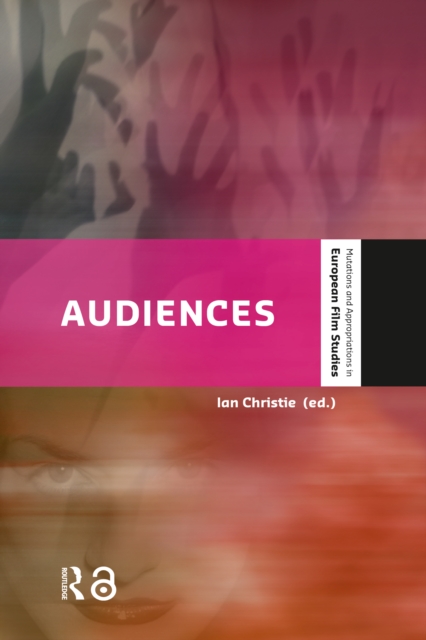
Audiences
AUDIENCES engages with one of the most important shifts in recent fi lm studies: the turn away from text-based analysis towards the viewer. Historically, this marks a return to the early interest of sociologists and psychologists, which was overtaken by concern with the \"effects\" of fi lm, linked to calls for censorship rather than to understanding the mental and behavioral world of the spectator. Early cinema history has revealed the diversity of fi lm-viewing habits, while traditional mass market box offi ce analysis has given way to more sophisticated economic and sociological analysis of attendance data. And as the fi lm experience fragments across multiple formats, the perceptual and cognitive experience of the individual viewer (who is also an auditor) becomes increasingly accessible. This book spans the spectrum of contemporary audience studies, revealing work being done on local, non-theatrical and live digital transmission audiences, and on the relative attraction of large-scale, domestic and mobile platforms.
A book on the spectator, today, is a challenge - if not a provocation. Cinema is relocating on new devices and in new environments: in its migration, it asks us to change our habits and our attitudes. Are we still spectators - or are we users, surfers, nostalgic buffs, technology experts, hackers and face-book friends? This book provides a deep insight in such a controversial situation, both at the theoretical and empirical level - retracing a history and facing a destiny. Francesco Casetti - Yale University
eBook


Harbin to Hanoi : the colonial built environment in Asia, 1840 to 1940
Colonial powers in China and northern Vietnam employed the built environment for many purposes: as an expression of imperial aspirations, a manifestation of supremacy, a mission to civilize, a re-creation of a home away from home, or simply as a place to live and work. In this volume, scholars of city planning, architecture, and Asian and imperial history provide a detailed analysis of how colonization worked on different levels, and how it was expressed in stone, iron, and concrete. The process of creating the colonial built environment was multilayered and unpredictable. This book uncovers the regional diversity of the colonial built form found from Harbin to Hanoi, varied experiences of the foreign powers in Asia, flexible interactions between the colonizers and the colonized, and the risks entailed in building and living in these colonies and treaty ports.
eBook
Untold. Life in the colonies. Daily life in the colonies
From bustling cities to quiet farms, colonial life was filled with the diverse experiences of European settlers, Indigenous communities, and the enslaved.
Streaming Video