
Catalogue Search | MBRL


Are you sure you want to remove the book from the shelf?

{{itemTitle}}
742
result(s) for
"Colonization Philosophy."
Sort by:

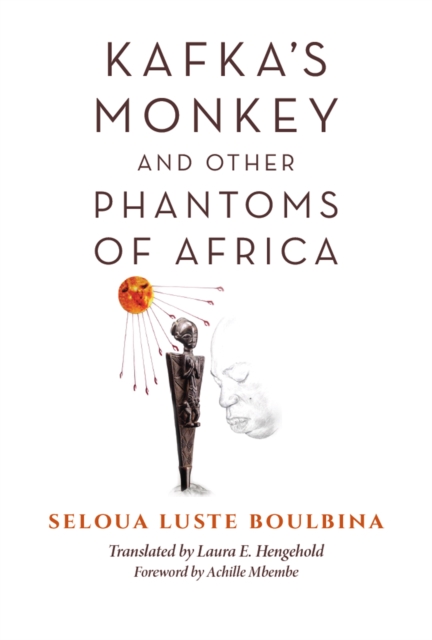
Kafka's Monkey and Other Phantoms of Africa
Even though many of France's former colonies became independent over fifty years ago, the concept of \"colony\" and who was affected by colonialism remain problematic in French culture today. Seloua Luste Boulbina, an Algerian-French philosopher and political theorist, shows how the colony's structures persist in the subjectivity, sexuality, and bodily experience of human beings who were once brought together through force. This text, which combines two works by Luste Boulbina, shows how France and its former colonies are haunted by power relations that are supposedly old history, but whose effects on knowledge, imagination, emotional habits, and public controversies have persisted vividly into the present. Luste Boulbina draws on the work of Michel Foucault, Frantz Fanon, and Édouard Glissant to build a challenging, original, and intercultural philosophy that responds to blind spots of inherited political and social culture.Kafka's Monkey and Other Phantoms of Africaoffers unique insights into how issues of migration, religious and ethnic identity, and postcolonial history affect contemporary France and beyond.
1. This book important primary source by a woman philosopher.
2. Seloua Luste Boulbina takes on the problematic concept of \"colony\" and all of its subjective, sexual, political, and social implications.
3. Boulbina's book builds on the work of traditional, well-known European philosophers.
eBook


Existence and Heritage
In Existence and Heritage , Tsenay Serequeberhan examines
what the European philosophical tradition has to offer when
encountered from the outsider perspective of postcolonial African
thought. He reads Kant in the context of contemporary international
relations, finds in Gadamer's work a way of conceiving relations
among differing traditions, and explores Heidegger's analysis of
existence as it converges with Marx's critique of alienation. In
the confluence of these different assessments, Serequeberhan
articulates both a need and example of responding to Fanon's call
for a new kind of thinking in philosophy. He demonstrates both how
continental philosophy can be a useful resource for theorizing
Africa's postcolonial condition and how postcolonial thought and
African philosophy can provide a new way of approaching and
understanding the Western tradition.
eBook

The burdens of empire : 1539 to the present
\"Throughout human history, empires have been far more constant and widespread, and the source of far more anguished political speculation, than nation states have ever been. But despite the long history of debate and the recent resurgence of interest in empires and imperialism, no one seems very clear as to what exactly an empire is. The Burdens of Empire strives to offer not only a definition but also a working description. This book examines how empires were conceived by those who ruled them and lived under them; it looks at the relations, real or imagined, between the imperial metropolis (when one existed) and its outlying provinces or colonies; and it asks how the laws that governed the various parts and various ethnic groups, of which all empires were made, were conceived and interpreted. Anthony Pagden argues that the evolution of the modern concept of the relationship between states, and in particular the modern conception of international law, cannot be understood apart from the long history of European empire building\"-- Provided by publisher.
Book
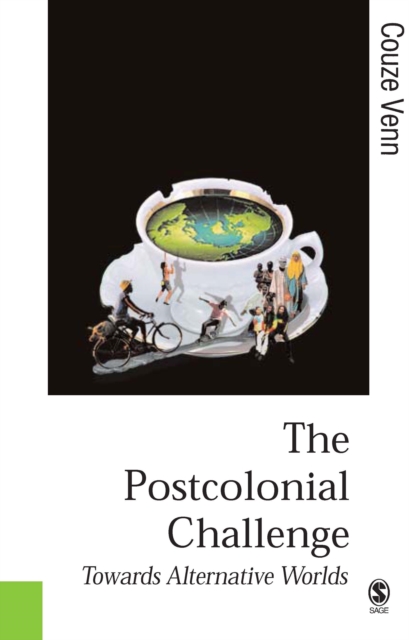
The postcolonial challenge : towards alternative worlds
What is postcolonial studies? What are its achievements and strengths and weaknesses? This concise and penetrating book: · Maps the territory of postcolonial studies · Demonstrates how identity and postcolonialism relate · Shows how postcolonialism connects with Modernity · Introduces new perspectives in the light of recent geo-political events · Provides a guide to future developments in the subject Lucid, comprehensive and accessible the book offers students and scholars a one-stop guide to one of the most important issues of our time.
eBook

In search of an Inca : identity and utopia in the Andes
\"In Search of the Inca examines how people in the Andean region have invoked the Incas to question and rethink colonialism and injustice, from the time of the Spanish conquest in the sixteenth century until the late twentieth century. It stresses the recurrence of the \"Andean utopia,\" that is, the idealization of the precolonial past as an era of harmony, justice, and prosperity and the foundation for political and social agendas for the future. In this award-winning work, Alberto Flores Galindo highlights how different groups imagined the pre-Hispanic world as a model for a new society. These included those conquered by the Spanish in the sixteenth century but also rebels in the colonial and modern era and a heterogeneous group of intellectuals and dissenters. This sweeping and accessible history of the Andes over the last five hundred years offers important reflections on and grounds for comparison of memory, utopianism, and resistance\"-- Provided by publisher.
Book

Decolonizing indigenous education : an Amazigh/Berber ethnographic journey
Using auto-ethnography, Taieb narrates the journey of developing a educational philosophy from and for the Kayble of Algeria and undertakes to write the sociological foundations of an Kayble education system.
eBook


Out of Africa
At the heart of this book is the argument that the fact that so many post-structuralist French intellectuals have a strong ‘colonial’ connection, usually with Algeria, cannot be a coincidence. The ‘biographical’ fact that so many French intellectuals were born in or otherwise connected with French Algeria has often been noted, but it has never been theorised. Ahluwalia makes a convincing case that post-structuralism in fact has colonial and postcolonial roots. This is an important argument, and one that ‘connects’ two theoretical currents that continue to be of great interest, post-structuralism and postcolonialism.
The re-reading of what is now familiar material against the background of de-colonial struggles demonstrates the extent to which it is this new condition that prompted theory to question long-held assumptions inscribed in the European colonial enterprise. The wide-ranging discussion, ranging across authors as different as Foucault, Derrida, Fanon, Althusser, Cixous, Bourdieu and Lyotard, enables the reader to make connections that have remained unnoticed or been neglected. It also brings back into view a history of struggles, both political and theoretical, that has shaped the landscape of critique in the social sciences and humanities.
This clear and lucid discussion of important and often difficult thinkers will be widely read and widely debated by students and academics alike.
Pal Ahluwalia is Pro Vice-Chancellor of the University of South Australia. He was previously Professor of the Politics Department, University of Adelaide, Australia, then Professor with the University of California, San Diego USA and Professor at Goldsmiths College, University of London, UK. He is editor of the Routledge journals African Identities, Social Identities and Sikh Formations.
1. Introduction 2. Algeria and Colonisation 3. Sartre, Camus and Fanon 4. Derrida 5. Cixous 6. Althusser, Bourdieu, Foucault and Lyotard 7. Conclusion
eBook