
Catalogue Search | MBRL


Are you sure you want to remove the book from the shelf?

{{itemTitle}}
760
result(s) for
"Color Psychological aspects"
Sort by:


Cultures of colour
Colour permeates contemporary visual and material culture and affects our senses beyond the superficial encounter by infiltrating our perceptions and memories and becoming deeply rooted in thought processes that categorise and divide along culturally constructed lines. Colour exists as a cultural as well as psycho-physical phenomenon and acquires a multitude of meanings within differing historical and cultural contexts. The contributors examine how colour becomes imbued with specific symbolic and material meanings that tint our constructions of race, gender, ideal bodies, the relationship of the self to others and of the self to technology and the built environment. By highlighting the relationship of colour across media and material culture, this volume reveals the complex interplay of cultural connotations, discursive practices and socio-psychological dynamics of colour in an international context.
eBook


Progress in Colour Studies : cognition, language and beyond
This volume presents authoritative and up-to-date research in colour studies by specialists across a wide range of academic disciplines, including vision science, psychology, psycholinguistics, linguistics, anthropology, onomastics, philosophy, archaeology and design.
eBook

On color
Ranging from Homer to Picasso, and from the Iranian Revolution to The Wizard of Oz, this spirited and radiant book awakens us anew to the role of color in our lives. Our lives are saturated by color. We live in a world of colors, and color marks our psychological and social existence. But for all color's inescapability, we don't know much about it. Authors David Scott Kastan and Stephen Farthing offer a fresh and imaginative exploration of one of the most intriguing and least understood aspects of everyday experience. Kastan and Farthing, a scholar and a painter, investigate color from numerous perspectives: literary, historical, cultural, anthropological, philosophical, art historical, political, and scientific. In ten wide-ranging chapters, each devoted to a different color, they examine the various ways colors have shaped and continue to shape our social and moral imaginations. Each individual color becomes the focal point for a consideration of one of the extraordinary ways in which color appears and matters in our lives.
BOOK

The red and the real : an essay on color ontology
This book offers a new approach to longstanding philosophical puzzles about what colors are and how they fit into the natural world. The author argues for a role-functionalist treatment of color — a view according to which colors are identical to certain functional roles involving perceptual effects on subjects. The author first argues (on broadly empirical grounds) for the more general relationalist view that colors are constituted in terms of relations between objects, perceivers, and viewing conditions. He responds to semantic, ontological, and phenomenological objections against this thesis, and argues that relationalism offers the best hope of respecting both empirical results and ordinary belief about color. He then defends the more specific role-functionalist account by contending that the latter is the most plausible form of color relationalism.
eBook

Race, Gender, and the Politics of Skin Tone
Race, Gender, and the Politics of Skin Tone tackles the hidden yet painful issue of colorism in the African American and Mexican American communities. Beginning with a historical discussion of slavery and colonization in the Americas, the book quickly moves forward to a contemporary analysis of how skin tone continues to plague people of color today. This is the first book to explore this well-known, yet rarely discussed phenomenon.
Margaret Hunter is Assistant Professor of Sociology at Loyola Marymount University in Los Angeles.
eBook
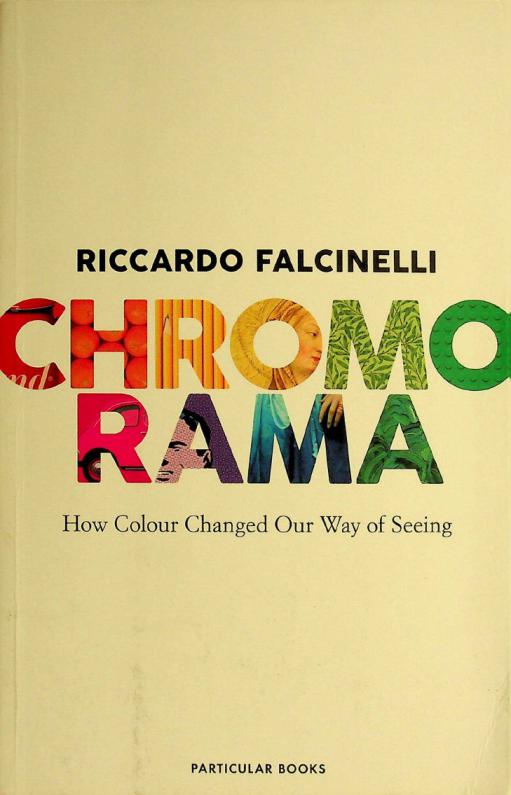
Chromorama : how colour changed our way of seeing
\"In Chromorama, acclaimed graphic designer Riccardo Falcinelli delves deep into the history of colour to show how it has shaped the modern gaze. With over four hundred illustrations throughout and with examples ranging widely across art and culture - from Flaubert's novels to The Simpsons, from Byzantine jewellery to misshapen fruit, from the black lines of Mondrian to the thrillers of Hitchcock - Falcinelli traces the evolution of our long relationship with colour, and how first the industrial revolution, and then the dawn of the internet age, changed it forever. Beautiful, warm and wise, taking in the lives of philosophers, entrepreneurs, designers, astrologists, shop assistants and pastry chef, Chromorama is an engrossing account of shade and light, of tone and hue, of dyes, pigments and pixels. It is the story of why we now see the world the way we do.\" -- flap of front cover.
Book

The luminous and the grey
Color surrounds us: the lush green hues of trees and grasses, the variant blues of water and the sky, the bright pops of yellow and red from flowers. But at the same time, color lies at the limits of language and understanding. In this absorbing sequel to Chromophobia —which addresses the extremes of love and loathing provoked by color since antiquity—David Batchelor charts color's more ambiguous terrain. The Luminous and the Grey explores the places where color comes into being and where it fades away, probing when it begins and when it ends both in the imagination and in the material world. Batchelor draws on neuroscience, philosophy, novels, films, and artists' writings—as well as his own experience as an artist working with color—to understand how we see and use colors. He considers the role of color in creation myths, industrial chemistry, and optics, and examines the particular forms of luminosity that saturate the modern city. Following this inquiry into the hues that we face every day, he turns to one that is both color and noncolor: grey itself, which he reveals is as much a mood, feeling, and existential condition as a shade that we experience with our eyes. Deftly argued, always thought-provoking, and ever entertaining, The Luminous and the Grey is a beautiful study of how we see and feel our multicolored world.
eBook