
Catalogue Search | MBRL


Are you sure you want to remove the book from the shelf?

{{itemTitle}}
263
result(s) for
"Color display systems."
Sort by:


The Art and Technique of Digital Color Correction
How to\" books are a dime a dozen. What makes this book special is that it is also a \"Why\" book. Hullfish sits down with world-class colorists and records not only what they do but why they do it. That's where the magic lies.
\"How\" is the question to ask if you want to become a craftsman. \"Why\" is the question that creates artists. I bought the first edition for \"How\" and came away with a lot of \"Why.\" This edition has lots more of both, with material from several additional world class colorists.
If you want an inside look into the art and craft of the professional colorist there's no better way to do it in book form. Whether you're learning to be a colorist or just want to understand what really happens when you decide something can be \"fixed in post,\" you need to read this book. -Art Adams, cinematographer/educator, ProVideoCoalition.com. This book just keeps getting better with each new edition. Steve Hullfish's approach is designed to teach techniques that transfer to a wide range of popular and accessible color correction tools. The intent is to demystify the process, so readers can learn the concepts and apply them, regardless of whether the software has sliders, wheels or curves. Best of all, Hullfish features extensive tips and tricks from some of the premier colorists in the country, so you can learn from the masters. If you only purchase one book on color correction, this is the essential guide to include in your library. -Oliver Peters, Oliver Peters Peters Post Production Services, LLC A terrific and much-needed book for anybody serious about digital color correction. Starting with the basics, it helps the reader work through a series of specific, well-illustrated examples, covering all the major software applications, and supports the text with insightful comments from prominent working colorists. All in all, it's essential reading for anyone who wants to improve their skills in this rapidly changing field. -Steve Cohen, editor, Emmy and ACE Eddie winner, author of Avid Agility.
eBook
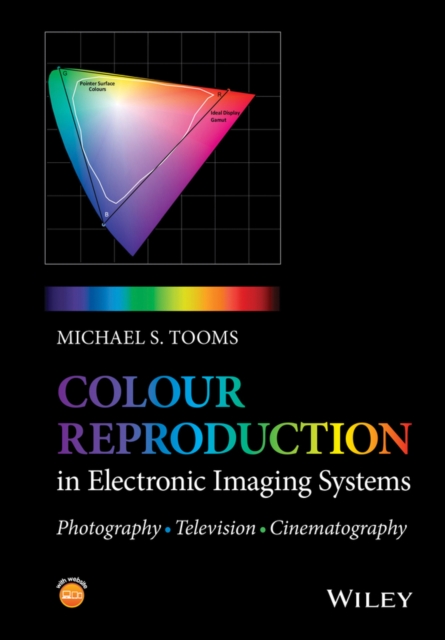
Colour reproduction in electronic imaging systems : photography, television, cinematography
With the move of cinema away from film, the adoption of electronic-based production throughout all media is now complete. In order to exploit its advantages, the accurate definition, measurement and reproduction of colour has become more important than ever to achieve the best fidelity of colour reproduction.
This book is concerned with providing readers with all they need to know about colour: how it is perceived and described, how it is measured and generated and how it is reproduced in colour systems. It serves as both a tutorial and a reference book, defining what we mean by colour and providing an explanation of the proper derivation of chromaticity charts and through to the means of ensuring accurate colour management.
Key Features:
* Addresses important theory and common misconceptions in colour science and reproduction, from the perception and characteristics of colour to the practicalities of its rendering in the fields of television, photography and cinematography
* Offers a clear treatment of the CIE chromaticity charts and their related calculations, supporting discussion on system primaries, their colour gamuts and the derivation of their contingent red, green and blue camera spectral sensitivities
* Reviews the next state-of-the-art developments in colour reproduction beyond current solutions, from Ultra-High Definition Television for the 2020s to laser projectors with unprecedented colour range for the digital cinema
* Includes a companion website hosting a workbook consisting of invaluable macro-enabled data worksheets; JPEG files containing images referred to in the book, including colour bars and grey scale charts to establish perceived contrast range under different environmental conditions; and, guides to both the workbook and JPEG files
eBook
Understanding color management
An accessible but technically rigorous guide to color management for all users in all market segments Understanding Color Management, 2nd Edition explains the basics of color science as needed to understand color profiling software, color measuring instruments, and software applications, such as Adobe Photoshop and proofing RIPs.
eBook
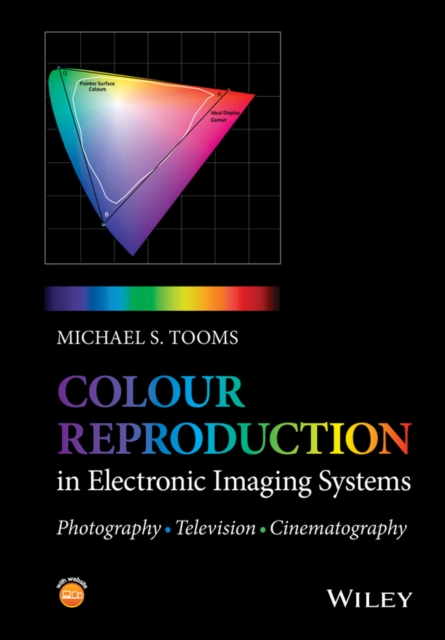
Colour reproduction in electronic imaging systems: photography, television, cinema
With the move of cinema away from film, the adoption of electronic-based production throughout all media is now complete. In order to exploit its advantages, the accurate definition, measurement and reproduction of colour has become more important than ever to achieve the best fidelity of colour reproduction. This book is concerned with providing readers with all they need to know about colour: how it is perceived and described, how it is measured and generated and how it is reproduced in colour systems. It serves as both a tutorial and a reference book, defining what we mean by colour and providing an explanation of the proper derivation of chromaticity charts and through to the means of ensuring accurate colour management. Key Features: Addresses important theory and common misconceptions in colour science and reproduction, from the perception and characteristics of colour to the practicalities of its rendering in the fields of television, photography and cinematography Offers a clear treatment of the CIE chromaticity charts and their related calculations, supporting discussion on system primaries, their colour gamuts and the derivation of their contingent red, green and blue camera spectral sensitivities Reviews the next state-of-the-art developments in colour reproduction beyond current solutions, from Ultra-High Definition Television for the 2020s to laser projectors with unprecedented colour range for the digital cinema Includes a companion website hosting a workbook consisting of invaluable macro-enabled data worksheets; JPEG files containing images referred to in the book, including colour bars and grey scale charts to establish perceived contrast range under different environmental conditions; and, guides to both the workbook and JPEG files
eBook

A photophoretic-trap volumetric display
Photophoretic optical trapping of cellulose particles and persistence of vision are used to produce real-space volumetric images that can be viewed from all angles, in geometries unachievable by holograms and light-field technologies.
Displays of solidity
Three-dimensional moving images have long been the stuff of science fiction. In reality, the appearance of three dimensions is usually approximated by manipulating light, but such approaches have limitations such as narrow viewing angles and the need for special viewing headwear. Daniel Smalley and colleagues offer a solution in which a three-dimensional object can be represented in real space, viewed from any angle, and even coexist with—and wrap around—solid objects that occupy the same physical volume. A near-invisible light field traps and moves a small particle through a volume of space. As the particle moves, it is illuminated using red, green and blue laser light, producing an arbitrarily coloured point-source that maps out the surface of the object to be imaged. If the particle scanning is fast enough, persistence of vision, which results from the slower 'refresh rate' of the human eye, gives the appearance of a solid three-dimensional surface. At even faster scanning rates, the imaged object can appear to move.
Free-space volumetric displays, or displays that create luminous image points in space, are the technology that most closely resembles the three-dimensional displays of popular fiction
1
. Such displays are capable of producing images in ‘thin air’ that are visible from almost any direction and are not subject to clipping. Clipping restricts the utility of all three-dimensional displays that modulate light at a two-dimensional surface with an edge boundary; these include holographic displays, nanophotonic arrays, plasmonic displays, lenticular or lenslet displays and all technologies in which the light scattering surface and the image point are physically separate. Here we present a free-space volumetric display based on photophoretic optical trapping
2
that produces full-colour graphics in free space with ten-micrometre image points using persistence of vision. This display works by first isolating a cellulose particle in a photophoretic trap created by spherical and astigmatic aberrations. The trap and particle are then scanned through a display volume while being illuminated with red, green and blue light. The result is a three-dimensional image in free space with a large colour gamut, fine detail and low apparent speckle. This platform, named the Optical Trap Display, is capable of producing image geometries that are currently unobtainable with holographic and light-field technologies, such as long-throw projections, tall sandtables and ‘wrap-around’ displays
1
.
Journal Article
Full-colour 3D holographic augmented-reality displays with metasurface waveguides
Emerging spatial computing systems seamlessly superimpose digital information on the physical environment observed by a user, enabling transformative experiences across various domains, such as entertainment, education, communication and training
1
–
3
. However, the widespread adoption of augmented-reality (AR) displays has been limited due to the bulky projection optics of their light engines and their inability to accurately portray three-dimensional (3D) depth cues for virtual content, among other factors
4
,
5
. Here we introduce a holographic AR system that overcomes these challenges using a unique combination of inverse-designed full-colour metasurface gratings, a compact dispersion-compensating waveguide geometry and artificial-intelligence-driven holography algorithms. These elements are co-designed to eliminate the need for bulky collimation optics between the spatial light modulator and the waveguide and to present vibrant, full-colour, 3D AR content in a compact device form factor. To deliver unprecedented visual quality with our prototype, we develop an innovative image formation model that combines a physically accurate waveguide model with learned components that are automatically calibrated using camera feedback. Our unique co-design of a nanophotonic metasurface waveguide and artificial-intelligence-driven holographic algorithms represents a significant advancement in creating visually compelling 3D AR experiences in a compact wearable device.
We develop a method for providing high-quality, holographic, three-dimensional augmented-reality images in a small form factor suitable for incorporation in eyeglass-scale wearables, using high-refraction-index glass waveguides with nanoscale metasurfaces, and incorporating artificial intelligence.
Journal Article
Colouration by total internal reflection and interference at microscale concave interfaces
Many physical phenomena create colour: spectrally selective light absorption by pigments and dyes
1
,
2
, material-specific optical dispersion
3
and light interference
4
–
11
in micrometre-scale and nanometre-scale periodic structures
12
–
17
. In addition, scattering, diffraction and interference mechanisms are inherent to spherical droplets
18
, which contribute to atmospheric phenomena such as glories, coronas and rainbows
19
. Here we describe a previously unrecognized mechanism for creating iridescent structural colour with large angular spectral separation. Light travelling along different trajectories of total internal reflection at a concave optical interface can interfere to generate brilliant patterns of colour. The effect is generated at interfaces with dimensions that are orders of magnitude larger than the wavelength of visible light and is readily observed in systems as simple as water drops condensed on a transparent substrate. We also exploit this phenomenon in complex systems, including multiphase droplets, three-dimensional patterned polymer surfaces and solid microparticles, to create patterns of iridescent colour that are consistent with theoretical predictions. Such controllable structural colouration is straightforward to generate at microscale interfaces, so we expect that the design principles and predictive theory outlined here will be of interest both for fundamental exploration in optics and for application in functional colloidal inks and paints, displays and sensors.
A mechanism for creating patterns of iridescent structural colour by total internal reflection of light beams along a concave optical interface leading to interference is described, for complex microscopic systems and for systems as simple as condensed water drops.
Journal Article

Colour Calibration of a Head Mounted Display for Colour Vision Research Using Virtual Reality
Virtual reality (VR) technology offers vision researchers the opportunity to conduct immersive studies in simulated real-world scenes. However, an accurate colour calibration of the VR head mounted display (HMD), both in terms of luminance and chromaticity, is required to precisely control the presented stimuli. Such a calibration presents significant new challenges, for example, due to the large field of view of the HMD, or the software implementation used for scene rendering, which might alter the colour appearance of objects. Here, we propose a framework for calibrating an HMD using an imaging colorimeter, the I29 (Radiant Vision Systems, Redmond, WA, USA). We examine two scenarios, both with and without using a rendering software for visualisation. In addition, we present a colour constancy experiment design for VR through a gaming engine software, Unreal Engine 4. The colours of the objects of study are chosen according to the previously defined calibration. Results show a high-colour constancy performance among participants, in agreement with recent studies performed on real-world scenarios. Our studies show that our methodology allows us to control and measure the colours presented in the HMD, effectively enabling the use of VR technology for colour vision research.
Journal Article

Recent advances in organic luminescent materials with narrowband emission
The International Telecommunication Union announced a new color gamut standard of broadcast service television (BT 2020) for ultra-high-definition TV in 2012. To satisfy the wide-color gamut standard of BT 2020, monochromatic red (R), green (G), and blue (B) emissions require a small full width at half-maximum, which is an important property for improving color purity. Although organic light-emitting diode (OLED) displays are currently one of the main types of display technologies, their broad emission via strong vibronic coupling between ground and excited states is a major hurdle to overcome in the development of next-generation wide-color gamut displays. Thus, the development of OLED emitters with narrowband R–G–B emissions is of great significance. In this review, the recent progress in the development of OLED materials with narrowband emission is summarized by grouping them into fluorescent, phosphorescent, and thermally activated delayed fluorescent emitters to reveal the correlation between molecular structures, optical properties, and device characteristics. We discuss rational molecular design strategies to achieve narrow photoluminescence and electroluminescence and the underlying mechanisms for controlling the emission bandwidth. Finally, the challenges in the realization of wide-color gamut OLED displays and the future prospects of such devices are discussed.Optoelectronics: An organic route to higher optical purityOrganic light-emitting diodes (OLEDs) with high color purity could be used in the next generation of high-definition televisions. The most widely used semiconductor, silicon, is an inorganic material but a wide range of organic alternatives are now emerging. These alternatives are especially in demand for light-emitting applications, where the performance of silicon is poor. Ji-Eun Jeong, Han Young Woo and colleagues from Korea University in Seoul, South Korea, reviewed recent progress in the development of OLEDs. An OLED tends to emit light over a relatively broad spectrum. This lack of color purity limits the device’s use in future ultra-high-definition TVs. The team presented an overview of the various molecular design strategies that have been used to reduce emission bandwidth and the physical mechanisms forming the basis of these strategies.With a growing demand for new emitters to realize ultra-high-definition displays, various types of organic emitters with narrow emission and high luminescent efficiency have been extensively studied. In this review, we summarized the recent developments of organic emitters (fluorescent, phosphorescent, and thermally activated delayed fluorescent) which show narrowband emission spectra with full-width half-maximum smaller than 50 nm.
Journal Article