
Catalogue Search | MBRL


Are you sure you want to remove the book from the shelf?

{{itemTitle}}
42
result(s) for
"Color drawing Technique."
Sort by:

Botanical line drawing : 200 step-by-step flowers, leaves, cacti, succulents, and other items found in nature
Line Drawing is an easy art form featuring illustrative, doodle-like designs. It's used widely among artists of many types with both fine and bold lines, creating different variations. This book walks through drawing very simple doodles, into more elaborate, delicate illustrations, and is easy to follow for all skill levels.
Book
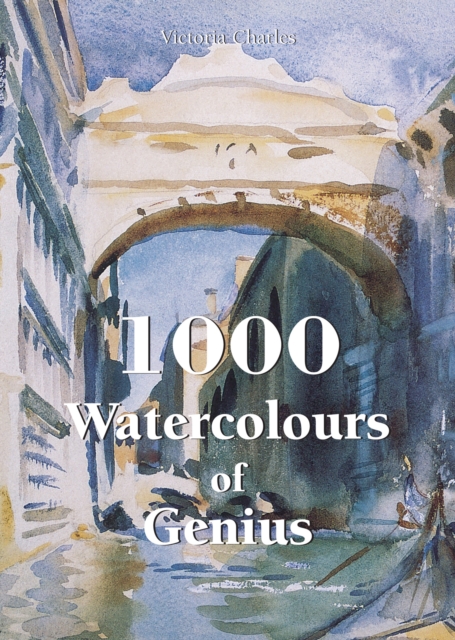
1000 watercolours of genius
The watercolour technique was for a long time the great companion to drawing. A mixture of water and pigments permitting great artistic freedom, it was often employed for preparatory sketches. Albrecht Dürer was one of the first to take advantage of all that watercolour offered. In the 18th century, English artists created of it an autonomous medium freed from academic constraints, an evolution which would have a considerable impact for following generations. Amongst the most famous artists to have produced watercolours, we find Turner, Whistler, Constable, Sargent, Van Gogh, Kandinsky, Klee, and Schiele.
eBook


Characteristics of notational expression by decomposition of Steven Holl’s sketches
PurposeThis study is about the expression of sketches in Steven Holl's architectural works. Holl shares his architectural ideas as watercolors with his staff, and he has established an original notational expression for the design process. This study investigates the elements of sketches as a notation method and examines the timeline changes.Design/methodology/approachClassification will be conducted using KJ method (Kawakita Jiro method), a method for organizing information developed by the Japanese cultural anthropologist Kawakita Jiro. Using the KJ method, this study compiled a list as a table about the pictures, letters, etc. in the sketches and grouped them together in the same attributes. The attributes that were grouped together were identified as elements of the sketches.FindingsAs a result, in the early 1970s, Holl used only line drawings for sketches, but since the 1980s, watercolor sketches have been increasingly used. Extracting the elements of sketches, it can divide them into drawing and describing expressions and classify them into three main types of pictorial expressions: Overview, Plan and Concept.Originality/valueThis study has shown that the closer the sketches were to the present, the more they combined elements of a more complex sketch with letters and symbols as well as pictorial expressions. This is the first study to investigate about sketch representations established as notations by Steven Holl. This study identified the elements that make the architectural concept visible through sketches.
Journal Article

Stone handling in geladas (Theropithecus gelada): implications for spontaneous drawing-like activity as a playful behavior
Stone handling (SH) is a form of solitary object play widely documented in four species of macaques and most recently also in geladas (
Theropithecus gelada
). Here, we describe the SH activity of two mother-reared captive gelada males, who combined different behavioral patterns in a sequence that occasionally led to the production of colored marks on a hard surface. Two playful techniques of different complexity emerged spontaneously in the two subjects. In the
etching and releasing technique,
the stone or pieces of it were repeatedly scraped across either a vertical or horizontal hard surface. In the
grind
and
finger technique
,
additional patterns were recruited such as scratching the stone to produce small debris that the subjects manipulated through a thumb–index finger precision grip. Animals selected preferentially hard surfaces when their SH sessions involved patterns that potentially released color and engaged in such patterns for longer and in a repeated way. This evidence suggests the high motivation of the two males to engage in drawing-like behavior that, as it occurs for other forms of play, can be characterized by its
autotelic self-rewarding
nature. Digital video images related to the article are available at
http://www.momo-p.com/showdetail-e.php?movieid=momo220922tg01a
and
http://www.momo-p.com/showdetail-e.php?movieid=momo220923tg01a
Journal Article

Painting on Paper/Drawings on Canvas: Color and Line in the Work of Robert Ryman
A \"Minimalist who achieved a startling non-Minimalist variety in his paintings even though they were mostly white and usually square\" was the way that artist Robert Ryman (1930—2019) was remembered by Roberta Smith in her obituary published on 9 February 2019.) With this description, she joined the critical discourse on one of the most discrete, yet significant artistic practices of our times. The terms \"white\" and \"square\" are bound to this discourse and form an elemental basis for an oeuvre that is compellingly rich in nuance and complexity. The differences between a painting and a drawing should be easily determined according to the work's support, be it canvas for a painting or paper for a drawing. Yet in Ryman's pictorial realm, the distinction is blurred, and the comparison sheds light on the multiple possibilities of \"white\" and \"square.' In this paper, I propose an anatomy of Ryman's art based on a select group of objects and careful first-hand observation of his modes and materials. I have chosen to examine works that can be described as either paintings or drawings (or sculptures) and to determine the unique attributes of each. These notes emphasize the type of looking to which scholars of drawings are accustomed, which requires our eyes to pause and our bodies to stand still. This is what Ryman's work asks of us.
Journal Article
Colore in Disegno: A Reappraisal of the Use of Color in Fifteenth-century Draftsmanship in the Veneto
Verdigel discusses the use of color in fifteenth-century draftsmanship in Veneto Italy. The relationship between colore and disego in the draftsmanship of Venice and the Veneto Italy has a storied past. Undeniably most fundamental are the remarks made by Giorgio Vasari (1511-1574) suggesting that Venetian artists neither possessed talents as draftsmen nor placed due emphasis on preparatory drawing within their working practices. To some extent, the counterpart to this denigrating perspective is the Dialogo di pittura (1548) of Paolo Pino (1534-1565), which praised the means by which Venetian artists harnessed colore to imbue their paintings with a striking immediacy. Interest in coloristic effects was not restricted to the paintings produced in the Veneto; it was also central to the region's graphic practices. For artists active in Venice and in cities on the terraferma, colored wash was a medium that complemented their use of the pen in delineating their invenzioni.
Journal Article

Artistic Robotic Painting Using the Palette Knife Technique
This paper presents a novel robotic painting system able to create artworks using the palette knife technique. The implementation of this method with a robotic system is particularly challenging, since the robot needs to precisely manipulate the palette knife to pick up and release the color on the canvas. The painting system comprises a 6-DOF collaborative robot, a camera to acquire the information on the color position, and several algorithms for the artistic rendering of the images and for the planning of the trajectories that the robot has to follow. During the painting process the user can modify multiple parameters: both software, for example, stroke position and orientation, and hardware, for example, palette knife inclination and height, to obtain different stroke effects. Finally, the experimental results are discussed by analyzing the artworks painted by the novel robotic system.
Journal Article
Realizing sensations: analyzing Paul Cezanne’s watercolors and assessing their light sensitivity with microfade testing
The exhibition Cézanne Drawing at The Museum of Modern Art (MoMA) brought together an exceptional group of works on paper from public and private collections across the globe. Recognizing the inherent light sensitivity of both the paper and watercolors, controlling, and tracking light exposure was central to the exhibition planning. This concern also led to a systematic study of three watercolors in the museum’s collection, Foliage (1895), Study of Trees (1895), and Mont Sainte-Victoire (1902-06), to characterize the watercolor paints used by Cezanne in these works and their sensitivity to light exposure, and to better understand the condition of the drawings based on the palette’s chemistry. Examination and analysis were undertaken non-invasively and micro-invasively with the following techniques: Infrared Reflectography (IRR), Ultraviolet Fluorescence Photography (UVF), Raman and surface-enhanced Raman (SERS) spectroscopies in addition to X-Ray fluorescence analysis on small spots and large areas using portable (p-XRF) and XRF scanning, respectively. The palette for these three watercolor drawings includes lead white, bone black, vermilion, yellow ochre, chrome yellow, emerald green, viridian, cobalt blue, and synthetic alizarin and carmine lakes. Microfade testing (MFT) was performed on the paper support and spots with each identified pigment, and the data acquired was evaluated both for color change (ΔE00) and rate of color change (∂ΔE00∂t). Together these techniques inform the future display and loan of these and similarly fugitive watercolors in Cézanne’s oeuvre.
Journal Article

Scientific Investigation of Contemporary Pastel Painting by Roberto Sebastian Matta: Characterization of Original Materials through Multispectral Imaging and Spectroscopic Techniques
The conservation of contemporary art often offers unique occasions to study complex multi-material artworks and understand their creative process and esteem degradation distress. The recent diagnostic campaign on the surrealist artwork Perché le vittime vincano (For the victims to win) (1974–75) by the artist Roberto Sebastian Matta allowed us to characterize the original painting materials (pastels on spolvero paper), never investigated and completely unknown, in order to support the imminent restoration. Due to the great dimensions of the artwork and its conservative issues, non-invasive multispectral imaging (HMI) analyses were done to investigate the whole painted surface, mapping and differentiating original materials and possible degradation patterns. Imaging data supported analytical characterization analyses run through elemental (portable X-ray fluorescence spectroscopy and scanning electron microscopy coupled with energy-dispersive spectroscopy) and molecular spectroscopy (Fourier transform infrared and portable µ-Raman spectroscopy) to identify the original artist’s materials and to support the restoration operations. The analysis revealed that the painting materials used by Matta are pastels characterized by modern pigments and dyes, such as Cu-phthalocyanines, chrome orange, titanium and zinc whites, compacted with kaolin without any organic binder or with a possible minuscule amount of gum.
Journal Article