
Catalogue Search | MBRL


Are you sure you want to remove the book from the shelf?

{{itemTitle}}
33
result(s) for
"Color photography -- Digital techniques"
Sort by:

The Art and Technique of Digital Color Correction
How to\" books are a dime a dozen. What makes this book special is that it is also a \"Why\" book. Hullfish sits down with world-class colorists and records not only what they do but why they do it. That's where the magic lies.
\"How\" is the question to ask if you want to become a craftsman. \"Why\" is the question that creates artists. I bought the first edition for \"How\" and came away with a lot of \"Why.\" This edition has lots more of both, with material from several additional world class colorists.
If you want an inside look into the art and craft of the professional colorist there's no better way to do it in book form. Whether you're learning to be a colorist or just want to understand what really happens when you decide something can be \"fixed in post,\" you need to read this book. -Art Adams, cinematographer/educator, ProVideoCoalition.com. This book just keeps getting better with each new edition. Steve Hullfish's approach is designed to teach techniques that transfer to a wide range of popular and accessible color correction tools. The intent is to demystify the process, so readers can learn the concepts and apply them, regardless of whether the software has sliders, wheels or curves. Best of all, Hullfish features extensive tips and tricks from some of the premier colorists in the country, so you can learn from the masters. If you only purchase one book on color correction, this is the essential guide to include in your library. -Oliver Peters, Oliver Peters Peters Post Production Services, LLC A terrific and much-needed book for anybody serious about digital color correction. Starting with the basics, it helps the reader work through a series of specific, well-illustrated examples, covering all the major software applications, and supports the text with insightful comments from prominent working colorists. All in all, it's essential reading for anyone who wants to improve their skills in this rapidly changing field. -Steve Cohen, editor, Emmy and ACE Eddie winner, author of Avid Agility.
eBook
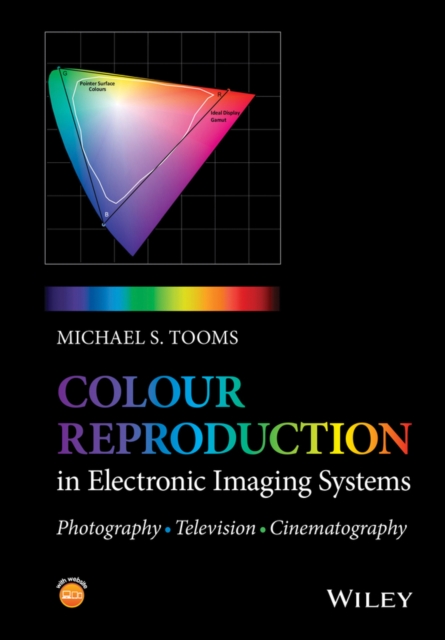
Colour Reproduction in Electronic Imaging Systems
With the move of cinema away from film, the adoption of electronic-based production throughout all media is now complete. In order to exploit its advantages, the accurate definition, measurement and reproduction of colour has become more important than ever to achieve the best fidelity of colour reproduction. This book is concerned with providing readers with all they need to know about colour: how it is perceived and described, how it is measured and generated and how it is reproduced in colour systems. It serves as both a tutorial and a reference book, defining what we mean by colour and providing an explanation of the proper derivation of chromaticity charts and through to the means of ensuring accurate colour management. Key Features: * Addresses important theory and common misconceptions in colour science and reproduction, from the perception and characteristics of colour to the practicalities of its rendering in the fields of television, photography and cinematography * Offers a clear treatment of the CIE chromaticity charts and their related calculations, supporting discussion on system primaries, their colour gamuts and the derivation of their contingent red, green and blue camera spectral sensitivities * Reviews the next state-of-the-art developments in colour reproduction beyond current solutions, from Ultra-High Definition Television for the 2020s to laser projectors with unprecedented colour range for the digital cinema * Includes a companion website hosting a workbook consisting of invaluable macro-enabled data worksheets; JPEG files containing images referred to in the book, including colour bars and grey scale charts to establish perceived contrast range under different environmental conditions; and, guides to both the workbook and JPEG files
eBook
Digital Color
In this book the authors identify the basic concepts and recent advances in the acquisition, perception, coding and rendering of color. The fundamental aspects related to the science of colorimetry in relation to physiology (the human visual system) are addressed, as are constancy and color appearance. It also addresses the more technical aspects related to sensors and the color management screen. Particular attention is paid to the notion of color rendering in computer graphics. Beyond color, the authors also look at coding, compression, protection and quality of color images and videos. Individual chapters focus on the LMS specification, color constancy, color appearance models, rendering in synthetic image generation, image sensor technologies, image compression, and quality and secure color imaging. Ideal for researchers, engineers, Master's and PhD students, Digital Color: Acquisition, Perception, Encoding and Rendering offers a state of the art on all the scientific and technical issues raised by the different stages of the digital color process – acquisition, analysis and processing.
eBook
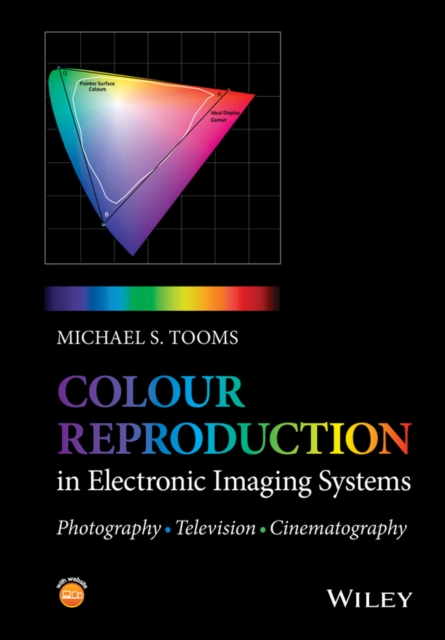
Colour reproduction in electronic imaging systems: photography, television, cinema
With the move of cinema away from film, the adoption of electronic-based production throughout all media is now complete. In order to exploit its advantages, the accurate definition, measurement and reproduction of colour has become more important than ever to achieve the best fidelity of colour reproduction. This book is concerned with providing readers with all they need to know about colour: how it is perceived and described, how it is measured and generated and how it is reproduced in colour systems. It serves as both a tutorial and a reference book, defining what we mean by colour and providing an explanation of the proper derivation of chromaticity charts and through to the means of ensuring accurate colour management. Key Features: Addresses important theory and common misconceptions in colour science and reproduction, from the perception and characteristics of colour to the practicalities of its rendering in the fields of television, photography and cinematography Offers a clear treatment of the CIE chromaticity charts and their related calculations, supporting discussion on system primaries, their colour gamuts and the derivation of their contingent red, green and blue camera spectral sensitivities Reviews the next state-of-the-art developments in colour reproduction beyond current solutions, from Ultra-High Definition Television for the 2020s to laser projectors with unprecedented colour range for the digital cinema Includes a companion website hosting a workbook consisting of invaluable macro-enabled data worksheets; JPEG files containing images referred to in the book, including colour bars and grey scale charts to establish perceived contrast range under different environmental conditions; and, guides to both the workbook and JPEG files
eBook

Induction, Probability, and Confirmation
Induction, Probability, and Confirmation was first published in 1975. This is Volume VI of the Minnesota Studies in the Philosophy of Science, a series edited by Herbert Feigl and Grover Maxwell for the Minnesota Center for Philosophy of Science, of which Professor Maxwell was the director and Professor Feigl, Regents’ Professor Emeritus of the University of Minnesota. The main inspiration for the volume came from a Center conference on the confirmation theory, and most of the essays were contributed by the participants. However, many of them were written considerably more recently, and others have been extensively augmented or revised. The book begins with essays which discuss general and fundamental problems of confirmation theory and its foundations, and these are followed by topics of a more specific or a more specialized nature. There are, in all, twenty essays by eighteen leaders in the field. They consider new approaches to such matters as the foundations of confirmation theory, the growth of scientific knowledge, and applications and interpretations of probability theory. In addition to the contributions by philosophers of science a physician, Jeffrey Bub, contributes a substantial article, and there is a monograph-length essay by a psychologist, Walter Weimer. The other contributors are Wesley C. Salmon, Richard C. Jeffrey, Mary Hesse, Grover Maxwell, Paul Teller, Abner Shimony, Ronald N. Giere, Henry Kyburg, David Miller, William H. Hanson, Tom Settle, Peter Caws, Brian Skyrms, and Robert M. Anderson, Jr.
eBook

Clinical comparison of different color selection methods with digital photographs using a button technique
Objectives
We aimed to compare the intra- and interobserver agreements of postgraduate students in selecting tooth color using various conventional or digital tools.
Methods
Color selection was performed by four postgraduate students. Prior to the study, the students attended a lecture for calibration. Tooth color was assessed on the maxillary central incisors of 32 healthy patients. Visual color selection was performed using VITA Classical (VC) and VITA 3D (V3D) color scales. Digital color selection was performed using VITA Easyshade V and Canon D80 digital camera. The enamel (incisal) and dentin (cervical) from an anterior composite resin set were temporarily adhered to the facial surface of the incisor using the button technique. Digital photographs were captured and color selection was performed. Enamel (E1) and dentin (D1) colors were created based on the original photographs. The enamel color (E2) was selected by converting the photographs to black and white. The dentin colors (D2) were chosen by increasing the contrast of the images. Data were statistically analyzed using the intraclass correlation coefficient (ICC) test.
Results
Poor or moderate agreement was observed between the VC-V3D, VC-VE, and V3D-VE in terms of intraobserver agreements. Conversely, the intraobserver agreements between E1 and E2 were good for all four observers. The ICC results for the interobserver agreement were good for evaluations of photographs alone, whereas the agreement was poor for the other methods.
Conclusions
Color selection in the aesthetic region can be safely performed using the button technique based on original digital photographs.
Clinical relevance
Digital dental photography is important in improving the accuracy of clinical tooth color selection.
Journal Article

Evaluation of grain yield based on digital images of rice canopy
Background
Rice canopy changes are associated with changes in the red light (R), green light (G), and blue light (B) value parameters of digital images. To rapidly diagnose the responses of rice to nitrogen (N) fertilizer application and planting density, a simple model based on digital images was developed for predicting and evaluating rice yield.
Results
N application rate and planting density had significant effects on rice yield. Rice yield first increased and then decreased with increasing of N rates, while the rice yield always increased significantly with increasing planting density. The normalized redness intensity (NRI), normalized greenness intensity (NGI), and normalized blueness intensity (NBI) values of the rice canopy varied among stages; however, they were primarily affected by N fertilizer rates, while planting density had no significant effects. Furthermore, the significant relationships of grain yield with NRI and NBI at the late filling stage could be fitted by quadratic equations, but there was no significant relationship observed between grain yield and NGI across all stages. In addition, a field validation experiment showed that the predicted yield based on the fitted quadratic equations was consistent with the measured yield.
Conclusion
The NRI, NGI, and NBI values of rice canopy were mainly affected by N fertilizer rates, while the planting density had no significant effect. The significant relationships between grain yield with NRI and NBI at the late filling stage could be fitted by quadratic equations. Therefore, the canopy NRI and NBI at the late filling stage as measured by digital photography could be used to predict grain yield in southern China.
Journal Article

Study on the Color Characteristics of Reproduced Oil Paintings Using a Machine Learning Algorithm
Accurate recording of the colors in cultural heritage is essential, where color data is crucial for various applications, including conservation, restoration, research, analysis, and archiving. Recently, advancements in digital color reproduction techniques have emerged, enabling precise documentation of colors using digital photography and image processing. This approach reproduces colors that closely match those of the cultural heritage object by correcting the image and profiling the camera. Notably, the correction process utilizes the device-independent CIE L*a*b* color space to ensure that the reproduced colors are consistent across different devices. Moreover, digital images consist of pixels, which facilitate data-driven statistical analysis. This study focused on digital color reproduction for Korean modern oil paintings, following a systematic process that included photography, digital color correction, and digital color space configuration. To enhance the reliability of color reproduction, it compared the spectral color measurement results of a color chart with the color differences observed in the reproduced images. The study then plotted the CIE L*a*b* color distribution of the images in a three-dimensional graph, where approximately 30 million pixels were classified using the K-means machine learning algorithm. Based on these classification results, representative colors were extracted, along with various analytical outcomes, such as the number of pixels, representative CIE L*a*b* color coordinates, and the percentage composition of each representative color. This research enabled oil paintings to be documented with accurate colors, and the resultant image data were used to extract representative colors using a machine learning algorithm. This method, wherein representative colors are derived through color reproduction, offers valuable insights into the color usage patterns and chromatic painting techniques of an artist, and even the authenticity of artworks.
Journal Article
Two-fold red excess (TREx): a simple and novel digital color index that enables non-invasive real-time monitoring of green-leaved as well as anthocyanin-rich crops
Background
Digital color indices provide a reliable means for assessing plant status by enabling real-time estimation of chlorophyll (Chl) content, and are thus adopted widely for crop monitoring. However, as all prevalent leaf color indices used for this purpose have been developed using green-leaved plants, they do not perform reliably for anthocyanin (Anth)-rich red-leaved varieties. Hence, the present study investigates digital color indices for six types of leafy vegetables with different levels of Anth to identify congruent trends that could be implemented universally for non-invasive crop monitoring irrespective of species and leaf Anth content. For this, datasets from three digital color spaces, viz., RGB (Red, Green, Blue), HSV (Hue, Saturation, Value), and
L*a*b*
(Lightness, Redness-greenness, Yellowness-blueness), as well as various derived plant color indices were compared with Anth/Chl ratio and SPAD Chl meter readings of
n
= 320 leaf samples.
Results
Logarithmic decline of G/R, G-minus-R, and Augmented Green-Red Index (AGRI) with increasing Anth/Chl ratio (
R
2
> 0.8) revealed that relative Anth content affected digital color profile markedly by shifting the greenness-redness balance until the Anth/Chl ratio reached a certain threshold. Further, while most digital color features and indices presented abrupt shifts between Anth-rich and green-leaved samples, the proposed color index Two-fold Red Excess (TREx) did not exhibit any deviation due to leaf Anth content and showed better correlation with SPAD readings (
R
2
= 0.855) than all other color features and vegetation indices.
Conclusion
The present study provides the first in-depth assessment of variations in RGB-based digital color indices due to high leaf Anth contents, and uses the data for Anth-rich as well as green-leaved crops belonging to different species to formulate a universal digital color index TREx that can be used as a reliable alternative to handheld Chl meters for rapid high-throughput monitoring of green-leaved as well as red-leaved crops.
Journal Article

Extraction of Color Information and Visualization of Color Differences between Digital Images through Pixel-by-Pixel Color-Difference Mapping
A novel method of extracting color information on a pixel-by-pixel basis or by the average of the regions of interest (ROIs) from digital images is proposed and demonstrated using newly developed and customized image-processing/analysis software (PicMan). For quantitative and statistical analyses of color, the newly developed software can be used for digital archive or digital forensic applications in various fields. The color differences between unrelated, similar, or identical scenes and or objects were quantified in various formats of desired color spaces such as RGB, HSV, XYZ, CIE L*a*b*, Munsell color, and hexadecimal color values. The color differences were visualized as images of pixel-by-pixel mapping of the ΔL*, Δa*, Δb*, ΔERGB, ΔEHSV, and ΔE*L*a*b* values and block comparison images of desired block sizes. Various color analyses and color-difference mapping examples using an aged and damaged oil painting before and after restoration were introduced. The effects of the image file format differences between PNG and JPG on color distortion are demonstrated by statistics and pixel-by-pixel color-difference mapping. A portrait of Chuk-ki Yoo (兪拓基, 1691–1767) on silk from the 18th century from Korea was used for further color analysis for whole and selected areas. A collector’s ownership stamp of Chuk-ki Yoo stamped in red ink on the text areas in one of his book collections was extracted using the image-processing software and superimposed on the original image as a visualization enhancement example. Image analysis, processing, modification, enhancement, and highlighting, as well as statistical color analysis of digital images in most formats, can conveniently and efficiently be performed using one piece of dedicated software (PicMan). The pixel-by-pixel color information extraction and color comparison technique can be very effective for a variety of applications in art and cultural heritage objects.
Journal Article