
Catalogue Search | MBRL


Are you sure you want to remove the book from the shelf?

{{itemTitle}}
5,018
result(s) for
"Color photography."
Sort by:


Gabriel Lippmann's Colour Photography
Physicist Gabriel Lippmann's (1845–1921) photographic process is one of the oldest methods for producing colour photographs. So why do the achievements of this 1908 Nobel laureate remain mostly unknown outside niche circles? Using the centenary of Lippmann’s death as an opportunity to reflect upon his scientific, photographic, and cultural legacy, this book is the first to explore his interferential colour photography. Initially disclosed in 1891, the emergence of this medium is considered here through three shaping forces: science, media, and museums. A group of international scholars reassess Lippmann’s reception in the history of science, where he is most recognised, by going well beyond his endeavours in France and delving into the complexity of his colour photography as a challenge to various historiographies. Moreover, they analyse colour photographs as optical media, thus pluralising Lippmann photography's ties to art, cultural and imperial history, as well as media archaeology. The contributors also focus on the interferential plate as a material object in need of both preservation and exhibition, one that continues to fascinate contemporary analogue photographers. This volume allows readers to get to know Lippmann, grasp the interdisciplinary complexity of his colourful work, and ultimately expand his place in the history of photography.
eBook

Color
'Color' is Ben Hassett's first photographic monograph and it brings together the editorial imagery he is known for with previously unpublished pictures and unseen personal work. In a lyrical journey through this artist's archive, Color establishes a link between his editorial magazine work as a beauty photographer, and the vast private and until now hidden catalogue of still life and landscape works. Designed by Fabien Baron with a text by Charlotte Cotton this very special collection of photographs will be printed with UV inks allowing the great range of colors so important to this collection. The book is a limited edition of 1,000 hand numbered copies.
Book

The Art and Technique of Digital Color Correction
How to\" books are a dime a dozen. What makes this book special is that it is also a \"Why\" book. Hullfish sits down with world-class colorists and records not only what they do but why they do it. That's where the magic lies.
\"How\" is the question to ask if you want to become a craftsman. \"Why\" is the question that creates artists. I bought the first edition for \"How\" and came away with a lot of \"Why.\" This edition has lots more of both, with material from several additional world class colorists.
If you want an inside look into the art and craft of the professional colorist there's no better way to do it in book form. Whether you're learning to be a colorist or just want to understand what really happens when you decide something can be \"fixed in post,\" you need to read this book. -Art Adams, cinematographer/educator, ProVideoCoalition.com. This book just keeps getting better with each new edition. Steve Hullfish's approach is designed to teach techniques that transfer to a wide range of popular and accessible color correction tools. The intent is to demystify the process, so readers can learn the concepts and apply them, regardless of whether the software has sliders, wheels or curves. Best of all, Hullfish features extensive tips and tricks from some of the premier colorists in the country, so you can learn from the masters. If you only purchase one book on color correction, this is the essential guide to include in your library. -Oliver Peters, Oliver Peters Peters Post Production Services, LLC A terrific and much-needed book for anybody serious about digital color correction. Starting with the basics, it helps the reader work through a series of specific, well-illustrated examples, covering all the major software applications, and supports the text with insightful comments from prominent working colorists. All in all, it's essential reading for anyone who wants to improve their skills in this rapidly changing field. -Steve Cohen, editor, Emmy and ACE Eddie winner, author of Avid Agility.
eBook

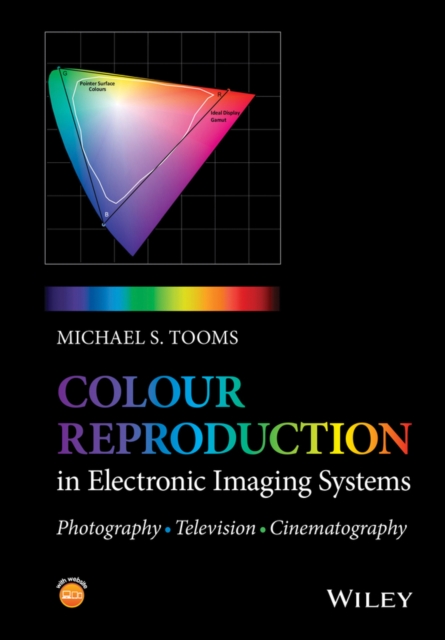
Colour reproduction in electronic imaging systems : photography, television, cinematography
With the move of cinema away from film, the adoption of electronic-based production throughout all media is now complete. In order to exploit its advantages, the accurate definition, measurement and reproduction of colour has become more important than ever to achieve the best fidelity of colour reproduction.
This book is concerned with providing readers with all they need to know about colour: how it is perceived and described, how it is measured and generated and how it is reproduced in colour systems. It serves as both a tutorial and a reference book, defining what we mean by colour and providing an explanation of the proper derivation of chromaticity charts and through to the means of ensuring accurate colour management.
Key Features:
* Addresses important theory and common misconceptions in colour science and reproduction, from the perception and characteristics of colour to the practicalities of its rendering in the fields of television, photography and cinematography
* Offers a clear treatment of the CIE chromaticity charts and their related calculations, supporting discussion on system primaries, their colour gamuts and the derivation of their contingent red, green and blue camera spectral sensitivities
* Reviews the next state-of-the-art developments in colour reproduction beyond current solutions, from Ultra-High Definition Television for the 2020s to laser projectors with unprecedented colour range for the digital cinema
* Includes a companion website hosting a workbook consisting of invaluable macro-enabled data worksheets; JPEG files containing images referred to in the book, including colour bars and grey scale charts to establish perceived contrast range under different environmental conditions; and, guides to both the workbook and JPEG files
eBook


On the Identification of Colour Photographic Processes
To determine the best investigations for restoration and storage procedures, a visual inspection can provide a preliminary screen for the colour processes used to print the photographs. The high costs of the instruments required to follow the protocols present in the literature make these methodologies challenging to reproduce, especially for institutions with limited resources. Hence, a cheap and advanced investigation protocol is needed. This work proposes a protocol that, besides having this characteristic, observes the degradation of the material as a factor in identifying printing processes. The procedure proposed is composed of four steps: I. print observation: a preliminary examination of the object; II. surface observation: an examination of the surface; III. magnified observation: examination with microscope; and IV. decay and damage: alteration and degradation analysis. A set of photographs from the 1960s to the 2000s were analysed following the proposed protocol. From these prints, it was possible to observe the typical forms of degradation deriving from inappropriate conservation and determine the different materials and formats, proving the protocol’s effectiveness and easy applicability.In addition, the scientific community may access this protocol through the open-access website Colour photographic processes-Preliminary identification by visual exam.
Journal Article
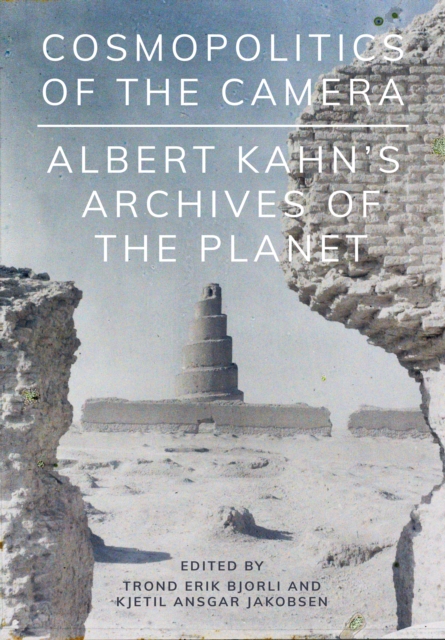
Cosmopolitics of the Camera
An in-depth intellectual and historical analysis of Les Archives de la Planète, Albert Kahn's collection of early colour photography and documentary film. The book examines the extraordinary context of Kahn's work, considers archival theory and visual culture, and investigates the cosmopolitan strategies of Kahn and associates, e.g. Henri Bergson.
eBook