
Catalogue Search | MBRL


Are you sure you want to remove the book from the shelf?

{{itemTitle}}
21
result(s) for
"Colorado Description and travel."
Sort by:

Fodor's Colorado
Written by locals, Fodor's Colorado is the perfect guidebook for those looking for insider tips to make the most out their visit to Denver, Boulder, Vail, Aspen Rocky Mountain National Park and beyond. Complete with detailed maps and concise descriptions, this Colorado travel guide will help you plan your trip with ease. Join Fodor's in exploring one of the most exciting states in the United States.
Book

Vacationland
Winner of the Western Writers of America 2014 Spur Award for Best Western Nonfiction, Contemporary
Mention the Colorado high country today and vacation imagery springs immediately to mind: mountain scenery, camping, hiking, skiing, and world-renowned resorts like Aspen and Vail. But not so long ago, the high country was isolated and little visited. Vacationland tells the story of the region's dramatic transformation in the decades after World War II, when a loose coalition of tourist boosters fashioned alluring images of nature in the high country and a multitude of local, state, and federal actors built the infrastructure for high-volume tourism: ski mountains, stocked trout streams, motels, resort villages, and highway improvements that culminated in an entirely new corridor through the Rockies, Interstate 70.
Vacationland is more than just the tale of one tourist region. It is a case study of how the consumerism of the postwar years rearranged landscapes and revolutionized American environmental attitudes. Postwar tourists pioneered new ways of relating to nature, forging surprisingly strong personal connections to their landscapes of leisure and in many cases reinventing their lifestyles and identities to make vacationland their permanent home. They sparked not just a population boom in popular tourist destinations like Colorado but also a new kind of environmental politics, as they demanded protection for the aesthetic and recreational qualities of place that promoters had sold them. Those demands energized the American environmental movement-but also gave it blind spots that still plague it today.
Peopled with colorful characters, richly evocative of the Rocky Mountain landscape, Vacationland forces us to consider how profoundly tourism changed Colorado and America and to grapple with both the potential and the problems of our familiar ways of relating to environment, nature, and place.
eBook

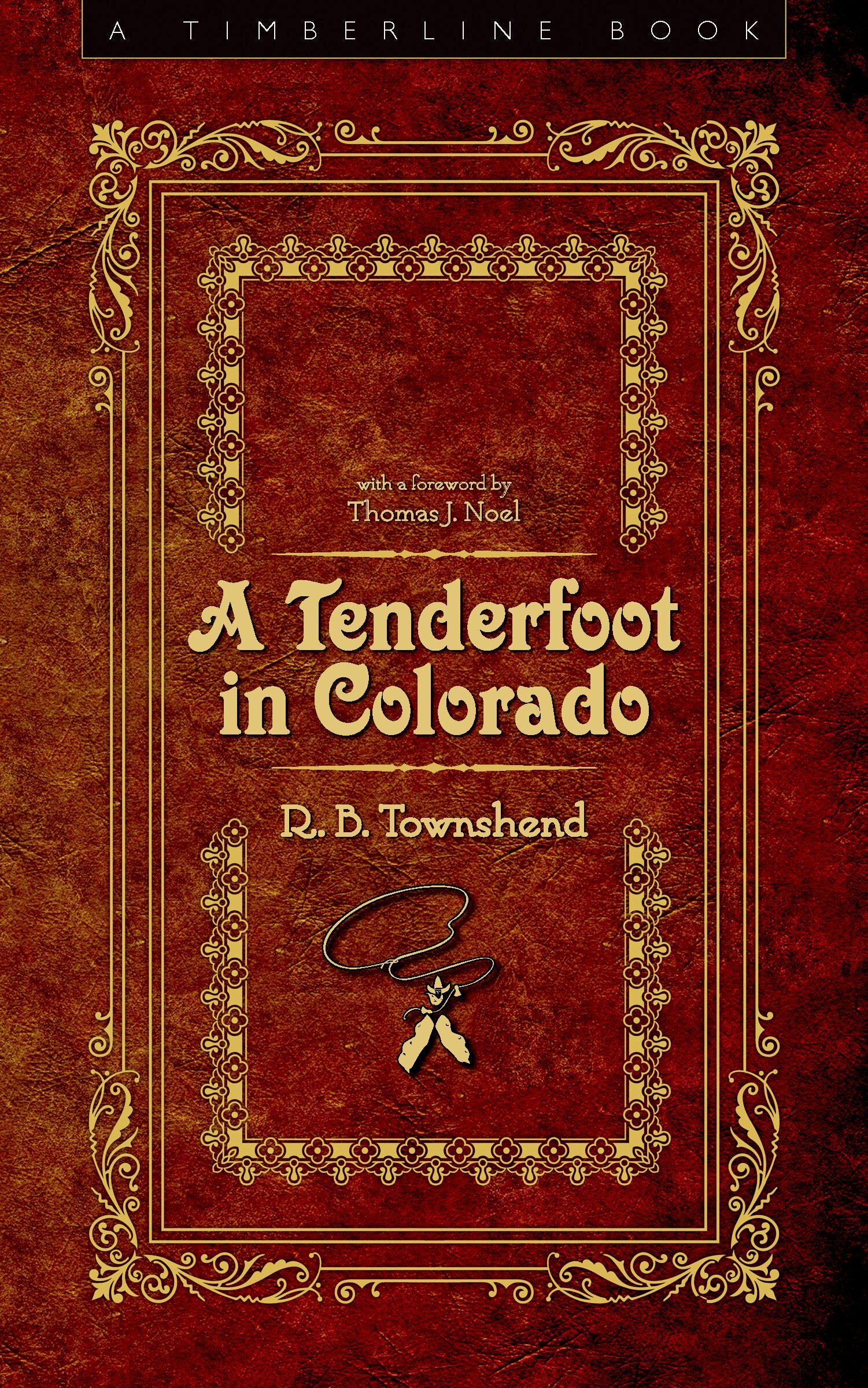
A Tenderfoot in Colorado
Now back in print,A Tenderfoot in Coloradois R. B. Townshend's classic account of his time in the wild frontier territory known as Colorado. Townshend arrived in the Rockies in 1869, fresh from Cambridge, England, with $300 in his pockets.
He found friends among some of Colorado's more colorful characters, people who taught him much about life on the frontier. Jake Chisolm taught him how to shoot after rescuing him from two men preparing to skin him at poker. Wild Bill of Colorado taught him the meaning of \"the drop\" and warned him against wearing a gun in town unless he wanted trouble. Capturing the Western vernacular more accurately than any other writer, Townshend includes vivid details of life in the West, where he killed a buffalo, prospected for gold, and was present for the official government conference with the Ute Indians after gold was discovered on their lands.
eBook

Major impossible
An account of John Wesley Powell's expedition down the Colorado River through the Grand Canyon.
Book


River of Contrasts
Writer and artist Margie Crisp has traveled the length of Texas’ Colorado River, which rises in Dawson County, south of Lubbock, and flows 860 miles southeast across the state to its mouth on the Gulf of Mexico at Matagorda Bay. Echoing the truth of Heraclitus’s ancient dictum, the river’s character changes dramatically from its dusty headwaters on the High Plains to its meandering presence on the coastal prairie. The Colorado is the longest river with both its source and its mouth in Texas, and its water, from beginning to end, provides for the state’s agricultural, municipal, and recreational needs.
As Crisp notes, the Colorado River is perhaps most frequently associated with its middle reaches in the Hill Country, where it has been dammed to create the six reservoirs known as the Highland Lakes. Following Crisp as she explores the river, sometimes with her fisherman husband, readers meet the river’s denizens—animal, plant, and human—and learn something about the natural history, the politics, and those who influence the fate of the river and the water it carries.
Those who live intimately with the natural landscape inevitably formulate emotional responses to their surroundings, and the people living on or near the Colorado River are no exception. Crisp’s own loving tribute to the river and its inhabitants is enhanced by the exquisite art she has created for this book. Her photographs and maps round out the useful and beautiful accompaniments to this thoughtful portrait of one of Texas’ most beloved rivers.
eBook

Damming Grand Canyon
In 1923, America paid close attention, via special radio broadcasts, newspaper headlines, and cover stories in popular magazines, as a government party descended the Colorado to survey Grand Canyon. Fifty years after John Wesley Powell's journey, the canyon still had an aura of mystery and extreme danger. At one point, the party was thought lost in a flood. Something important besides adventure was going on. Led by Claude Birdseye and including colorful characters such as early river-runner Emery Kolb, popular writer Lewis Freeman, and hydraulic engineer Eugene La Rue, the expedition not only made the first accurate survey of the river gorge but sought to decide the canyon's fate. The primary goal was to determine the best places to dam the Grand. With Boulder Dam not yet built, the USGS, especially La Rue, contested with the Bureau of Reclamation over how best to develop the Colorado River. The survey party played a major role in what was known and thought about Grand Canyon. The authors weave a narrative from the party's firsthand accounts and frame it with a thorough history of water politics and development and the Colorado River. The recommended dams were not built, but the survey both provided base data that stood the test of time and helped define Grand Canyon in the popular imagination.
eBook

The Rocky Mountain National Park Reader
Writer Wallace Stegner once wrote that “No place is a place until things that have happened in it are remembered.” This collection celebrates one of America’s most loved places, Rocky Mountain National Park, which marks its 100th birthday in 2015. Engagement with place and the events that loom large in park history are the underlying themes that connect the thirty-three selections that make up this anthology. Representative both in subject and approach, the selections reach back to Arapaho and pioneer times before the park was established and move forward to span its entire first century. The voices that speak to us are distinctive: among them are Irish sportsman Windham Thomas Wyndham-Quin, the Fourth Earl of Dunraven; British travel writer Isabella Bird; mountaineer Frederick Chapin; naturalist Enos Mills; iconic ranger Jack Moomaw and his fictional counterpart, Dorr Yeager’s Bob Flame; and contemporary nature writers Anne Zwinger and SueEllen Campbell—to mention but a few. Some tell us about the past, recalling moments of personal triumph and tragedy. Other voices are quieter; some are more polemic. All capture and share a part of the national treasure that is Rocky Mountain National Park. The first of its kind, this original collection is a rich literary and historical compendium of the best that has been written about Rocky Mountain National Park. As such it provides an indispensable introduction to the nation’s twelfth national park. Part of the National Park Reader series, edited by Lance Newman and David Stanley
eBook