
Catalogue Search | MBRL


Are you sure you want to remove the book from the shelf?

{{itemTitle}}
16,579
result(s) for
"Columbus, Christopher."
Sort by:


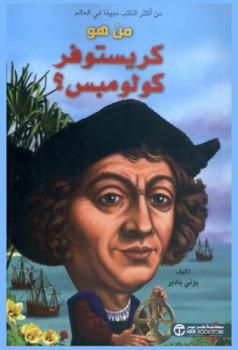

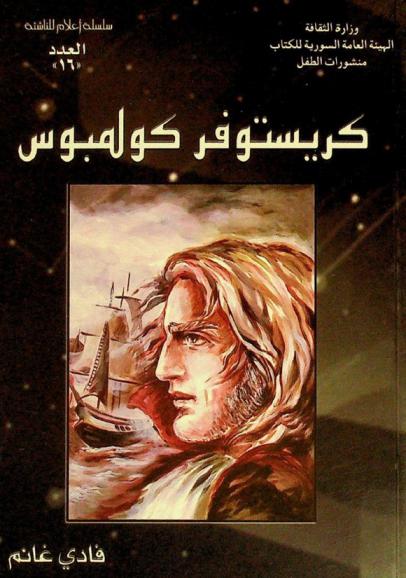

An Ecofeminist Perspective of the Alternate-History Novel Pastwatch: The Redemption of Christopher Columbus
Orson Scott Card’s Pastwatch: The Redemption of Christopher Columbus is an interesting work of fiction that belongs to the genre of Alternate History, which is a subgenre of speculative fiction. The novel poses the question of: “what would have happened to the world if the Indigenous American tribes had been stronger and had made coalitions with each other, instead of being conquered and defeated by European forces?” This paper reads the selected novel from the Ecofeminist point of view, exploring various issues that are relevant to the theory of Ecofeminism. The analysis conducted in this paper tackles the roles women perform when trying to save their world; the connections between women and nature, and how patriarchal cultures treat both of them; the role technology plays in the times of natural disasters and how it can make the world a better place for women; whether or not technology is a tool in the hands of the White savior; and the empowerment of the Indigenous Americans or lack thereof.
Journal Article

A picture book of Christopher Columbus
A brief account of the life and accomplishments of Christopher Columbus.
BOOK

Mythical Indies and Columbus's Apocalyptic Letter
With his Letter of 1493 to the court of Spain, Christopher Columbus heralded his first voyage to the present-day Americas, creating visions that seduced the European imagination and birthing a fascination with those \"new\" lands and their inhabitants that continues today. Columbus's epistolary announcement travelled from country to country in a late-medieval media event -- and the rest, as has been observed, is history. The Letter has long been the object of speculation concerning its authorship and intention: British historian Cecil Jane questions whether Columbus could read and write prior to the first voyage while Demetrio Ramos argues that King Ferdinand and a minister composed the Letter and had it printed in the Spanish folio. The Letter has figured in studies of Spanish Imperialism and of Discovery and Colonial period history, but it also offers insights into Columbus's passions and motives as he reinvents himself and retails his vision of Peter Martyr's Novus orbis to men and women for whom Columbus was as unknown as the places he claimed to have visited. The central feature of the book is its annotated variorum edition of the Spanish Letter, together with an annotated English translation and word and name glossaries. A list of terms from early print-period and manuscript cultures supports those critical discussions. In the context of her text-based reading, the author addresses earlier critical perspectives on the Letter, explores foundational questions about its composition, publication and aims, and proposes a theory of authorship grounded in text, linguistics, discourse, and culture.
eBook

Global coloniality and the challenges of creating African futures
Can Africans create African futures within a modern world system structured by global coloniality? Global coloniality is a modern global power structure that has been in place since the dawn of Euro-North American-centric modernity. This modernity is genealogically and figuratively traceable to 1492 when Christopher Columbus claimed to have discovered a 'New World'. It commenced with enslavement of black people and culminated in global coloniality. Today global coloniality operates as an invisible power matrix that is shaping and sustaining asymmetrical power relations between the Global North and the Global South. Even the current global power transformations which have enabled the re-emergence of a Sinocentric economic power and de-Westernisation processes including the rise of South-South power blocs such as BRICS, do not mean that the modern world system has now undergone genuine decolonisation and deimperialisation to the extent of being amenable to the creation of other futures. Global coloniality continues to frustrate decolonial initiatives aimed at creating postcolonial futures free from coloniality. The article posits that global coloniality remains one of the most important modern power structures that constrain and limit African agency. To support this proposition, the article delves deeper into an analysis of the architecture and configuration of current asymmetrical global power structures; unmasks imperial/ colonial reason embedded in Euro-North American-centric epistemology as well as the problem of Eurocentrism; and unpacks the Cartesian notions of being and its relegation of African subjectivity to a perpetual state of becoming. Within this context, Africans have emerged as fighting subjects for a new world order that is decolonised, deimperialised, open to the emergence of new humanism and African futures.
Journal Article