
Catalogue Search | MBRL


Are you sure you want to remove the book from the shelf?

{{itemTitle}}
91
result(s) for
"Combustibles fossiles."
Sort by:

Economic development in the Gulf Cooperation Council countries : from rentier states to diversified economies
This book delves into the economic development of the six Gulf Cooperation Council (GCC) countries. Since the 1960s, the GCC states have harnessed their potential to exploit the wealth accrued from the oil boom to build their infrastructure and grow their economies. However, the high level of dependency on oil as the primary source feeding their output made their economies volatile and vulnerable to fluctuations in the global oil prices. Moreover, the plunge in oil prices and the threat of depletion of this natural resource pose serious challenges to the GCC countries. Consequently, the GCC governments have realized the importance of diversifying their economies following the need to move away from reliance on hydrocarbon. This book contributes to the theoretical literature by enriching the debate on the transition of the GCC countries from rentier states to diversified economies. It helps students and scholars understand this transformation with an expansive comprehension of the contemporary challenges facing the region, as well as outlining prospects for the future.
Book
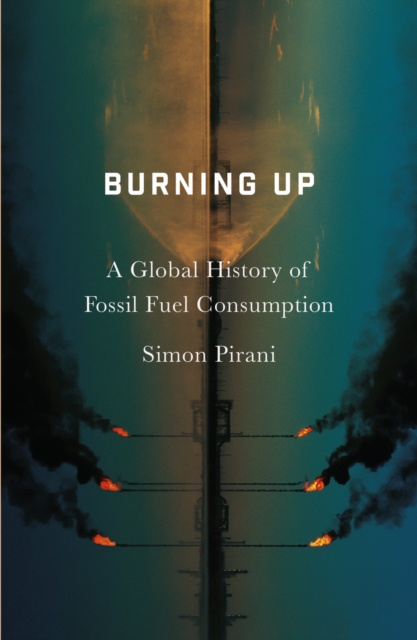
Burning up
Coal, gas and oil have been capitalism's main fuels since the industrial revolution. And yet, of all the fossil fuels ever consumed, more than half were burned in the last 50 years. Most alarming of all, fossil fuel consumption has grown fastest in the last three decades, since scientists confirmed that it is the main cause of potentially devastating global warming. In Burning Up, Simon Pirani recounts the history of fossil fuels' relentless rise since the mid twentieth century. Dispelling explanations foregrounding Western consumerism, and arguments that population growth is the main problem, Pirani shows how fossil fuels are consumed through technological, social and economic systems, and that these systems must change. This is a major contribution to understanding the greatest crisis of our time.
eBook
Chemistry of Fossil Fuels and Biofuels
Focusing on today's major fuel resources – ethanol, biodiesel, wood, natural gas, petroleum products and coal – this book discusses the formation, composition and properties of the fuels, and the ways in which they are processed for commercial use. It examines the origin of fuels through natural processes such as photosynthesis and the geological transformation of ancient plant material; the relationships between their composition, molecular structures and physical properties; and the various processes by which they are converted or refined into the fuel products appearing on today's market. Fundamental chemical aspects such as catalysis and the behaviour of reactive intermediates are presented and global warming and anthropogenic carbon dioxide emissions are also discussed. The book is ideal for graduate students in energy engineering, chemical engineering, mechanical engineering and chemistry, as well as professional scientists and engineers.
eBook

Education as a Petro-Pipeline: Beyond the Limits of Education Research in the Face of Climate Change
Considering the key cause of climate-harming carbon emissions is the increased use of fossil fuels, we might expect research in education to engage in petrocriticism—a critical way of reading the world that deconstructs how fossil-fuelled cultural expectations and practices, or “petroculture,” functions in education. To trace the intersection of fossil fuels and education, this article conducts a systematic literature review of both existing and emerging scholarship, engaging in a petrocritical reading of research themes to reveal the extent to which petroculture is naturalized and/or confronted. By examining both dominant research patterns and the notable silences, we conclude by making recommendations for how education scholarship can respond to climate science and contribute to a more livable future through research that takes up (a) petrocriticism, (b) mitigation and decarbonization, and (c) transformation toward alternatives.
Journal Article

Carbon nation : fossil fuels in the making of American culture
\"Fossil fuels don't simply impact our ability to commute to and from work. They condition our sensory lives, our erotic experiences, and our aesthetics; they structure what we assume to be normal and healthy; and they prop up a distinctly modern bargain with nature that allows populations and economies to grow wildly beyond the older and more clearly understood limits of the organic economy. Carbon Nation ranges across film and literary studies, ecology, politics, journalism, and art history to chart the course by which prehistoric carbon calories entered into the American economy and body. It reveals how fossil fuels remade our ways of being, knowing, and sensing in the world while examining how different classes, races, sexes, and conditions learned to embrace and navigate the material manifestations and cultural potential of these new prehistoric carbons. The ecological roots of modern America are introduced in the first half of the book where the author shows how fossil fuels revolutionized the nation's material wealth and carrying capacity. The book then demonstrates how this eager embrace of fossil fuels went hand in hand with both a deliberate and an unconscious suppression of that dependency across social, spatial, symbolic, and psychic domains. In the works of Eugene O'Neill, Upton Sinclair, Sherwood Anderson, and Stephen Crane, the author reveals how Americans' material dependencies on prehistoric carbon were systematically buried within modernist narratives of progress, consumption, and unbridled growth; while in films like Charlie Chaplin's Modern Times and George Stevens's Giant he uncovers cinematic expressions of our own deep-seated anxieties about living in a dizzying new world wrought by fossil fuels. Any discussion of fossil fuels must go beyond energy policy and technology. In Carbon Nation, Bob Johnson reminds us that what we take to be natural in the modern world is, in fact, historical, and that our history and culture arise from this relatively recent embrace of the coal mine, the stoke hole, and the oil derrick.\"--Book jacket.
\"A close look at our nation's conflicted love affair with fossil fuels (including coal, oil, and natural gas) and their pervasive impact on American life and culture. While carbon has literally fueled a relentless technological progress and provided the highest standard of living the world has ever seen, it's also been the engine for environmental and human degradation, a blithe consumerism unaware of its carbon dependency, and dangerously large concentrations of wealth and power. Focusing on this longstanding contradiction, Johnson argues that our embrace and celebration of carbon has been enabled by distancing ourselves from its costs.\"--Publisher information.
eBook

Alternative scenarios for the future of the Canadian boreal zone1
In response to global climate change, Canada is transitioning towards a low-carbon economy and the need for policy approaches that are effective, equitable, coordinated, and both administratively and politically feasible is high. One point is clear; the transition is intimately tied to the vast supply of ecosystem services in the boreal zone of Canada. This paper describes four contrasting futures for the boreal zone using scenario analysis, which is a transdisciplinary, participatory approach that considers alternative futures and policy implications under conditions of high uncertainty and complexity. The two critical forces shaping the four scenarios are the global economy’s energy and society’s capacity to adapt. The six drivers of change are atmospheric change, the demand for provisioning ecosystem services, the demand for nonprovisioning ecosystem services, demographics, and social values, governance and geopolitics, and industrial innovation and infrastructure. The four scenarios include: (i) the Green Path, where a low-carbon economy is coupled with high adaptive capacity; (ii) the Uphill Climb, where a low-carbon economy is instead coupled with low adaptive capacity; (iii) the Carpool Lane, where society has a strong capacity to adapt but a reliance on fossil fuels; and (iv) the Slippery Slope, where there is both a high-carbon economy and a society with low adaptive capacity. The scenarios illustrate the importance of transitioning to a low-carbon economy and the role of society’s adaptive capacity in doing so. However, they also emphasize themes like social inequality and adverse environmental outcomes arising from the push towards climate change mitigation.
Journal Article
Demand for provisioning ecosystem services as a driver of change in the Canadian boreal zone1
The Canadian boreal zone provides extractive goods and services (provisioning ecosystem services (PrES)) to domestic and global markets and makes a significant contribution to the Canadian economy. The intensity and location of these extractive activities, however, may positively or negatively affect the availability of other benefits that the Canadian and global society receive from the boreal. Where PrES compete, managing these activities along with their impacts to boreal ecosystems becomes a balancing act between the need for resource extraction and the continued availability of the other benefits from ecosystems. Management measures and policies are more likely to succeed if they are designed with foresight, which means accounting for how demand, a key driver of change in the boreal, may change in the future. To help this process, we present three divergent, yet plausible future scenarios based on the analysis of: (i) the capacity of the boreal to provide wood products, fossil fuels, metals and minerals, and hydropower and other renewables; (ii) past trends (1985–2015) and key events in the demand for these PrES; (iii) the interaction of demand for PrES with other drivers of change to the boreal zone; and (iv) the synergies and trade-offs between PrES. We find that historically and currently the capacity of the boreal to provide these PrES exceeds the amount currently supplied. However, the capacity of different PrES and location of extractive activities are spatially dispersed creating a spatial and temporal patchwork of associated risks to local ecosystem integrity and the supply of non-PrES. In addition, these scenarios suggest that the future of boreal PrES is very uncertain and highly dependent on how other drivers of change (namely governance and geopolitics, societal values and climate change) play out in the future. Given the spatial complexity, we find that the cumulative effect of these drivers (e.g., climate change) will determine what paths unfold for different areas of the boreal, and we conclude that careful consideration and planning must be given to ensure that the balance between PrES and non-PrES is maintained.
Journal Article

Ending the Fossil Fuel Era
Not so long ago, people North and South had little reason to believe that wealth from oil, gas, and coal brought anything but great prosperity. But the presumption of net benefits from fossil fuels is eroding as widening circles of people rich and poor experience the downside.A positive transition to a post-fossil fuel era cannot wait for global agreement, a swap-in of renewables, a miracle technology, a carbon market, or lifestyle change. This book shows that it is now possible to take the first step toward the post-fossil fuel era, by resisting the slow violence of extreme extraction and combustion, exiting the industry, and imagining a good life after fossil fuels. It shows how an environmental politics of transition might occur, arguing for going to the source rather than managing byproducts, for delegitimizing fossil fuels rather than accommodating them, for engaging a politics of deliberately choosing a post-fossil fuel world. Six case studies reveal how individuals, groups, communities, and an entire country have taken first steps out of the fossil fuel era, with experiments that range from leaving oil under the Amazon to ending mountaintop removal in Appalachia.
eBook

Small, gritty, and green
America's once-vibrant small-to-midsize cities -- Syracuse, Worcester, Akron, Flint, Rockford, and others -- increasingly resemble urban wastelands. Gutted by deindustrialization, outsourcing, and middle-class flight, disproportionately devastated by metro freeway systems that laid waste to the urban fabric and displaced the working poor, small industrial cities seem to be part of America's past, not its future. And yet, Catherine Tumber argues in this provocative book, America's gritty Rust Belt cities could play a central role in a greener, low-carbon, relocalized future.As we wean ourselves from fossil fuels and realize the environmental costs of suburban sprawl, we will see that small cities offer many assets for sustainable living not shared by their big city or small town counterparts, including population density and nearby, fertile farmland available for new environmentally friendly uses.Tumber traveled to twenty-five cities in the Northeast and Midwest -- from Buffalo to Peoria to Detroit to Rochester -- interviewing planners, city officials, and activists, and weaving their stories into this exploration of small-scale urbanism. Smaller cities can be a critical part of a sustainable future and a productive green economy.Small, Gritty, and Greenwill help us develop the moral and political imagination we need to realize this.
eBook
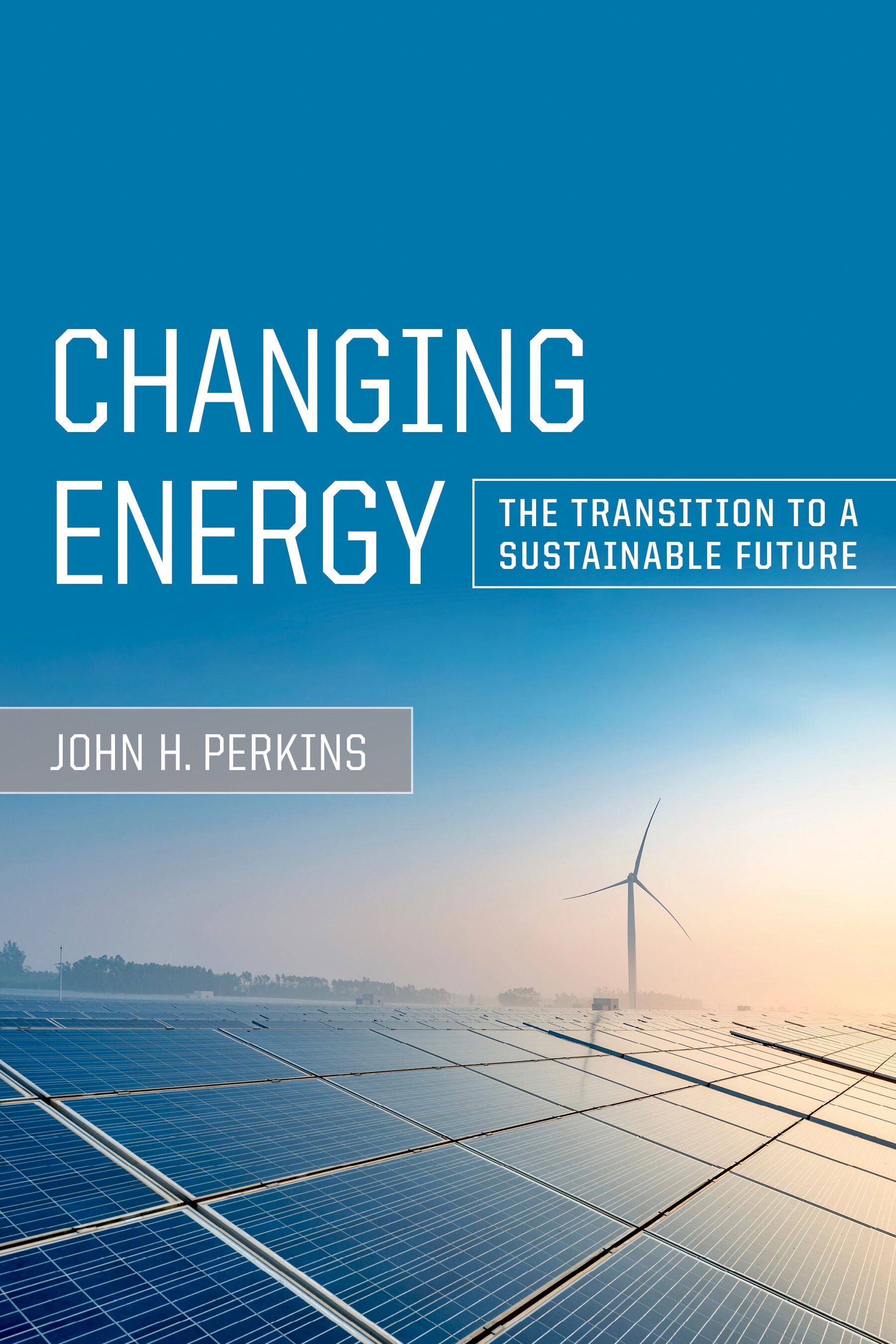
Changing energy
Changing Energy outlines how humanity established the current energy economy through three previous transitions, and how we now stand poised for a necessary fourth transition. Human societies around the globe have received immense benefits from uses of coal, oil, gas, and uranium sources, yet we must now rebuild our energy economies to rely on renewable sources and use them efficiently. The imperative for a fourth energy transition comes from dangers related to climate change, geopolitical tensions, documented health and environmental effects, and long-term depletion of today’s sources. John H. Perkins argues that a future in which current levels of energy service benefits are sustained can come only from investments in the technologies needed to bring about a fourth energy transition. Changing Energy envisions a viable post–fossil fuel economy and identifies the barriers to be overcome.
eBook