
Catalogue Search | MBRL


Are you sure you want to remove the book from the shelf?

{{itemTitle}}
1,908
result(s) for
"Comic book fans."
Sort by:

Adventure comics and youth cultures in India
This pioneering book presents a history and ethnography of adventure comic books for young people in India with a particular focus on vernacular superheroism. It chronicles popular and youth culture in the subcontinent from the mid-twentieth century to the contemporary era dominated by creative audio-video-digital outlets. The authors highlight early precedents in adventures set by the avuncular detective Chacha Chaudhary with his `faster than a computer brain', the forays of the film veteran Amitabh Bachchan's superheroic alter ego called Supremo, the Protectors of Earth and Mankind (P.O.E.M.), along with the exploits of key comic book characters, such as Nagraj, Super Commando Dhruv, Parmanu, Doga, Shakti and Chandika. The book considers how pulp literature, western comics, television programmes, technological developments and major space ventures sparked a thirst for extraterrestrial action and how these laid the grounds for vernacular ventures in the Indian superhero comics genre. It contains descriptions, textual and contextual analyses, excerpts of interviews with comic book creators, producers, retailers and distributers, together with the views, dreams and fantasies of young readers of adventure comics. These narratives touch upon special powers, super-intelligence, phenomenal technologies, justice, vengeance, geopolitics, romance, sex and the amazing potentials of masked identities enabled by navigation of the internet. With its lucid style and rich illustrations, this book will be essential reading for scholars and researchers of popular and visual cultures, comics studies, literature, media and cultural studies, social anthropology and sociology, and South Asian studies.
Book

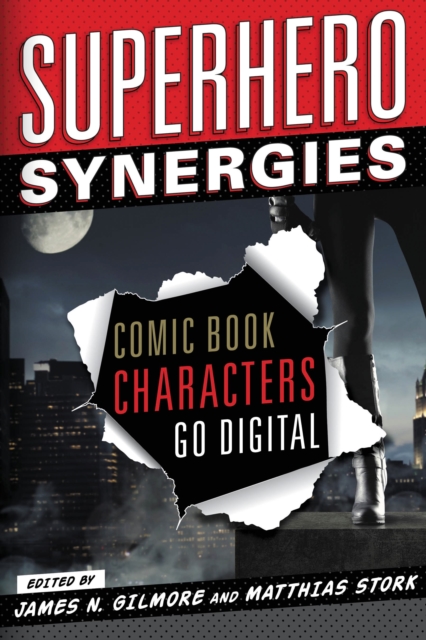
Superhero synergies
In the age of digital media, superheroes are no longer confined to comic books and graphic novels. Their stories are now featured in films, video games, digital comics, television programs, and more. In a single year alone, films featuring Batman, Spider-Man, and the Avengers have appeared on the big screen. Popular media no longer exists in isolation, but converges into complex multidimensional entities. As a result, traditional ideas about the relationship between varying media have come under striking revision. Although this convergence is apparent in many genres, perhaps nowhere is it more persistent, more creative, or more varied than in the superhero genre. Superhero Synergies: Comic Book Characters Go Digital explores this developing relationship between superheroes and various forms of media, examining how the superhero genre, which was once limited primarily to a single medium, has been developed into so many more. Essays in this volume engage with several of the most iconic heroes—including Batman, Hulk, and Iron Man—through a variety of academic disciplines such as industry studies, gender studies, and aesthetic analysis to develop an expansive view of the genre’s potency. The contributors to this volume engage cinema, comics, video games, and even live stage shows to instill readers with new ways of looking at, thinking about, and experiencing some of contemporary media’s most popular texts. This unique approach to the examination of digital media and superhero studies provides new and valuable readings of well-known texts and practices. Intended for both academics and fans of the superhero genre, this anthology introduces the innovative and growing synergy between traditional comic books and digital media.
eBook

My gym teacher is an alien overlord
Luke, disgruntled that his brother and friend have become superheroes, fails at solving crimes alone but when he discovers an alien plot to overthrow the world, only his sworn enemy will listen.
Book

Getting a life : the social worlds of Geek culture
This book recentres our understanding of geek culture, drawing on fieldwork in comic book shops, game stores, and conventions, including interviews with ordinary members of the overlapping communities of fans and enthusiasts. Woo offers an accessible introduction to the subculture while exploring ethical possibilities of a life lived with media.
eBook

Frank Miller's Daredevil and the Ends of Heroism
In the late 1970s and early 1980s, writer-artist Frank Miller turnedDaredevilfrom a tepid-selling comic into an industry-wide success story, doubling its sales within three years. Lawyer by day and costumed vigilante by night, the character of Daredevil was the perfect vehicle for the explorations of heroic ideals and violence that would come to define Miller's work.
Frank Miller's Daredevil and the Ends of Heroismis both a rigorous study of Miller's artistic influences and innovations and a reflection on how his visionary work onDaredevilimpacted generations of comics publishers, creators, and fans. Paul Young explores the accomplishments of Miller the writer, who fused hardboiled crime stories with superhero comics, while reimagining Kingpin (a classic Spider-Man nemesis), recuperating the half-baked villain Bullseye, and inventing a completely new kind ofDaredevilvillain in Elektra. Yet, he also offers a vivid appreciation of the indelible panels drawn by Miller the artist, taking a fresh look at his distinctive page layouts and lines.
A childhood fan of Miller'sDaredevil, Young takes readers on a personal journey as he seeks to reconcile his love for the comic with his distaste for the fascistic overtones of Miller's controversial later work. What he finds will resonate not only with Daredevil fans, but with anyone who has contemplated what it means to be a hero in a heartless world.
Other titles in the Comics Culture series includeTwelve-Cent Archie,Wonder Woman: Bondage and Feminism in the Marston/Peter Comics,1941-1948, andConsidering Watchmen:
Poetics, Property, Politics.
eBook

Fashion statements: Activism, memory, and participatory culture in Trina Robbins’ Misty
This article examines the short-lived Marvel comic Misty (1985–1986), created by feminist cartoonist Trina Robbins, as a case study in how comics can invite and depend on reader participation. We draw on an archival collection of over 1,000 fan letters and fashion designs submitted to Misty , along with recent communications with former readers, to explore how children and young adults influenced both the published comic and its surrounding culture. We argue that readers’ contributions – ranging from clothing designs to story ideas – constituted a form of activism: they challenged corporate publishing practices, promoted new story directions, and built local fan communities. Highlighting the recent memories of Misty ’s reader contributors, we show how engaging in the comic’s participatory culture could, in turn, have lasting effects on readers, shaping their confidence, career paths, and creative philosophies. By reframing Misty ’s collective participatory culture as activism and placing it in conversation with readers’ personal memories, this study contributes to scholarship on comics, fandom, and memory: even small acts of reader engagement can transform both cultural texts and individual lives.
Journal Article

Fandom Unbound
In recent years, otaku culture has emerged as one of Japan’s major cultural exports and as a genuinely transnational phenomenon. This timely volume investigates how this once marginalized popular culture has come to play a major role in Japan’s identity at home and abroad. In the American context, the word otaku is best translated as “geek”—an ardent fan with highly specialized knowledge and interests. But it is associated especially with fans of specific Japan-based cultural genres, including anime, manga, and video games. Most important of all, as this collection shows, is the way otaku culture represents a newly participatory fan culture in which fans not only organize around niche interests but produce and distribute their own media content. In this collection of essays, Japanese and American scholars offer richly detailed descriptions of how this once stigmatized Japanese youth culture created its own alternative markets and cultural products such as fan fiction, comics, costumes, and remixes, becoming a major international force that can challenge the dominance of commercial media. By exploring the rich variety of otaku culture from multiple perspectives, this groundbreaking collection provides fascinating insights into the present and future of cultural production and distribution in the digital age.
eBook

Paratextual Negotiations: Fan Forums as Digital Epitexts of Popular Superhero Comic Books and Science Fiction Pulp Novel Series
This article examines the reception of popular serial narratives. Starting from the assumption that this reception presents both a challenge (how to study the vast and heterogeneous readerly engagement with these texts?) and a chance (readers of such texts tend to comment profusely about the reception process), we identify the paratext as a privileged space of readerly communication on, and serial engagement with, popular storytelling. We develop the concept of “paratextual negotiation” as a means of understanding letter columns and fan forums as (now mostly) digital epitexts that shape the evolution of particularly popular—widely noticed, commercially successful, long-running—narratives, with a focus on the German science fiction pulp novel series Perry Rhodan (1961–) and additional thoughts on the US American comic book superhero Captain America (1941–). Taking the quantitative-empirical metrics of attention measurement and their public display seriously by identifying and close-reading the most popular forum threads and the most broadly recognized commentary about these narratives, we argue that the participatory element of popular culture can be reconstructed in the interplay between series text and serial paratext and can be described as a force in serial evolution that thrives on a combination of variation and redundancy and of selection and adaptation.
Journal Article