
Catalogue Search | MBRL


Are you sure you want to remove the book from the shelf?

{{itemTitle}}
7
result(s) for
"Comic books, strips, etc. -- Political aspects -- United States"
Sort by:

The new mutants : superheroes and the radical imagination of American comics
In The New Mutants, Ramzi Fawaz draws upon queer theory to tell the story of these monstrous fantasy figures and how they grapple with radical politics from Civil Rights and The New Left to Women's and Gay Liberation Movements. Through a series of comic book case studies including The Justice League of America, The Fantastic Four, The X-Men, and The New Mutants alongside late 20th century fan writing, cultural criticism, and political documents, Fawaz reveals how the American superhero modeled new forms of social belonging that counterculture youth would embrace in the 1960s and after. The New Mutants provides the first full-length study to consider the relationship between comic book fantasy and radical politics in the modern United States.
Book
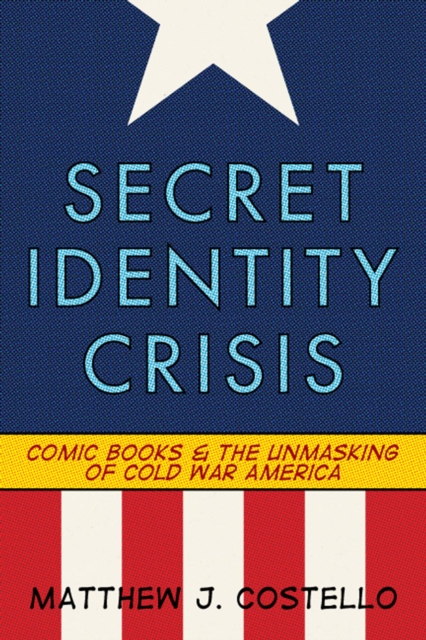
Secret identity crisis : comic books and the unmasking of cold war America
What Cold War-era superheroes reveal about American society and foreign policy Physicist Bruce Banner, caught in the nuclear explosion of his experimental gamma bomb, is transformed into the rampaging green monster, the Hulk.High school student Peter Parker, bitten by an irradiated spider, gains its powers and becomes Spiderman.
eBook

The Comics of Joe Sacco
Named a Notable Scholarly Publication of 2015 by the Comics
Studies Society Contributions by Georgiana Banita, Lan
Dong, Ann D'Orazio, Kevin C. Dunn, Alexander Dunst, Jared Gardner,
Edward C. Holland, Isabel Macdonald, Brigid Maher, Ben Owen,
Rebecca Scherr, Maureen Shay, Marc Singer, Richard Todd Stafford,
and Øyvind Vågnes The Comics of Joe Sacco addresses the
range of his award-winning work, from his early comics stories as
well as his groundbreaking journalism Palestine (1993) and
Safe Area to Goražde (2000), to Footnotes in Gaza
(2009) and his most recent book The Great War (2013), a
graphic history of World War I. First in the series, Critical
Approaches to Comics Artists, this edited volume explores Sacco's
comics journalism and features established and emerging scholars
from comics studies, cultural studies, geography, literary studies,
political science, and communication studies. Sacco's work has
already found a place in some of the foundational scholarship in
comics studies, and this book solidifies his role as one of the
most important comics artists today. Sections focus on how Sacco's
comics journalism critiques and employs the standard of objectivity
in mainstream reporting, what aesthetic principles and approaches
to lived experience can be found in his comics, how Sacco employs
the space of the comics page to map history and war, and the ways
that his comics function in the classroom and as human rights
activism. The Comics of Joe Sacco offers definitive,
exciting approaches to some of the most important--and
necessary--comics today, by one of the most acclaimed
journalist-artists of our time.
eBook

Comics and conflict : patriotism and propaganda from WWII through Operation Iraqi Freedom
Illustration has been an integral part of human history. Particularly before the advent of media such as photography, film, television, and now the Internet, illustrations in all their variety had been the primary visual way to convey history. The comic book, which emerged in its modern form in the 1930s, was another form of visual entertainment that gave readers, especially children, a form of escape. As World War II began, however, comic books became a part of propaganda as well, providing information and education for both children and adults. This book looks at how specific comic books of the war genre have been used to display patriotism, adventure through war stories, and eventually to tell of the horrors of combat--from World War II through the current conflicts in Iraq and Afghanistan in the first decade of the twenty-first century. This book also examines how war- and patriotically-themed comics evolved from soldier-drawn reflections of society, eventually developing along with the broader comic book medium into a mirror of American society during times of conflict. These comic books generally reflected patriotic fervor, but sometimes they advanced a specific cause. As war comic books evolved along with American society, many also served as a form of protest against United States foreign and military policy. During the country's most recent wars, however, patriotism has made a comeback, at the same time that the grim realities of combat are depicted more realistically than ever before. The focus of the book is not only on the development of the comic book medium, but also as a bell-weather of society at the same time. How did they approach the news of the war? Were people in favor or against the fighting? Did the writers of comics promote a perception of combat or did they try to convey the horrors of war? All of these questions were
important to the research, and serve as a focal point for what has been researched only in limited form previously. The conclusions of the book show that comic books are more than mere forms of entertainment. Comic books were also a way of political protest against war, or what the writers felt were wider examples of governmental abuse. In the post 9/11 era, the comic books have returned to their propagandistic/patriotic roots.
eBook

Sovereignty and superheroes
Marks a major new contribution to the emerging field of comic studies and the growing literature on superheroes. Using a range of critical theorists the book examines superheroes as sovereigns, addressing amongst other things the complex treatment of law and violence, legitimacy and authority.
eBook

Disability in comic books and graphic narratives
As there has yet to be any substantial scrutiny of the complex confluences a more sustained dialogue between disability studies and comics studies might suggest, Disability in Comic Books and Graphic Narratives aims through its broad range of approaches and focus points to explore this exciting subject in productive and provocative ways.
eBook
