
Catalogue Search | MBRL


Are you sure you want to remove the book from the shelf?

{{itemTitle}}
14
result(s) for
"Comic books, strips, etc.-Social aspects-United States"
Sort by:


Comic Book Women
The history of comics has centered almost exclusively on men.
Comics historians largely describe the medium as one built by men
telling tales about male protagonists, neglecting the many ways in
which women fought for legitimacy on the page and in publishers'
studios. Despite this male-dominated focus, women played vital
roles in the early history of comics. The story of how comic books
were born and how they evolved changes dramatically when women like
June Tarpé Mills and Lily Renée are placed at the center rather
than at the margins of this history, and when characters such as
the Black Cat, Patsy Walker, and Señorita Rio are analyzed.
Comic Book Women offers a feminist history of the
golden age of comics, revising our understanding of how numerous
genres emerged and upending narratives of how male auteurs built
their careers. Considering issues of race, gender, and sexuality,
the authors examine crime, horror, jungle, romance, science
fiction, superhero, and Western comics to unpack the cultural and
industrial consequences of how women were represented across a wide
range of titles by publishers like DC, Timely, Fiction House, and
others. This revisionist history reclaims the forgotten work done
by women in the comics industry and reinserts female creators and
characters into the canon of comics history.
eBook

Latinx superheroes in mainstream comics
Latinx Superheroes in Mainstream Comics offers the first thorough exploration of Latino/a superheroes in mainstream comic books, TV shows, and movies--Provided by publisher.
Book

Super black : American pop culture and black superheroes
Super Black places the appearance of black superheroes alongside broad and sweeping cultural trends in American politics and pop culture, which reveals how black superheroes are not disposable pop products, but rather a fascinating racial phenomenon through which futuristic expressions and fantastic visions of black racial identity and symbolic political meaning are presented. Adilifu Nama sees the value-and finds new avenues for exploring racial identity-in black superheroes who are often dismissed as sidekicks, imitators of established white heroes, or are accused of having no role outside of blaxploitation film contexts.Nama examines seminal black comic book superheroes such as Black Panther, Black Lightning, Storm, Luke Cage, Blade, the Falcon, Nubia, and others, some of whom also appear on the small and large screens, as well as how the imaginary black superhero has come to life in the image of President Barack Obama. Super Black explores how black superheroes are a powerful source of racial meaning, narrative, and imagination in American society that express a myriad of racial assumptions, political perspectives, and fantastic (re)imaginings of black identity. The book also demonstrates how these figures overtly represent or implicitly signify social discourse and accepted wisdom concerning notions of racial reciprocity, equality, forgiveness, and ultimately, racial justice.
eBook


Christianity and Comics
The Bible has inspired Western art and literature for centuries, so it is no surprise that Christian iconography, characters, and stories have also appeared in many comic books. Yet the sheer stylistic range of these comics is stunning. They include books from Christian publishers, as well as underground comix with religious themes and a vast array of DC, Marvel, and Dark Horse titles, from Hellboy to Preacher. Christianity and Comics presents an 80-year history of the various ways that the comics industry has drawn from biblical source material. It explores how some publishers specifically targeted Christian audiences with titles like Catholic Comics, books featuring heroic versions of Oral Roberts and Billy Graham, and special religious-themed editions of Archie. But it also considers how popular mainstream comics like Daredevil, The Sandman, Ghost Rider, and Batman are infused with Christian themes and imagery. Comics scholar Blair Davis pays special attention to how the medium's unique use of panels, word balloons, captions, and serialized storytelling have provided vehicles for telling familiar biblical tales in new ways. Spanning the Golden Age of comics to the present day, this book charts how comics have both reflected and influenced Americans' changing attitudes towards religion.
eBook

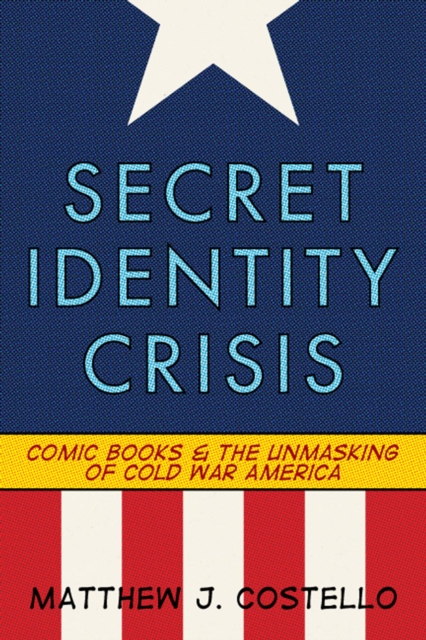
Secret identity crisis : comic books and the unmasking of cold war America
What Cold War-era superheroes reveal about American society and foreign policy Physicist Bruce Banner, caught in the nuclear explosion of his experimental gamma bomb, is transformed into the rampaging green monster, the Hulk.High school student Peter Parker, bitten by an irradiated spider, gains its powers and becomes Spiderman.
eBook

Kid comic strips : a genre across four countries
\"This book looks at the humor that artists and editors believed would have appeal in four different countries. Ian Gordon explains how similar humor played out in comic strips across different cultures and humor styles. By examining Skippy and Ginger Meggs, the book shows a good deal of similarities between American and Australian humor while establishing some distinct differences. In examining the French translation of Perry Winkle, the book explores questions of language and culture. By shifting focus to a later period and looking at the American and British comics entitled Dennis the Menace, two very different comics bearing the same name, Kid Comic Strips details both differences in culture and traditions and the importance of the type of reader imagined by the artist\"-- Publisher's description.
Book

The Comics of Joe Sacco
Named a Notable Scholarly Publication of 2015 by the Comics
Studies Society Contributions by Georgiana Banita, Lan
Dong, Ann D'Orazio, Kevin C. Dunn, Alexander Dunst, Jared Gardner,
Edward C. Holland, Isabel Macdonald, Brigid Maher, Ben Owen,
Rebecca Scherr, Maureen Shay, Marc Singer, Richard Todd Stafford,
and Øyvind Vågnes The Comics of Joe Sacco addresses the
range of his award-winning work, from his early comics stories as
well as his groundbreaking journalism Palestine (1993) and
Safe Area to Goražde (2000), to Footnotes in Gaza
(2009) and his most recent book The Great War (2013), a
graphic history of World War I. First in the series, Critical
Approaches to Comics Artists, this edited volume explores Sacco's
comics journalism and features established and emerging scholars
from comics studies, cultural studies, geography, literary studies,
political science, and communication studies. Sacco's work has
already found a place in some of the foundational scholarship in
comics studies, and this book solidifies his role as one of the
most important comics artists today. Sections focus on how Sacco's
comics journalism critiques and employs the standard of objectivity
in mainstream reporting, what aesthetic principles and approaches
to lived experience can be found in his comics, how Sacco employs
the space of the comics page to map history and war, and the ways
that his comics function in the classroom and as human rights
activism. The Comics of Joe Sacco offers definitive,
exciting approaches to some of the most important--and
necessary--comics today, by one of the most acclaimed
journalist-artists of our time.
eBook