
Catalogue Search | MBRL


Are you sure you want to remove the book from the shelf?

{{itemTitle}}
1,469
result(s) for
"Comma."
Sort by:

Commas say \take a break\
\"Commas love taking breaks. In fact, they want everyone to take breaks! Follow along and learn all about commas\"-- Provided by publisher.
Book

A Community Convention for Ecological Forecasting: Output Files and Metadata Version 1.0
This paper summarizes the open community conventions developed by the Ecological Forecasting Initiative (EFI) for the common formatting and archiving of ecological forecasts and the metadata associated with these forecasts. Such open standards are intended to promote interoperability and facilitate forecast communication, distribution, validation, and synthesis. For output files, we first describe the convention conceptually in terms of global attributes, forecast dimensions, forecasted variables, and ancillary indicator variables. We then illustrate the application of this convention to the two file formats that are currently preferred by the EFI, netCDF (network common data form), and comma-separated values (CSV), but note that the convention is extensible to future formats. For metadata, EFI's convention identifies a subset of conventional metadata variables that are required (e.g., temporal resolution and output variables) but focuses on developing a framework for storing information about forecast uncertainty propagation, data assimilation, and model complexity, which aims to facilitate cross-forecast synthesis. The initial application of this convention expands upon the Ecological Metadata Language (EML), a commonly used metadata standard in ecology. To facilitate community adoption, we also provide a Github repository containing a metadata validator tool and several vignettes in R and Python on how to both write and read in the EFI standard. Lastly, we provide guidance on forecast archiving, making an important distinction between short-term dissemination and long-term forecast archiving, while also touching on the archiving of code and workflows. Overall, the EFI convention is a living document that can continue to evolve over time through an open community process.
Journal Article

Take a pause, Paul : a book about commas
\"Paul excitedly shows Mya around her new school, while both learn how to correctly use commas in a sentence.\"-- Provided by publisher.
Book
Comma Distribution in Czech Texts: Variation by Genre and Author, and Error Analysis
This article investigates the distribution and typology of commas in Czech texts, combining genre-differentiated samples with an annotated error corpus to offer a comprehensive view of punctuation usage and misuse. Building on previous work, we expand the analysis from a small newspaper sample to a broader set of texts, encompassing fiction, blogs, translations, and school dictations. Using a consistent typology of comma usage, we classify 1,000 manually selected instances and identify trends in different textual genres. Furthermore, we examine over 1,000 missing comma errors and more than 200 redundant ones from the self-built error corpus. The results reveal genre-dependent tendencies in comma types, especially in the use of commas preceding connectives and within asyndetic structures. The study offers insights for improving automatic comma insertion systems and deepens our understanding of punctuation norms and deviations in Czech.
Journal Article

Recollements, comma categories and morphic enhancements
For each recollement of triangulated categories, there is an epivalence between the middle category and the comma category associated with a triangle functor from the category on the right to the category on the left. For a morphic enhancement of a triangulated category $\\mathcal {T}$, there are three explicit ideals of the enhancing category, whose corresponding factor categories are all equivalent to the module category over $\\mathcal {T}$. Examples related to inflation categories and weighted projective lines are discussed.
Journal Article

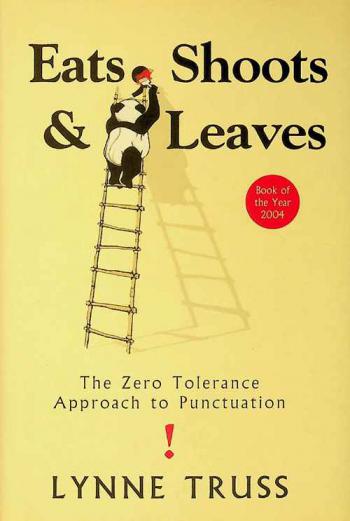
Between you & me : confessions of a Comma Queen
\"Mary Norris has spent more than three decades in The New Yorker's copy department, maintaining its celebrated high standards. Now she brings her vast experience, good cheer, and finely sharpened pencils to help the rest of us in a boisterous language book as full of life as it is of practical advice. [The book] features Norris's ... descriptions of some of the most common and vexing problems in spelling, punctuation, and usage--comma faults, danglers, 'who' vs. 'whom,' 'that' vs. 'which,' compound words, gender-neutral language--and her ... explanations of how to handle them\"--Dust jacket flap.
Book

Strong Comma-Free Codes in Genetic Information
Comma-free codes constitute a class of circular codes, which has been widely studied, in particular by Golomb et al. (Biologiske Meddelelser, Kongelige Danske Videnskabernes Selskab 23:1–34,
1958a
, Can J Math 10:202–209,
1958b
), Michel et al. (Comput Math Appl 55:989–996,
2008a
, Theor Comput Sci 401:17–26,
2008b
, Inf Comput 212:55–63,
2012
), Michel and Pirillo (Int J Comb 2011:659567,
2011
), and Fimmel and Strüngmann (J Theor Biol 389:206–213,
2016
). Based on a recent approach using graph theory to study circular codes Fimmel et al. (Philos Trans R Soc 374:20150058,
2016
), a new class of circular codes, called strong comma-free codes, is identified. These codes detect a frameshift during the translation process immediately after a reading window of at most two nucleotides. We describe several combinatorial properties of strong comma-free codes: enumeration, maximality, self-complementarity and
C
F
3
-property (comma-free property in all the three possible frames). These combinatorial results also highlight some new properties of the genetic code and its evolution. Each amino acid in the standard genetic code is coded by at least one strong comma-free code of size 1. There are 9 amino acids
S
=
{
A
s
n
,
A
s
p
,
G
l
n
,
G
l
y
,
L
y
s
,
M
e
t
,
P
h
e
,
P
r
o
,
T
r
p
}
among 20 such that for each amino acid from
S
, its synonymous trinucleotide set (excluding the necessary periodic trinucleotides
{
A
A
A
,
C
C
C
,
G
G
G
,
T
T
T
}
) is a strong comma-free code. The primeval comma-free
RNY
code of Eigen and Schuster (Naturwissenschaften 65:341–369,
1978
) is a self-complementary
C
F
3
-code of size 16. Furthermore, it is the union of two strong comma-free codes of size 8 which are complementary to each other.
Journal Article

Wrangling messy CSV files by detecting row and type patterns
Data scientists spend the majority of their time on preparing data for analysis. One of the first steps in this preparation phase is to load the data from the raw storage format. Comma-separated value (CSV) files are a popular format for tabular data due to their simplicity and ostensible ease of use. However, formatting standards for CSV files are not followed consistently, so each file requires manual inspection and potentially repair before the data can be loaded, an enormous waste of human effort for a task that should be one of the simplest parts of data science. The first and most essential step in retrieving data from CSV files is deciding on the dialect of the file, such as the cell delimiter and quote character. Existing dialect detection approaches are few and non-robust. In this paper, we propose a dialect detection method based on a novel measure of data consistency of parsed data files. Our method achieves 97% overall accuracy on a large corpus of real-world CSV files and improves the accuracy on messy CSV files by almost 22% compared to existing approaches, including those in the Python standard library. Our measure of data consistency is not specific to the data parsing problem, and has potential for more general applicability.
Journal Article

n-Nucleotide circular codes in graph theory
The circular code theory proposes that genes are constituted of two trinucleotide codes: the classical genetic code with 61 trinucleotides for coding the 20 amino acids (except the three stop codons {TAA,TAG,TGA}) and a circular code based on 20 trinucleotides for retrieving, maintaining and synchronizing the reading frame. It relies on two main results: the identification of a maximal C3 self-complementary trinucleotide circular code X in genes of bacteria, eukaryotes, plasmids and viruses (Michel 2015 J. Theor. Biol. 380, 156–177. (doi:10.1016/j.jtbi.2015.04.009); Arquès & Michel 1996 J. Theor. Biol. 182, 45–58. (doi:10.1006/jtbi.1996.0142)) and the finding of X circular code motifs in tRNAs and rRNAs, in particular in the ribosome decoding centre (Michel 2012 Comput. Biol. Chem. 37, 24–37. (doi:10.1016/j.compbiolchem.2011.10.002); El Soufi & Michel 2014 Comput. Biol. Chem. 52, 9–17. (doi:10.1016/j.compbiolchem.2014.08.001)). The univerally conserved nucleotides A1492 and A1493 and the conserved nucleotide G530 are included in X circular code motifs. Recently, dinucleotide circular codes were also investigated (Michel & Pirillo 2013 ISRN Biomath. 2013, 538631. (doi:10.1155/2013/538631); Fimmel et al. 2015 J. Theor. Biol. 386, 159–165. (doi:10.1016/j.jtbi.2015.08.034)). As the genetic motifs of different lengths are ubiquitous in genes and genomes, we introduce a new approach based on graph theory to study in full generality n-nucleotide circular codes X, i.e. of length 2 (dinucleotide), 3 (trinucleotide), 4 (tetranucleotide), etc. Indeed, we prove that an n-nucleotide code X is circular if and only if the corresponding graph is acyclic. Moreover, the maximal length of a path in corresponds to the window of nucleotides in a sequence for detecting the correct reading frame. Finally, the graph theory of tournaments is applied to the study of dinucleotide circular codes. It has full equivalence between the combinatorics theory (Michel & Pirillo 2013 ISRN Biomath. 2013, 538631. (doi:10.1155/2013/538631)) and the group theory (Fimmel et al. 2015 J. Theor. Biol. 386, 159–165. (doi:10.1016/j.jtbi.2015.08.034)) of dinucleotide circular codes while its mathematical approach is simpler.
Journal Article