
Catalogue Search | MBRL


Are you sure you want to remove the book from the shelf?

{{itemTitle}}
25
result(s) for
"Commande intelligente."
Sort by:


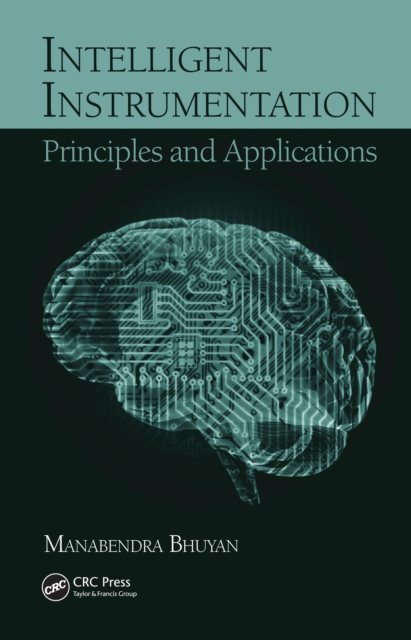
Intelligent Instrumentation
Evaluating current topics in instrumentation and sensor engineering courses, this book employs principles-based explanations to delineate the technology. Using commercial devices and technology to support theoretical bases, the author provides solid answers to questions such as: What makes a sensor intelligent? What are the various ways to classify them? How can a classical instrumentation system be provided with the intelligent features? and What are the recent technologies of II/SS? The book includes illustrations, photographs, numerical problems and case studies to explain the theory.
eBook

Advances in Computational Intelligence and Autonomy for Aerospace Systems
About the Book
A follow-on volume to
Advances in Intelligent and Autonomous Aerospace Systems (AIAA, 2012) Advances in Computational Intelligence and Autonomy for Aerospace Systems seeks to provide
both the aerospace researcher and the practicing aerospace engineer with further insight into the latest innovative methods and approaches regarding intelligent and autonomous
aerospace systems. Written by leading researchers in the field, it focuses on:
Intelligent Space Systems
Intelligent Validation and Verification Methods
Intelligent Health Monitoring
Intelligent Flight Control
Research advances in embedded computational intelligence, communication, control, and new mechanisms for sensing, actuation, and adaptation hold the promise to transform aerospace. The result will
be air and space vehicles, propulsion systems, exploration systems, and vehicle management systems that respond more quickly, provide large-scale distributed coordination, work in dangerous or
inaccessible environments, and augment human capabilities.
ABOUT THE EDITOR
JOHN VALASEK is professor of aerospace engineering and Director of the Vehicle Systems & Control Laboratory at Texas A&M University. He was the Founding Director of the
Center for Autonomous Vehicles and Sensor Systems (CANVASS), and has industrial experience with Northrop Corporation, Aircraft Division. His research is focused on bridging the gap
between traditional computer science topics and aerospace engineering topics, and has been funded by AFOSR, AFRL, ONR, NSF, NASA, FAA, and industry. John has served on several autonomy
and aerospace studies and panels for the National Academies. He is the author or editor of numerous publications including
Advances in Intelligent and Autonomous Aerospace
Systems
(AIAA, 2012) and Morphing Aerospace Vehicles and
Structures (AIAA, 2012). He holds a B.S. in aerospace engineering from California State Polytechnic University, Pomona, and an M.S.
and a Ph.D. in aerospace engineering from the University of Kansas. He is an AIAA Fellow, member of the AIAA Unmanned Systems Technical Program Committee, the AIAA Intelligent Systems
Technical Committee, and Associate Editor of the Journal of Guidance, Control, and Dynamics.
eBook

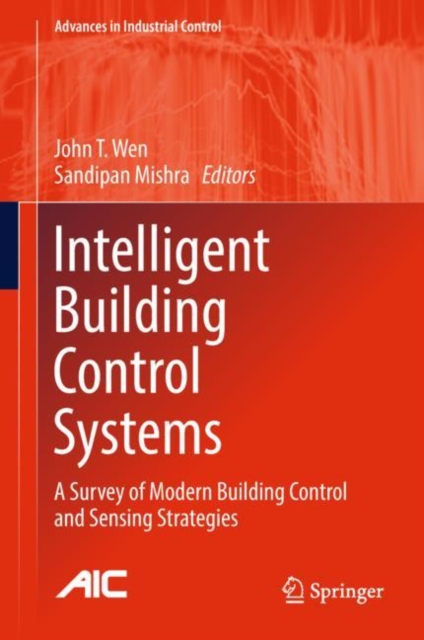
Intelligent Building Control Systems
Readers of this book will be shown how, with the adoption of ubiquituous sensing, extensive data-gathering and forecasting, and building-embedded advanced actuation, intelligent building systems with the ability to respond to occupant preferences in a safe and energy-efficient manner are becoming a reality.
eBook
Iterative Learning Control for Multi-agent Systems Coordination
<p>A timely guide using iterative learning control (ILC) as a solution for multi-agent systems (MAS) challenges, this book showcases recent advances and industrially relevant applications. Readers are first given a comprehensive overview of the intersection between ILC and MAS, then introduced to a range of topics that include both basic and advanced theoretical discussions, rigorous mathematics, engineering practice, and both linear and nonlinear systems. Through systematic discussion of network theory and intelligent control, the authors explore future research possibilities, develop new tools, and provide numerous applications such as power grids, communication and sensor networks, intelligent transportation systems, and formation control. Readers will gain a roadmap of the latest advances in the fields and can use their newfound knowledge to design their own algorithms.</p> <ul> <li>Explores the synergy between the important topics of iterative learning control (ILC) and multi-agent systems (MAS) </li> <li>Concisely summarizes recent advances and significant applications in ILC methods for power grids, sensor networks, and control processes</li> <li>Covers basic theory and rigorous mathematics as well as engineering practice</li> </ul><br> <p>Written by experienced researchers, Iterative Learning Control for Multi-agent Systems Coordination will appeal to researchers and graduate students of multi-agent systems. Industrial practitioners whose work involves system engineering, system control, system biology, and computing science will also find it useful.
eBook
