
Catalogue Search | MBRL


Are you sure you want to remove the book from the shelf?

{{itemTitle}}
5
result(s) for
"Commedia dell"
Sort by:

Pierrot in Petrograd
Douglas Clayton examines the tradition of commedia dell'arte as the Russian modernists inherited it, from its origins in Italian street theatre through its various transformations: in Italy (Gozzi and Goldini's plays); in France (the development of Pierrot and the restructuring of the plot); and in Germany (Tieck's and Hoffmann's metatheatre). He also analyses crucial texts by Gozzi, Lothar, Benavente, and Schnitzler that came to play a central role in the Russian theatre. Tracing the history of commedia dell'arte on the Russian stage, he demonstrates that the introduction of the tradition was theory-driven and discusses several milestone productions in the pre- and post-revolutionary period. Clayton examines the impact of commedia dell'arte, russified as the new theatrical genre of balagan, on both popular and lesser-known Russian playwrights, and, in conclusion, explores the significance of the commedia dell'arte as a theoretical underpinning for Sergei Eisenstein's theories of theatre and film.
eBook

Jewish Theatre Making in Mantua, 1520-1650
This book studies how the Jewish community of Mantua established, normalized, and maintained interrelations with the Christian community for over 130 years, from 1520 to 1650, by means of theatre performance for the Gonzaga Dukes.
eBook
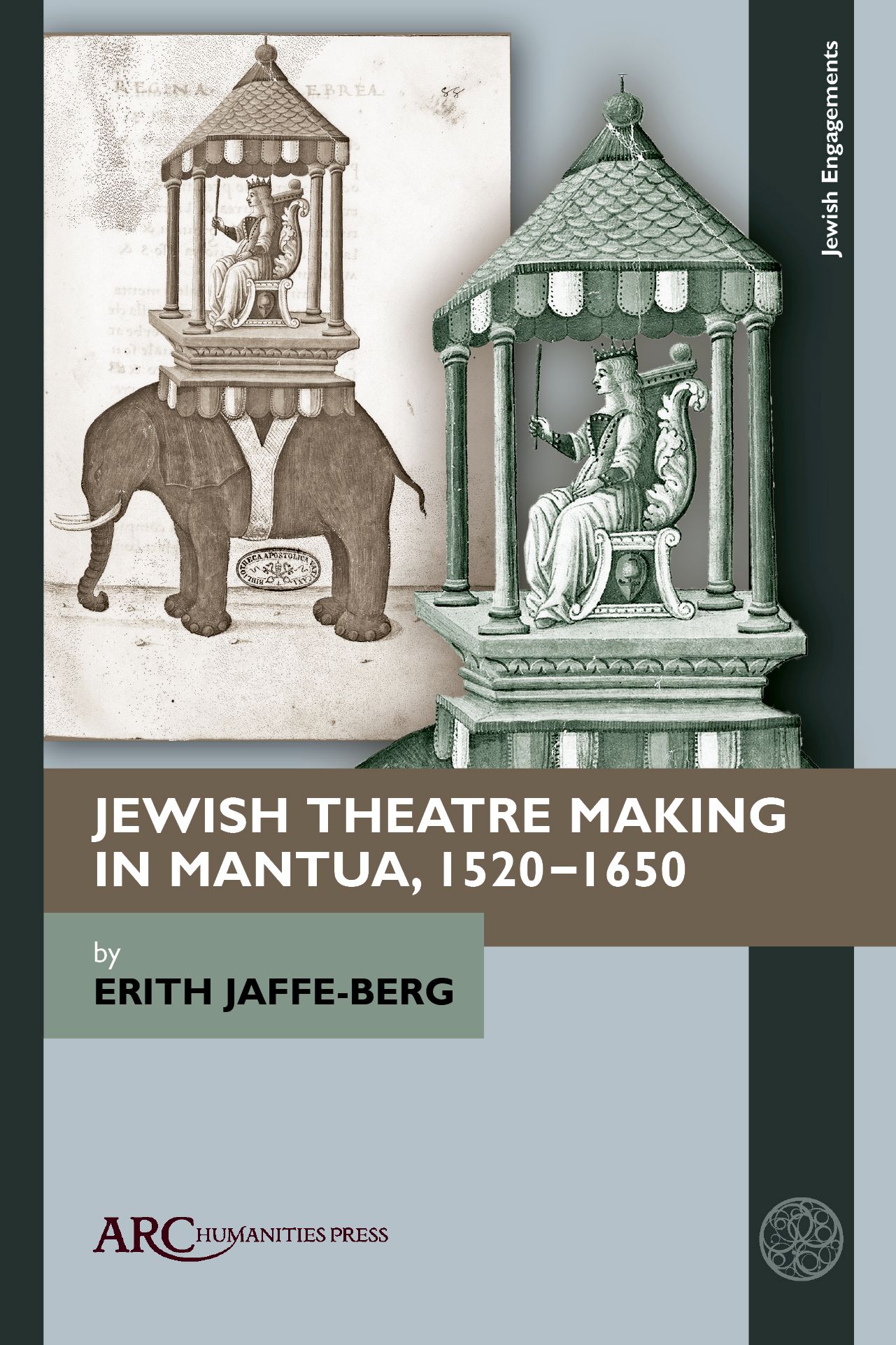
Jewish Theatre Making in Mantua, 1520-1650
This book studies how the Jewish community of Mantua established, normalized, and maintained interrelations with the Christian community for over 130 years, from 1520 to 1650, by means of theatre performance for the Gonzaga Dukes. Performance is shown to have been a mutually beneficial \"currency\" that both the Dukes and Jews could use to calibrate their relations with one another. Seen in this light, the author demonstrates that performance was not the consequence of cultural exchange between Jews and Christians, but was one of the means by which the complicated nature of cultural communication and exchange took place. Jewish Theatre Making in Mantua details the performances created by the Jewish community of Mantua and argues that these theatrical events were a crucial component in the ability of Jews to live peacefully within Mantua, which became one of the few refuges left to Jews in the Italian peninsula and Catholic Europe.
eBook


Venice incognito
\"The entire town is disguised,\" declared a French tourist of eighteenth-century Venice. And, indeed, maskers of all ranks--nobles, clergy, imposters, seducers, con men--could be found mixing at every level of Venetian society. Even a pious nun donned a mask and male attire for her liaison with the libertine Casanova. In Venice Incognito, James H. Johnson offers a spirited analysis of masking in this carnival-loving city. He draws on a wealth of material to explore the world view of maskers, both during and outside of carnival, and reconstructs their logic: covering the face in public was a uniquely Venetian response to one of the most rigid class hierarchies in European history. This vivid account goes beyond common views that masking was about forgetting the past and minding the muse of pleasure to offer fresh insight into the historical construction of identity.
eBook