
Catalogue Search | MBRL


Are you sure you want to remove the book from the shelf?

{{itemTitle}}
3,391
result(s) for
"Common Core State Standards"
Sort by:


Opting Out
A 2020 AESA Critics' Choice Book Award winner The rise of high-stakes testing in New York and across the nation has narrowed and simplified what is taught, while becoming central to the effort to privatize public schools. However, it and similar reform efforts have met resistance, with New York as the exemplar for how to repel standardized testing and invasive data collection, such as inBloom. In New York, the two parent/teacher organizations that have been most effective are Long Island Opt Out and New York State Allies for Public Education. The opt-out movement has been so successful that 20% of students statewide and 50% of students on Long Island refused to take tests. In Opting Out, two parent leaders of the opt-out movement--Jeanette Deutermann and Lisa Rudley--tell why and how they became activists in the two organizations. The story of parents, students, and teachers resisting not only high-stakes testing but also privatization and other corporate reforms parallels the rise of teachers across the country going on strike to demand increases in school funding and teacher salaries. Both the success of the opt-out movement and teacher strikes reflect the rise of grassroots organizing using social media to influence policy makers at the local, state, and national levels.
eBook

Navigating the Common Core with English Language Learners : practical strategies to develop higher-order thinking skills
\"Written by experienced teachers of English Language Learners, this essential resource gives educators a much-needed and practical guide for implementing the Common Core State Standards in ELL classrooms. Larry Ferlazzo and Katie Hull Sypnieski provide a digest of the latest research and developments in ELL education, along with comprehensive guidance in reading and writing, social studies, math, science, social/emotional learning and more. The book's expert guidance helps instructors instill the higher-order thinking skills demanded by the Common Core, and its ready-to-use lesson plans and reproducible handouts help educators bring key ideas and concepts to life in the classroom.\"--Page [4] of cover.
Book
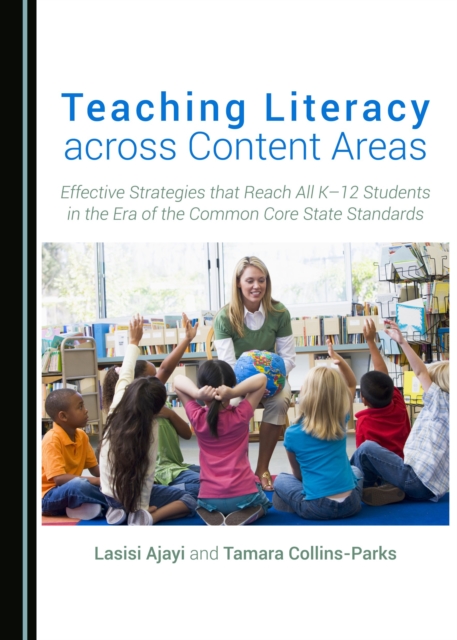
Teaching Literacy across Content Areas
This book is written primarily for pre-service and in-service teachers of Literacy/English Language Arts, school administrators, literacy graduate education students, and literacy education researchers, and addresses the myriad of questions regarding the implementation of the Common Core State Standards. Classroom teachers and pre-service teachers are currently confronting questions such as how they can teach the Common Core State Standards to make sure they are fully addressing them; how they can have the time to teach students to have deeper understandings of the skills and concepts addressed in the Standards; what they can do to meet the learning needs of diverse students such as English language learners and students with learning disabilities; whether teachers of content areas are required to add reading instruction to their teaching responsibilities; whether the Standards tell teachers what to teach; and whether the document tells teachers how to implement the Standards in the classroom, among others. This book is designed to answer these questions and many others. Each chapter contains instructional practices, examples, vignettes, and illustrations that connect the Common Core State Standards to classroom practices, and thereby provide pre-service and in-service teachers with meaningful, relevant, and practical teaching strategies to prepare culturally, academically, and linguistically diverse students in California and other states of the nation for both career and college. In this regard, readers of this book will find that the authors have provided a pathway to better understand the Common Core State Standards, and will be able to use what they learn in the pages of this book to provide more effective instruction for their students across the disciplines to read, analyse, and critique complex texts and apply knowledge to solve
practical, real-life problems.
eBook


The game plan
The Game Plan is the first professional book that gives secondary administrators, literacy coaches, and other instructional leaders a step-by-step blueprint for implementing the Common Core Literacy Standards for History/Social Studies, Science, and the Technical Subjects and other college and career readiness standards. The book provides principals, district supervisors, instructional coaches, and other leaders with a coherent, realistic plan to build a school-wide culture of literacy instruction, data use, and PLC-based cycles of reflection, planning, and action. This multi-year plan is built on a continuous cycle of improvement philosophy and is modular in nature, allowing leaders to rearrange, substitute, and modify the plan to meet the needs of any secondary school. Organized in two parts, the first section of The Game Plan lays out a semester-by-semester flexible configuration for introducing, implementing, and supporting the literacy standards over the course of six full school years; this section also includes detailed guidelines for creating a comprehensive assessment plan to gather, analyze, and act on school data. The second section includes instructional tools and strategies for reading, writing, vocabulary, and other aspects of the literacy standards that teachers in all subject areas can use.
eBook
Effective content reading strategies to develop mathematical and scientific literacy
Success in mathematics and science requires students to process and comprehend various forms of text; yet, many teachers feel ill-equipped to promote the development of literacy skills within the context of developing conceptual understanding of mathematics and science. Many content area literacy resources do not provide an adequate development of the complexities involved in dealing with mathematics and science texts. This work presents important background information on the reading and process and classroom tested strategies which include implementation information and ideas for modifying the strategy to diverse needs. These classroom examples support teachers and educational specialists as they design instructional experiences to facilitate both students’ conceptualization of important subject area content and the tools necessary for students to develop the literacy skills necessary to be successful in today’s text rich educational learning environments.
eBook

The wrong direction for today's schools
This book provides an in-depth analysis of the newest national American education fad, intended to replace the 2002 incarnation of the ESEA, No Child Left Behind. Zarra delves into the \"seeds\" that produced the Common Core Standards, as well as the groups involved in the political and corporate pressure to revamp America's K-16 education system.
eBook
Addressing the needs of all learners in the era of changing standards
In this book, leading educators envision the standards as a vehicle to provide more rigorous instruction and illustrate how teachers are uniquely qualified to determine the most effective methods for developing students' skills and close the achievement gap.
eBook
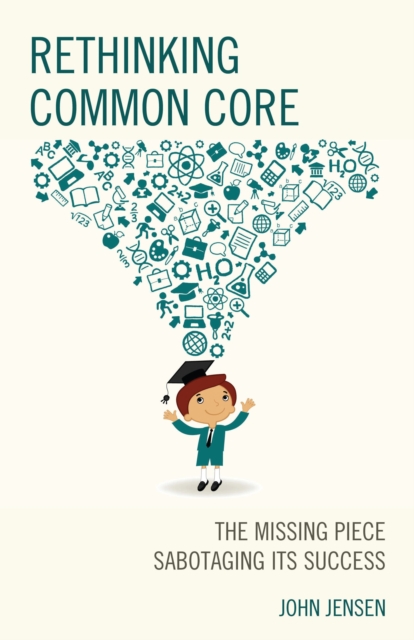
Rethinking common core
This book examines the aim of Common Core and how the structure of U.S. education has limited its potential; why many states, district administrators, teachers, and parents oppose it, and the changes that might help to set it back on track.
eBook