
Catalogue Search | MBRL


Are you sure you want to remove the book from the shelf?

{{itemTitle}}
397
result(s) for
"Commonwealth countries History."
Sort by:


The Empire Project
The British Empire, wrote Adam Smith, 'has hitherto been not an empire, but the project of an empire' and John Darwin offers a magisterial global history of the rise and fall of that great imperial project. The British Empire, he argues, was much more than a group of colonies ruled over by a scattering of British expatriates until eventual independence. It was, above all, a global phenomenon. Its power derived rather less from the assertion of imperial authority than from the fusing together of three different kinds of empire: the settler empire of the 'white dominions'; the commercial empire of the City of London; and 'Greater India' which contributed markets, manpower and military muscle. This unprecedented history charts how this intricate imperial web was first strengthened, then weakened and finally severed on the rollercoaster of global economic, political and geostrategic upheaval on which it rode from beginning to end.
eBook

The Empire's new clothes : the myth of the Commonwealth
\"Is the Commonwealth little more than a mirage--as lacking in substance as the emperor's new clothes? In the wake of Brexit, the Commonwealth has been identified as an important body for future British trade and diplomacy, but few know what it actually does. How is it organized and what has held it together for so long? How important is the Queen's role as Head of the Commonwealth? Most importantly, why has it had such a troubled recent past, and is it realistic to imagine that its fortunes might be reversed? In The Empire's New Clothes, Philip Murphy strips away the gilded self-image of the Commonwealth to reveal an irrelevant institution afflicted by imperial amnesia. He offers a personal perspective on this complex and poorly understood institution, and asks if it can ever escape from the shadow of the British Empire to become an organization based on shared values, rather than a shared history.\" --book jacket.
Book
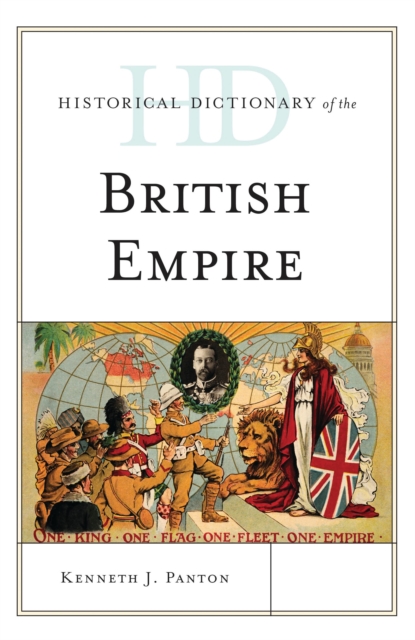
Historical dictionary of the British Empire
The Historical Dictionary of the British Empire covers its history through a chronology, an introductory essay, appendixes, and an extensive bibliography. The dictionary section has over 700 cross-referenced entries on important personalities, politics, economy, foreign relations, religion, and culture.
eBook

British decolonisation, 1918-1984
Few subjects have aroused more controversy in recent years than that of empire, and that of the British Empire in particular. Few other subjects are of greater importance to today's world. How the British Empire was created and maintained, and the impact it had on both the colonised and the colonisers, have been the source of long-running and heated debates amongst historians, politicians and in the media. For several decades it has been analysed from numerous different perspectives, providing a wide range of differing interpretations. Over recent years, new studies have extended the scope of imperial history into previously ignored fields that have significantly added to our understanding. Imperial history can, therefore, no longer be regarded as the exclusive realm of the political historian, or the reserve of an essentially British approach.The British Empire was complex. Each of the far-flung components that made it up had its own particularities. At various times and in various places it took on different forms and had different meanings. It affected people across the globe in a multitude of ways. This inevitably produces a multi-facetted picture. The large number of actors, in Britain and in the colonised world, who played a part in its history adds to this impression. As a consequence, it is difficult to come up with one, all-encompassing, history of the British Empire.All these aspects of the British Empire are apparent in the story of how it ended. What precisely decolonisation was, how it came about, and what it meant for the British and for those who gained their independence, varied considerably from one part of the Empire to another, and from one period to another. How these changes came about, how independence was won across the colonial world, and how it was resisted, are dealt with here across a selection of different case
studies. Understanding how the British Empire collapsed tells us a great deal about what this Empire was and about its legacy in today's world.
eBook

Empireworld : how British imperialism has shaped the globe
In 'Empireworld', award-winning author and journalist, Sathnam Sanghera extends his examination of British imperial legacies beyond Britain. Travelling the globe to trace its international legacies - from Barbados and Mauritius to India and Nigeria and beyond - Sanghera demonstrates just how deeply British imperialism is baked into our world. And why it's time Britain was finally honest with itself about empire.
BOOK
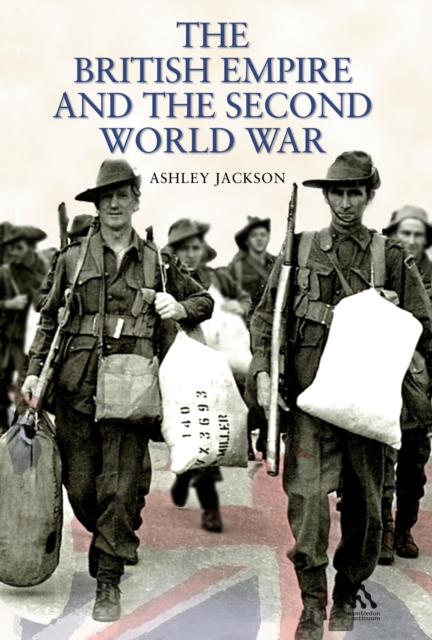
The British Empire and the Second World War
In 1939 Hitler went to war not just with Great Britain; he also went to war with the whole of the British Empire, the greatest empire that there had ever been. In the years since 1945 that empire has disappeared, and the crucial fact that the British Empire fought together as a whole during the war has been forgotten. All the parts of the empire joined the struggle and were involved in it from the beginning, undergoing huge changes and sometimes suffering great losses as a result. The war in the desert, the defence of Malta and the Malayan campaign, and the contribution of the empire as a whole in terms of supplies, communications and troops, all reflect the strategic importance of Britain's imperial status. Men and women not only from Australia, New Zealand and India but from many parts of Africa and the Middle East all played their part. Winston Churchill saw the war throughout in imperial terms. The British Empire and the Second World War emphasises a central fact about the Second World War that is often forgotten.
eBook

Discourses of empire and commonwealth
\"In Discourses of Empire and Commonwealth a range of prominent writers and critics reflect on the legacy of imperialism and the role of writers in forging a new, more cosmopolitan identity. The contributors, writing about a wide range of countries, affirm the freedom of the human spirit, even within unjust or oppressive social systems. They show the power of words to illuminate injustices and unite different peoples. Salman Rushdie famously declared that Commonwealth Literature has had its day: this book provides a vital antidote to this idea. Editors Sandra Robinson and Alastair Niven have put together this mixture of personal reflections, critical overviews, historical re-evaluations and creative works to illustrate the vitality of this genre.\"-- Provided by publisher.
Book
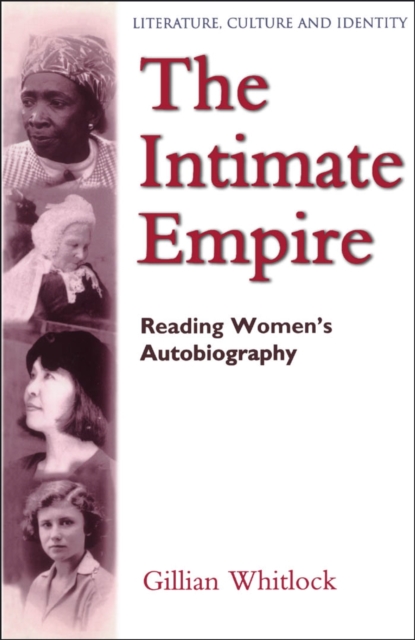
The intimate empire : reading women's autobiography
By means of contextualized readings, this work argues that autobiographic writing allows an intimate access to processes of colonization and decolonization, incorporation and resistance, and the formation and reformation of identities which occurs in postcolonial space. The book explores the interconnections between race, gender, autobiography and colonialism and uses a method of reading which looks for connections between very different autobiographical writings to pursue constructions of blackness and whiteness, femininity and masculinity, and nationality. Unlike previous studies of autobiography which focus on a limited Euro American canon, the book brings together contemporary and 19th-century women's autobiographies and travel writing from Canada, the Caribbean, Kenya, South Africa, Australia and New Zealand. With emphasis on the reader of autobiography as much as the subject, it argues that colonization and resistance are deeply embedded in thinking about the self.
eBook