
Catalogue Search | MBRL


Are you sure you want to remove the book from the shelf?

{{itemTitle}}
508
result(s) for
"Communes of France"
Sort by:

French Peasants in Revolt
The triumphant rise of Louis Napoleon Bonaparte over his Republican opponents has been the central theme of most narrative accounts of mid-nineteenth-century France, while resistance to the coup d'état generally has been neglected. By placing the insurrection of December 1851 in a broad perspective of socioeconomic and political development, Ted Margadant displays its full significance as a turning point in modern French history. He argues that, as the first expression of a new form of political participation on the part of the peasants, resistance to the coup was of greater importance than previously supposed. Furthermore, it provides and appropriate testing ground for more general theories of peasant movements and popular revolts.
Using manuscript materials in French national and departmental archives that cover all the major areas of revolt, the author examines the insurrection in depth on a national scale. After a brief discussion of the main characteristics of the insurrection, he analyzes its economic and social foundations; the dialectic of repression and conspiracy that fostered the political crisis; and the armed mobilizations, violence, and massive arrests that exploded as the result. A final chapter considers the implications of the insurrection for larger issues in the social and political history of modern France.
eBook

Surmounting the barricades : women in the Paris Commune
This book vividly evokes radical women's integral roles within France's
revolutionary civil war known as the Paris Commune. It demonstrates the breadth,
depth, and impact of communard feminist socialisms far beyond the 1871 insurrection.
Examining the period from the early 1860s through that century's end, Carolyn J.
Eichner investigates how radical women developed critiques of gender, class, and
religious hierarchies in the immediate pre-Commune era, how these ideologies emerged
as a plurality of feminist socialisms within the revolution, and how these varied
politics subsequently affected fin-de-siècle gender and class relations. She
focuses on three distinctly dissimilar revolutionary women leaders who exemplify
multiple competing and complementary feminist socialisms: Andre Leo, Elisabeth
Dmitrieff, and Paule Mink. Leo theorized and educated through journalism and
fiction, Dmitrieff organized institutional power for working-class women, and Mink
agitated crowds to create an egalitarian socialist world. Each woman forged her own
path to gender equality and social justice.
eBook

Massacre
The Paris Commune lasted for only 64 days in 1871, but during that short time it gave rise to some of the grandest political dreams of the nineteenth century-before culminating in horrific violence. Following the disastrous French defeat in the Franco-Prussian War, hungry and politically disenchanted Parisians took up arms against their government in the name of a more just society. They expelled loyalists and soldiers and erected barricades in the streets. In Massacre, John Merriman introduces a cast of inimitable Communards-from les pétroleuses (female incendiaries) to the painter Gustave Courbet-whose idealism fueled a revolution. And he vividly recreates the Commune's chaotic and bloody end when 30,000 troops stormed the city, burning half of Paris and executing captured Communards en masse. A stirring evocation of the spring when Paris was ablaze with cannon fire and its citizens were their own masters, Massacre reveals how the indomitable spirit of the Commune shook the very foundations of Europe.
eBook

From Jacobin to Liberal
For this book R. R. Palmer has translated selections from the abundant writings of the versatile French political figure and writer Marc-Antoine Jullien, weaving them together with his own extensive commentary into an absorbing narrative of Jullien's life and times. Jullien's hopes and fears for the \"progress of humanity\" were typical of many of the French bourgeoisie in this turbulent period. His life coincided with the whole era of revolution in Europe and the Americas from 1775 to 1848: he was born in the year when armed rebellion against Britain began in America, he witnessed the fall of the Bastille as a schoolboy in Paris, joined the Jacobin club, took part in the Reign of Terror, advocated democracy, put his hopes in Napoleon Bonaparte, turned against him, and then welcomed his return from Elba. Under the restored Bourbons, he became an outspoken liberal, rejoiced in the revolution of 1830, had doubts about the July monarchy, welcomed the revolution of 1848, and died a few weeks before the election of Louis-Napoleon Bonaparte as president of the Second Republic.
Drawn from books, pamphlets, reports, letters, book reviews, magazine articles, poems, and private notes and memoranda, Jullien's comments are supplemented here by letters that his mother wrote during the early years of the French Revolution and by articles by Jullien's collaborators in theRevue Encyclopédique. In Palmer's skilled hands, these selected materials from a now forgotten life vividly portray France's transition from revolutionary republicanism and the Terror through the Napoleonic years to the more placid liberalism of the nineteenth century.
eBook

Commemorating Trauma
Nothing says more about a culture than the way it responds to deeply traumatic events. The Reign of Terror, America's Civil War, the Holocaust, Hiroshima and Nagasaki, the Kennedy assassination, September 11th-watershed moments such as these can be rich sounding boards for the cultural historian patient enough to tease out the traumatic event's complex cultural resonances.This book is about one such moment in the history of modern France. The so-called Terrible Year began with the French army's crushing defeat at Sedan and the fall of the Second Empire in September of 1870, followed by the Prussian occupation of France and first siege of Paris in the fall and winter of that year. But no event of the period proved so deeply traumatic as the Paris Commune of 1871 and the bloody reprisals that attended its demise.Commemorating Trauma engages the rich body of recent scholarly work on cultural trauma to examine a curious conundrum. Why do French literary, historical and philosophical texts written in the aftermath of the Paris Commune so often employ the trope of confusion (in both the phenomenal and cognitive senses of that term) to register and work through the historical traumas of the Terrible Year? And how might these representations of confusion both reflect and inflect the confusions inherent to an ongoing process of social upheaval evident in late nineteenth-century France-a process whose benchmarks include democratization and the blurring of social classes, a persistent and evolving revolutionism, radical reconfigurations of the city as lived environment, and the development of specifically capitalist logics of commerce? These are the two principal questions addressed in this important study of cultural memory.
eBook

Terrorism and Communism
First published in English in 1920, this work is a reissue of Karl Kautsky's seminal work dealing with the origins and history of the forces at work in revolutionary epochs, which offers pathbreaking insights on the development of civilisation.
The opening chapters, dealing with eigthteenth century France, are of special interest to the student of the French revolution. The section devoted to the Commune of Paris offers a stimulating and provocative description of this famous govenment of the working class.
The reissue of this controversial and extraordinary work will be welcomed by all those interested in the history of Communism in particular and the theory and history of revolution in general.
eBook

Red Virgin
Louise Michel was born illegitimate in 1830 and became a schoolmistress in Paris. She was involved in radical activities during the twilight of France’s Second Empire, and during the Franco-Prussian War of 1870 and the siege of Paris. She was a leading member of the revolutionary groups controlling Montmarte. Michel emerged as one of the leaders of the insurrection during the Paris Commune of March-May 1871; and French anarchists saw her as martyr and saint – The Red Virgin. When the Versailles government crushed the Commune in May 1871, Michel was sentenced to exile in New Caledonia, until the general amnesty of 1880, when she returned to France and great popular acclaim and support from the working people of the country. Michel was arrested again during a demonstration in Paris in 1883 and sentenced to six years in prison. Pardoned after three years, she continued her speeches and writing, although she spent the greater part of her time from 1890 until her death in 1905 in England in self-imposed exile. It was during her prison term from 1883 to 1886 that she compiled her Memoires , now available in English. These memoirs offer readers a view of the non-Marxist left and give an in-depth look into the development of the revolutionary spirit. The early chapters treat her childhood, the development of her revolutionary feelings, and her training as a schoolteacher. The next section describes her activities as a schoolteacher in the Haute-Marne and Paris and therefore contains much of interest on education in 19th-century Europe. Her chapters on the siege of Paris, the Commune, and her first trial show those events from the point of view of a major participant. Of particular interest is a chapter on women’s rights, which Michel saw as part of the search for the rights of all people, male and female, and not as a separate struggle. The Red Virgin: Memoirs of Louise Michel will be useful to both scholars and students of 19th-century French history and women’s studies.
eBook
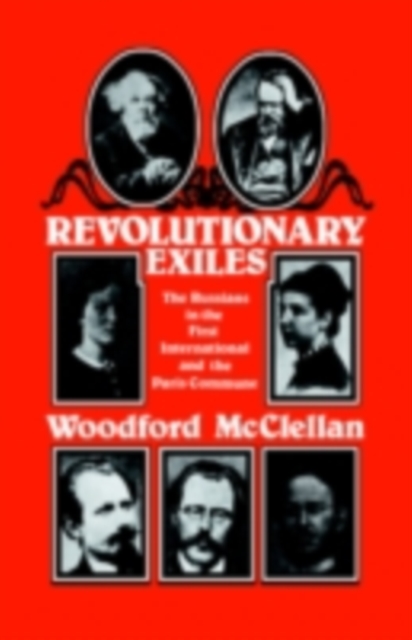
Revolutionary Exiles
This book, first published in 1979, examines the little-studied forerunners of the Russian revolutionary movement - the Russian section of the First International.It looks at the social democratic and Marxist Russians in the International, as well as examining the complex relations between the terrorist Sergei Nechaev and Marx's friends, as well.
eBook
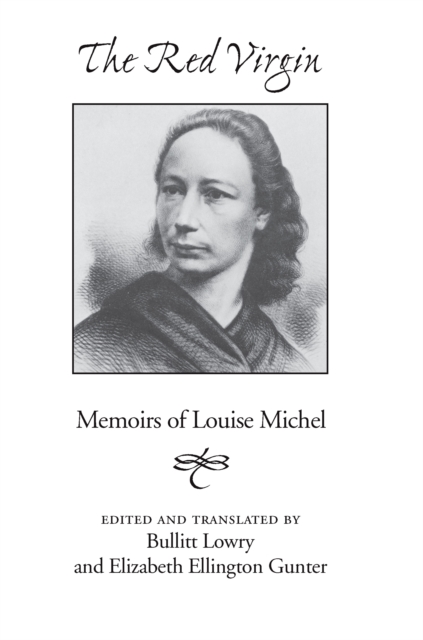
The Red Virgin: memoirs of Louise Michel
Louise Michel was born illegitimate in 1830 and became a schoolmistress in Paris. She was involved in radical activities during the twilight of France's Second Empire, and during the Franco-Prussian War of 1870 and the siege of Paris. She was a leading member of the revolutionary groups controlling Montmarte. Michel emerged as one of the leaders of the insurrection during the Paris Commune of March-May 1871; and French anarchists saw her as martyr and saint - The Red Virgin. When the Versailles government crushed the Commune in May 1871, Michel was sentenced to exile in New Caledonia, until the general amnesty of 1880, when she returned to France and great popular acclaim and support from the working people of the country. Michel was arrested again during a demonstration in Paris in 1883 and sentenced to six years in prison. Pardoned after three years, she continued her speeches and writing, although she spent the greater part of her time from 1890 until her death in 1905 in England in self-imposed exile. It was during her prison term from 1883 to 1886 that she compiled her Memoires, now available in English. These memoirs offer readers a view of the non-Marxist left and give an in-depth look into the development of the revolutionary spirit. The early chapters treat her childhood, the development of her revolutionary feelings, and her training as a schoolteacher. The next section describes her activities as a schoolteacher in the Haute-Marne and Paris and therefore contains much of interest on education in 19th-century Europe. Her chapters on the siege of Paris, the Commune, and her first trial show those events from the point of view of a major participant. Of particular interest is a chapter on women's rights, which Michel saw as part of the search for the rights of all people, male and female, and not as a separate struggle. The Red Virgin: Memoirs of Louise Michel will be useful to both scholars and students of 19th-century French history and women's studies.
eBook