
Catalogue Search | MBRL


Are you sure you want to remove the book from the shelf?

{{itemTitle}}
6,816
result(s) for
"Communicable diseases -- Statistics"
Sort by:

Monitoring the health of populations by tracking disease outbreaks : saving humanity from the next plague
\"Today the citizens of developed counties have never experienced a large-scale disease outbreak. One reason is the success of the public health community, including epidemiologists and biostatisticians, in tracking and identifying disease outbreaks. Monitoring the Health of Populations by Tracking Disease Outbreaks: Saving Humanity from the Next Plague is the story of the application of statistics for disease detection and tracking. The work of public health officials often critically depends on the use of statistical methods to help discern whether an outbreak may be occurring and, if there is sufficient evidence of an outbreak, then to locate and track it\"-- Provided by publisher.
Book
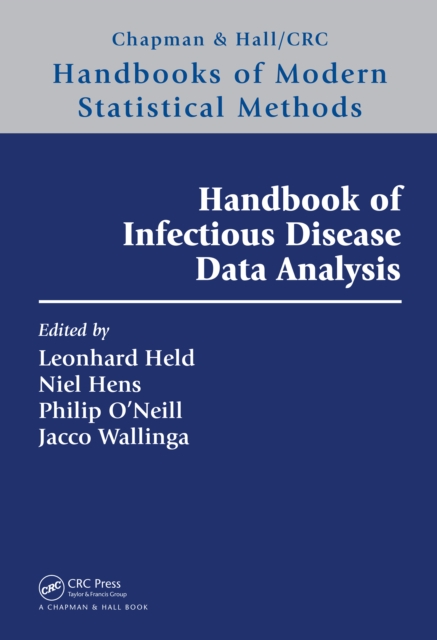
Handbook of Infectious Disease Data Analysis
Recent years have seen an explosion in new kinds of data on infectious diseases, including data on social contacts, whole genome sequences of pathogens, biomarkers for susceptibility to infection, serological panel data, and surveillance data. The Handbook of Infectious Disease Data Analysis provides an overview of many key statistical methods that have been developed in response to such new data streams and the associated ability to address key scientific and epidemiological questions. A unique feature of the Handbook is the wide range of topics covered.
Key features
Contributors include many leading researchers in the field
Divided into four main sections: Basic concepts, Analysis of Outbreak Data, Analysis of Seroprevalence Data, Analysis of Surveillance Data
Numerous case studies and examples throughout
Provides both introductory material and key reference material
I Introduction
1. Introduction Leonhard Held, Niel Hens, Philip O’Neill, Jacco Wallinga
II Basic Concepts
2. Population dynamics of pathogens Ottar Bjornstad
3. Infectious disease data from surveillance, outbreak investigation and epidemiological studies Susan Hahné, Richard Pebody
4. Key concepts in infectious disease epidemiology Nick Jewell
5. Key parameters in infectious disease epidemiology Laura White
6. Contact patterns for contagious diseases Jacco Wallinga, Jan van de Kassteele, Niel Hens
7. Basic stochastic transmission models and their inference Tom Britton
8. Analysis of vaccine studies and causal inference Betz Halloran
III Analysis of Outbreak Data
9. Markov chain Monte Carlo methods for outbreak data Philip O’Neill, Theodore Kypraios
10. Approximate Bayesian Computation methods for epidemic models Peter Neal
11. Iterated filtering methods for Markov process epidemic models Theresa Stocks
12. Pairwise survival analysis of infectious disease transmission data Eben Kenah
13. Methods for outbreaks using genomic data Don Klinkenberg, Caroline Colijn, Xavier Didelot
IV Analysis of Seroprevalence Data
14. Persistence of passive immunity, natural immunity (and vaccination) Amy Winter, Jess Metcalf
15. Inferring the time of infection from serological data Maciej Boni, Kåre Mølbak, Karen Angeliki Krogfelt
16. The use of seroprevalence data to estimate cumulative incidence of infection Ben Cowling, Jessica Wong
17. The analysis of serological data with transmission models Marc Baguelin
18. The analysis of multivariate serological data Steven Abrams
19. Mixture modelling Emanuele Del Fava, Ziv Shkedy
V Analysis of Surveillance Data
20. Modeling infectious diseases distributions: applications of point process methods Peter J Diggle
21. Prospective detection of outbreaks Benjamin Allevius, Michael Höhle
22. Underreporting and reporting delays Angela Noufaily
23. Spatio-temporal analysis of surveillance data Jon Wakefield, Tracy Q Dong, Vladimir N Minin
24. Analysing multiple epidemic data sources Daniela De Angelis, Anne Presanis
25. Forecasting based on surveillance data Leonhard Held, Sebastian Meyer
26. Spatial mapping of infectious disease risk Ewan Cameron
\"One of the editors of the book, Jacco Wallinga, is heading the group at the Dutch Institute of Public Health and the Environment that does all of the statistical analyses to feed their director with information. The latter has had a strong influence on the policy our government chose . . . The book is well produced . . . \" ~Paul Eilers, ISCB News
Leonhard Held is Professor of Biostatistics at the University of Zurich.
Niel Hens is Professor of Biostatistics at Hasselt University and the University of Antwerp.
Philip O’Neill is Professor of Applied Probability at the University of Nottingham.
Jacco Wallinga is Professor of Mathematical Modelling of Infectious Diseases at the Leiden University Medical Center.
eBook

Prevalence and risk factors of schistosomiasis among primary school children in four selected regions of The Gambia
The Gambia initiated a control programme for schistosomiasis in 2015. In light of this, recent and comprehensive data on schistosomiasis is required to effectively guide the control programme. This study aimed to evaluate the prevalence and associated risk factors of schistosomiasis among primary school children in The Gambia.
We utilised data from a previous study conducted in 2015 in 4 regions of The Gambia: North Bank Region (NBR), Lower River Region (LRR), Central River Region (CRR) and Upper River Region (URR). In the parent study, ten schools were selected randomly from each region. Urine and stool samples collected from 25 boys and 25 girls (7-14 years) in each school were examined for urinary schistosomiasis (Schistosoma haematobium infection) and intestinal schistosomiasis (Schistosoma mansoni infection) using urine filtration, dipstick and Kato-Katz methods.
Urinary schistosomiasis had an overall prevalence of 10.2% while intestinal schistosomiasis had a prevalence of 0.3% among the sampled school children. Prevalence of urinary schistosomiasis was significantly different among regions (χ 2 = 279.958, df = 3, p < 0.001), with CRR (27.6%) being the most endemic region, followed by URR (12.0%), then LRR (0.6%), and NBR (0.0%). Prevalence of intestinal schistosomiasis was also significantly variable among regions, with 4 of the 5 positive cases detected in CRR and 1 case in URR. Every school sampled in CRR had at least one student infected with S. haematobium, 50% of schools in URR had S. haematobium infection, and just one school in LRR had S. haematobium infection. While S. haematobium infection was significantly higher in boys (χ 2 = 4.440, df = 1, p = 0.035), no significant difference in infection rate was observed among age groups (χ 2 = 0.882, df = 2, p = 0.643). Two of the 5 students infected with S. mansoni were boys and 3 were girls. Four of these 5 students were in the 10-12 years age group and 1 was in the 7-9 years age group. Macrohaematuria and microhaematuria were found to be statistically associated with presence of S. haematobium eggs in urine. Being a male was a risk factor of S. haematobium infection. Bathing, playing and swimming in water bodies were found to pose less risk for S. haematobium infection, indicating that the true water contact behaviour of children was possibly underrepresented.
The findings of this study provide invaluable information on the prevalence of schistosomiasis in The Gambia. This was useful for the schistosomiasis control efforts of the country, as it guided mass drug administration campaigns in eligible districts in the study area. More studies on S. mansoni and its intermediate snail hosts are required to establish its true status in The Gambia. As children sometimes tend to provide responses that potentially please the research or their teacher, data collection frameworks and approaches that ensure true responses in studies involving children should be devised and used.
Journal Article

Estimating the health impact of vaccination against ten pathogens in 98 low-income and middle-income countries from 2000 to 2030: a modelling study
The past two decades have seen expansion of childhood vaccination programmes in low-income and middle-income countries (LMICs). We quantify the health impact of these programmes by estimating the deaths and disability-adjusted life-years (DALYs) averted by vaccination against ten pathogens in 98 LMICs between 2000 and 2030.
16 independent research groups provided model-based disease burden estimates under a range of vaccination coverage scenarios for ten pathogens: hepatitis B virus, Haemophilus influenzae type B, human papillomavirus, Japanese encephalitis, measles, Neisseria meningitidis serogroup A, Streptococcus pneumoniae, rotavirus, rubella, and yellow fever. Using standardised demographic data and vaccine coverage, the impact of vaccination programmes was determined by comparing model estimates from a no-vaccination counterfactual scenario with those from a reported and projected vaccination scenario. We present deaths and DALYs averted between 2000 and 2030 by calendar year and by annual birth cohort.
We estimate that vaccination of the ten selected pathogens will have averted 69 million (95% credible interval 52–88) deaths between 2000 and 2030, of which 37 million (30–48) were averted between 2000 and 2019. From 2000 to 2019, this represents a 45% (36–58) reduction in deaths compared with the counterfactual scenario of no vaccination. Most of this impact is concentrated in a reduction in mortality among children younger than 5 years (57% reduction [52–66]), most notably from measles. Over the lifetime of birth cohorts born between 2000 and 2030, we predict that 120 million (93–150) deaths will be averted by vaccination, of which 58 million (39–76) are due to measles vaccination and 38 million (25–52) are due to hepatitis B vaccination. We estimate that increases in vaccine coverage and introductions of additional vaccines will result in a 72% (59–81) reduction in lifetime mortality in the 2019 birth cohort.
Increases in vaccine coverage and the introduction of new vaccines into LMICs have had a major impact in reducing mortality. These public health gains are predicted to increase in coming decades if progress in increasing coverage is sustained.
Gavi, the Vaccine Alliance and the Bill & Melinda Gates Foundation.
Journal Article

Travel restrictions and lockdown during the COVID-19 pandemic—impact on notified infectious diseases in Switzerland
Based on notification data the impact of the COVID-19 lockdown in Switzerland was assessed. While the incidence of tick-borne encephalitis almost doubled as compared to 2016-2019, a reduction in all other infectious diseases was recorded. The lowest reduction rates (<25%) were noted for legionellosis, hepatitis A, chlamydia infection and gonorrhoea.
Journal Article

Lifting Universal Masking in Schools — Covid-19 Incidence among Students and Staff
Among school districts in the greater Boston area, the lifting of masking requirements was associated with an additional 44.9 Covid-19 cases per 1000 students and staff during the 15 weeks after a statewide masking policy was rescinded.
Journal Article

Evaluating the Effectiveness of Social Distancing Interventions to Delay or Flatten the Epidemic Curve of Coronavirus Disease
By April 2, 2020, >1 million persons worldwide were infected with severe acute respiratory syndrome coronavirus 2. We used a mathematical model to investigate the effectiveness of social distancing interventions in a mid-sized city. Interventions reduced contacts of adults >60 years of age, adults 20-59 years of age, and children <19 years of age for 6 weeks. Our results suggest interventions started earlier in the epidemic delay the epidemic curve and interventions started later flatten the epidemic curve. We noted that, while social distancing interventions were in place, most new cases, hospitalizations, and deaths were averted, even with modest reductions in contact among adults. However, when interventions ended, the epidemic rebounded. Our models suggest that social distancing can provide crucial time to increase healthcare capacity but must occur in conjunction with testing and contact tracing of all suspected cases to mitigate virus transmission.
Journal Article

Co-administration of a meningococcal glycoconjugate ACWY vaccine with travel vaccines: A randomized, open-label, multi-center study
Potential interactions between vaccines may compromise the immunogenicity and/or safety of individual vaccines so must be assessed before concomitant administration is recommended. In this study, the immunogenicity and safety of travel vaccines against Japanese encephalitis (JEV) and rabies (PCECV) administered together with or without a quadrivalent meningococcal glycoconjugate ACWY-CRM vaccine were evaluated (NCT01466387).
Healthy adults aged 18 to ≤60 years were randomized to one of four vaccine regimens: JEV + PCECV + MenACWY-CRM, JEV + PCECV, PCECV or MenACWY-CRM. Immunogenicity at baseline and 28 days post-complete vaccination was assessed by serum bactericidal assay using human complement or neutralization tests. Adverse events (AEs) were collected throughout the study period.
JEV + PCECV + MenACWY-CRM was non-inferior to JEV + PCECV. Post-vaccination seroprotective neutralizing titers or concentrations were achieved in 98–99% (JE) and 100% (rabies) of subjects across the vaccine groups. Antibody responses to vaccine meningococcal serogroups were in the same range for MenACWY-CRM and JEV + PCECV + MenACWY-CRM. Rates of reporting of AEs were similar for JEV + PCECV and JEV + PCECV + MenACWY-CRM.
MenACWY-CRM was administered with an inactivated adjuvanted JE and a purified chick embryo cell-culture rabies vaccine without compromising immunogenicity or safety of the individual vaccines. These data provide evidence that MenACWY-CRM could be effectively incorporated into travel vaccination programs.
Trial number: NCT01466387.
Journal Article

Reduction in mobility and COVID-19 transmission
In response to the COVID-19 pandemic, countries have sought to control SARS-CoV-2 transmission by restricting population movement through social distancing interventions, thus reducing the number of contacts. Mobility data represent an important proxy measure of social distancing, and here, we characterise the relationship between transmission and mobility for 52 countries around the world. Transmission significantly decreased with the initial reduction in mobility in 73% of the countries analysed, but we found evidence of decoupling of transmission and mobility following the relaxation of strict control measures for 80% of countries. For the majority of countries, mobility explained a substantial proportion of the variation in transmissibility (median adjusted R-squared: 48%, interquartile range - IQR - across countries [27–77%]). Where a change in the relationship occurred, predictive ability decreased after the relaxation; from a median adjusted R-squared of 74% (IQR across countries [49–91%]) pre-relaxation, to a median adjusted R-squared of 30% (IQR across countries [12–48%]) post-relaxation. In countries with a clear relationship between mobility and transmission both before and after strict control measures were relaxed, mobility was associated with lower transmission rates after control measures were relaxed indicating that the beneficial effects of ongoing social distancing behaviours were substantial.
Social distancing policies aiming to reduce COVID-19 transmission have been reflected in reductions in human mobility. Here, the authors show that reduced mobility is correlated with decreased transmission, but that this relationship weakened over time as social distancing measures were relaxed.
Journal Article

Japanese citizens' behavioral changes and preparedness against COVID-19: An online survey during the early phase of the pandemic
The Japanese government instituted countermeasures against COVID-19, a pneumonia caused by the new coronavirus, in January 2020. Seeking \"people's behavioral changes,\" in which the government called on the public to take precautionary measures or exercise self-restraint, was one of the important strategies. The purpose of this study is to investigate how and from when Japanese citizens have changed their precautionary behavior under circumstances in which the government has only requested their cooperation. This study uses micro data from a cross-sectional survey conducted on an online platform of an online research company, based on quota sampling that is representative of the Japanese population. By the end of March 2020, a total of 11,342 respondents, aged from 20 to 64 years, were recruited. About 85 percent reported practising the social distancing measures recommended by the government including more females than males and more older than younger participants. Frequent handwashing is conducted by 86 percent of all participants, 92 percent of female, and 87.9 percent of over-40 participants. The most important event influencing these precautionary actions was the infection aboard the Diamond Princess cruise ship, which occurred in early February 2020 (23 percent). Information from the central and local governments, received by 60 percent of the participants, was deemed trustworthy by 50 percent. However, the results also showed that about 20 percent of the participants were reluctant to implement proper prevention measures. The statistical analysis indicated that the typical characteristics of those people were male, younger (under 30 years old), unmarried, from lower-income households, a drinking or smoking habit, and a higher extraversion score. To prevent the spread of infection in Japan, it is imperative to address these individuals and encourage their behavioural changes using various means to reach and influence them.
Journal Article