
Catalogue Search | MBRL


Are you sure you want to remove the book from the shelf?

{{itemTitle}}
6,171
result(s) for
"Communicable diseases in animals"
Sort by:

Framing animals as epidemic villains : histories of non-human disease vectors
This book takes a historical and anthropological approach to understanding how non-human hosts and vectors of diseases are understood, at a time when emerging infectious diseases are one of the central concerns of global health. The volume critically examines the ways in which animals have come to be framed as 'epidemic villains' since the turn of the nineteenth century. Providing epistemological and social histories of non-human epidemic blame, as well as ethnographic perspectives on its recent manifestations, the essays explore this cornerstone of modern epidemiology and public health alongside its continuing importance in today's world. Covering diverse regions, the book argues that framing animals as spreaders and reservoirs of infectious diseases - from plague to rabies to Ebola - is an integral aspect not only to scientific breakthroughs but also to the ideological and biopolitical apparatus of modern medicine. As the first book to consider the impact of the image of non-human disease hosts and vectors on medicine and public health, it offers a major contribution to our understanding of human-animal interaction under the shadow of global epidemic threat.
Book

Climate Warming and Disease Risks for Terrestrial and Marine Biota
Infectious diseases can cause rapid population declines or species extinctions. Many pathogens of terrestrial and marine taxa are sensitive to temperature, rainfall, and humidity, creating synergisms that could affect biodiversity. Climate warming can increase pathogen development and survival rates, disease transmission, and host susceptibility. Although most host-parasite systems are predicted to experience more frequent or severe disease impacts with warming, a subset of pathogens might decline with warming, releasing hosts from disease. Recently, changes in El Niño-Southern Oscillation events have had a detectable influence on marine and terrestrial pathogens, including coral diseases, oyster pathogens, crop pathogens, Rift Valley fever, and human cholera. To improve our ability to predict epidemics in wild populations, it will be necessary to separate the independent and interactive effects of multiple climate drivers on disease impact.
Journal Article
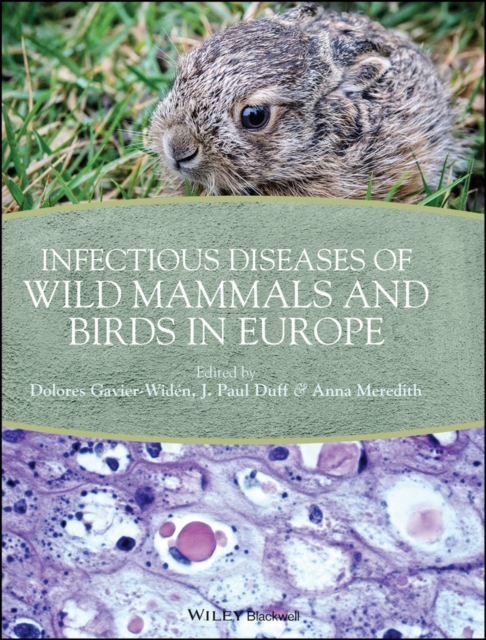
Infectious Diseases of Wild Mammals and Birds in Europe
INFECTIOUS DISEASES OF WILD MAMMALS AND BIRDS IN EUROPE Infectious Diseases of Wild Mammals and Birds in Europe is a key resource on the diagnosis and treatment of infectious diseases in European wildlife that covers the distinctive nature of diseases as they occur in Europe, including strains, insect vectors, reservoir species, and climate, as well as geographical distribution of the diseases and European regulations for reporting, diagnosis and control. Divided into sections on viral infections, bacterial infections, fungal and yeast infections, and prion infections, this definitive reference provides valuable information on disease classification and properties, causative agents, epidemiology, pathogenesis, and implications for human, domestic and wild animal health. KEY FEATURES: * Brings together extensive research from many different disciplines into one integrated and highly useful definitive reference. * Zoonotic risks to human health, as well as risks to pets and livestock are highlighted. * Each disease is covered separately with practical information on the animal species in which the disease has been recorded, clinical signs of the disease, diagnostic methods, and recommended treatments and vaccination. * Wildlife vaccination and disease surveillance techniques are described. * Examines factors important in the spread of disease such as changing climate, the movement of animals through trade, and relaxations in the control of wild animal populations. Written by a team of pathologists, epidemiologists and clinicians from across Europe, this is the definitive resource for infectious diseases of wild mammals and birds in Europe. It will be an invaluable reference for veterinarians, conservation biologists, epidemiologists, and wildlife researchers, managers, rehabilitators and students.
eBook

Ecology and impacts of white-nose syndrome on bats
The recent introduction of Pseudogymnoascus destructans (the fungal pathogen that causes white-nose syndrome in bats) from Eurasia to North America has resulted in the collapse of North American bat populations and restructured species communities. The long evolutionary history between P. destructans and bats in Eurasia makes understanding host life history essential to uncovering the ecology of P. destructans. In this Review, we combine information on pathogen and host biology to understand the patterns of P. destructans spread, seasonal transmission ecology, the pathogenesis of white-nose syndrome and the cross-scale impact from individual hosts to ecosystems. Collectively, this research highlights how early pathogen detection and quantification of host impacts has accelerated the understanding of this newly emerging infectious disease.The fungal pathogen Pseudogymnoascus destructans, which causes white-nose syndrome in bats, has devastated bat populations in North America since its introduction from Eurasia in the 2000s. In this Review, Hoyt and colleagues describe the ecology of P. destructans in bats and its impacts on bats and the ecosystem.
Journal Article

Encephalitis and Death in Wild Mammals at a Rehabilitation Center after Infection with Highly Pathogenic Avian Influenza A(H5N8) Virus, United Kingdom
We report a disease and mortality event involving swans, seals, and a fox at a wildlife rehabilitation center in the United Kingdom during late 2020. Five swans had onset of highly pathogenic avian influenza virus infection while in captivity. Subsequently, 5 seals and a fox died (or were euthanized) after onset of clinical disease. Avian-origin influenza A virus subtype H5N8 was retrospectively determined as the cause of disease. Infection in the seals manifested as seizures, and immunohistochemical and molecular testing on postmortem samples detected a neurologic distribution of viral products. The fox died overnight after sudden onset of inappetence, and postmortem tissues revealed neurologic and respiratory distribution of viral products. Live virus was isolated from the swans, seals, and the fox, and a single genetic change was detected as a potential adaptive mutation in the mammalian-derived viral sequences. No human influenza-like illness was reported in the weeks after the event.
Journal Article

A review on the diagnosis of animal trypanosomoses
This review focuses on the most reliable and up-to-date methods for diagnosing trypanosomoses, a group of diseases of wild and domestic mammals, caused by trypanosomes, parasitic zooflagellate protozoans mainly transmitted by insects. In Africa, the Americas and Asia, these diseases, which in some cases affect humans, result in significant illness in animals and cause major economic losses in livestock. A number of pathogens are described in this review, including several Salivarian trypanosomes, such as
Trypanosoma brucei
sspp. (among which are the agents of sleeping sickness, the human African trypanosomiasis [HAT]),
Trypanosoma congolense
and
Trypanosoma vivax
(causing “Nagana” or animal African trypanosomosis [AAT]),
Trypanosoma evansi
(“Surra”) and
Trypanosoma equiperdum
(“Dourine”), and
Trypanosoma cruzi
, a Stercorarian trypanosome, etiological agent of the American trypanosomiasis (Chagas disease). Diagnostic methods for detecting zoonotic trypanosomes causing Chagas disease and HAT in animals, as well as a diagnostic method for detecting animal trypanosomes in humans (the so-called “atypical human infections by animal trypanosomes” [a-HT]), including
T. evansi
and
Trypanosoma lewisi
(a rat parasite), are also reviewed. Our goal is to present an integrated view of the various diagnostic methods and techniques, including those for: (i) parasite detection; (ii) DNA detection; and (iii) antibody detection. The discussion covers various other factors that need to be considered, such as the sensitivity and specificity of the various diagnostic methods, critical cross-reactions that may be expected among Trypanosomatidae, additional complementary information, such as clinical observations and epizootiological context, scale of study and logistic and cost constraints. The suitability of examining multiple specimens and samples using several techniques is discussed, as well as risks to technicians, in the context of specific geographical regions and settings. This overview also addresses the challenge of diagnosing mixed infections with different
Trypanosoma
species and/or kinetoplastid parasites. Improving and strengthening procedures for diagnosing animal trypanosomoses throughout the world will result in a better control of infections and will significantly impact on “One Health,” by advancing and preserving animal, human and environmental health.
Graphical Abstract
Journal Article
Serologic Screening of Severe Acute Respiratory Syndrome Coronavirus 2 Infection in Cats and Dogs during First Coronavirus Disease Wave, the Netherlands
Severe acute respiratory syndrome coronavirus 2 (SARS-CoV-2) can infect many animal species, including minks, cats, and dogs. To gain insights into SARS-CoV-2 infections in cats and dogs, we developed and validated a set of serologic assays, including ELISA and virus neutralization. Evaluation of samples from animals before they acquired coronavirus disease and samples from cats roaming SARS-CoV-2-positive mink farms confirmed the suitability of these assays for specific antibody detection. Furthermore, our findings exclude SARS-CoV-2 nucleocapsid protein as an antigen for serologic screening of cat and dog samples. We analyzed 500 serum samples from domestic cats and dogs in the Netherlands during April-May 2020. We showed 0.4% of cats and 0.2% of dogs were seropositive. Although seroprevalence in cats and dogs that had unknown SARS-CoV-2 exposure was low during the first coronavirus disease wave, our data stress the need for development of continuous serosurveillance for SARS-CoV-2 in these 2 animal species.
Journal Article

The Global Burden of Emerging and Re-Emerging Orbiviruses in Livestock: An Emphasis on Bluetongue Virus and Epizootic Hemorrhagic Disease Virus
Bluetongue virus (BTV) and epizootic hemorrhagic disease virus (EHDV) are vector-borne orbiviruses that pose an emerging threat to livestock, including cattle and sheep. This review summarizes the global distribution, genetic diversity, and key factors driving their spread along with the existing knowledge gaps and recommendations to mitigate their impact. Both viruses cause hemorrhagic disease in susceptible ruminants and are commonly reported in tropical and subtropical regions including North America, Asia, Africa, Oceania, and some parts of Europe. The geographical distribution of these viruses, encompassing 27 BTV and 7 EHDV serotypes, has shifted, particularly with the recent invasion of BTV-3, 4, and 8 and EHDV-8 serotypes in Europe. Several factors contribute to the recent spread of these viruses such as the distribution of virulent strains by the movement of temperature-dependent Culicoides vectors into new areas due to rapid climate change, the reassortment of viral strains during mixed infections, and unrestricted global trade. These diseases cause significant economic impacts including morbidity, mortality, reduced production, high management costs, and the disruption of international trade. Effective prevention and control strategies are paramount and rely on vaccination, vector control using insecticides, and the destruction of breeding sites, husbandry practices including the isolation and quarantine of infected hosts, restriction of animal movement, prompt diagnosis and identification of circulating strains, and effective surveillance and monitoring plans such as the pre-export and post-import screening of semen used for artificial insemination. However, challenges remain with intercontinental virus spread, live vaccines, and the failure of inactivated vaccines to produce protective immunity against dissimilar strains. Significant knowledge gaps highlight the need for a better scientific understanding and a strategic plan to ensure healthy livestock and global food security.
Journal Article
Common and Contrasting Themes of Plant and Animal Diseases
Recent studies in bacterial pathogenesis reveal common and contrasting mechanisms of pathogen virulence and host resistance in plant and animal diseases. This review presents recent developments in the study of plant and animal pathogenesis, with respect to bacterial colonization and the delivery of effector proteins to the host. Furthermore, host defense responses in both plants and animals are discussed in relation to mechanisms of pathogen recognition and defense signaling. Future studies will greatly add to our understanding of the molecular events defining host-pathogen interactions.
Journal Article