
Catalogue Search | MBRL


Are you sure you want to remove the book from the shelf?

{{itemTitle}}
290,456
result(s) for
"Communication Studies"
Sort by:

The art of explanation : noun : 1. How to communicate with clarity and confidence
Do you worry about holding people's attention during presentations? Are you unsure where to start when faced with writing an essay or report? Are you preparing for an interview and wondering how to get all your points across? Explanation - identifying and communicating what we want to say - is an art. And the BBC presenter and journalist Ros Atkins is something of a master of the form. In this book, Ros shares the secrets he has learned from years of working in high-pressure newsrooms, identifying the ten elements of a good explanation and the seven steps you need to take to express yourself with clarity and impact. Whether at work, school, university or home, we all benefit from being able to articulate ourselves clearly. Filled with practical examples, this book is a must-read for anyone who wants to sharpen their communication skills.
BOOK

Statistical Methods for Communication Science
Statistical Methods for Communication Science is the only statistical methods volume currently available that focuses exclusively on statistics in communication research. Writing in a straightforward, personal style, author Andrew F. Hayes offers this accessible and thorough introduction to statistical methods, starting with the fundamentals of measurement and moving on to discuss such key topics as sampling procedures, probability, reliability, hypothesis testing, simple correlation and regression, and analyses of variance and covariance. Hayes takes readers through each topic with clear explanations and illustrations. He provides a multitude of examples, all set in the context of communication research, thus engaging readers directly and helping them to see the relevance and importance of statistics to the field of communication.
eBook

How to Read Like You Mean It
In this candid and concise volume, Kyle Conway, author of The Art of Communication in a Polarized World, considers how we can open ourselves to others and to ideas that scare us by reading difficult texts. Conway argues that because we resist ideas we don’t understand, we must embrace confusion as a constitutive part of understanding and meaningful exchange, whether between a reader and a text or between two people. Building on the work of hermeneutics scholar Paul Ricoeur, Conway evaluates the recurring paradox of miscommunication that results in deeper understanding and proposes strategies for reading that will allow individuals to give up the illusion of certainty. In elegant and compelling prose, Conway introduces readers to the idea that it is through uncertainty that we can gain access to new and meaningful worlds—those of texts and other people.
eBook

Writing for busy readers : communicate more effectively in the real world
We were all taught the fundamentals of writing well in school. But how do we write effectively in today's hyper-interactive world? When 'The Elements of Style' and 'On Writing Well' were published in 1959 and 1976, the internet hadn't been invented. Since then, there has been a radical transformation in how we communicate. The average adult receives over 100 emails and tens of text messages each day. With all this correspondence, gaining a busy reader's attention is now a competition. Todd Rogers and Jessica Lasky-Fink, both behavioural scientists, offer practical writing advice you can use today.
Book

Action and agency in dialogue : passion, incarnation and ventriloquism
What happens when people communicate or dialogue with each other? This is the daunting question that this book proposes to address by starting from a controversial hypothesis: What if human interactants were not the only ones to be considered, paraphrasing Austin (1962), as \"doing things with words\"? That is, what if other \"things\" could also be granted the status of agents in a dialogical situation? Action and Agency in Dialogue: Passion, incarnation, and ventriloquism proposes to explore this unique hypothesis by mobilizing metaphorically the notion of ventriloquism. According to this ventriloqual perspective, interactions are never purely local, but dislocal, that is, they constantly mobilize figures (collectives, principles, values, emotions, etc.) that incarnate themselves in people's discussions. This highly original book, which develops the analytical, practical and ethical dimensions of such a theoretical positioning, may be of interest to communication scholars, linguists, sociologists, conversation analysts, management and organizational scholars, as well as philosophers interested in language, action and ethics.
eBook

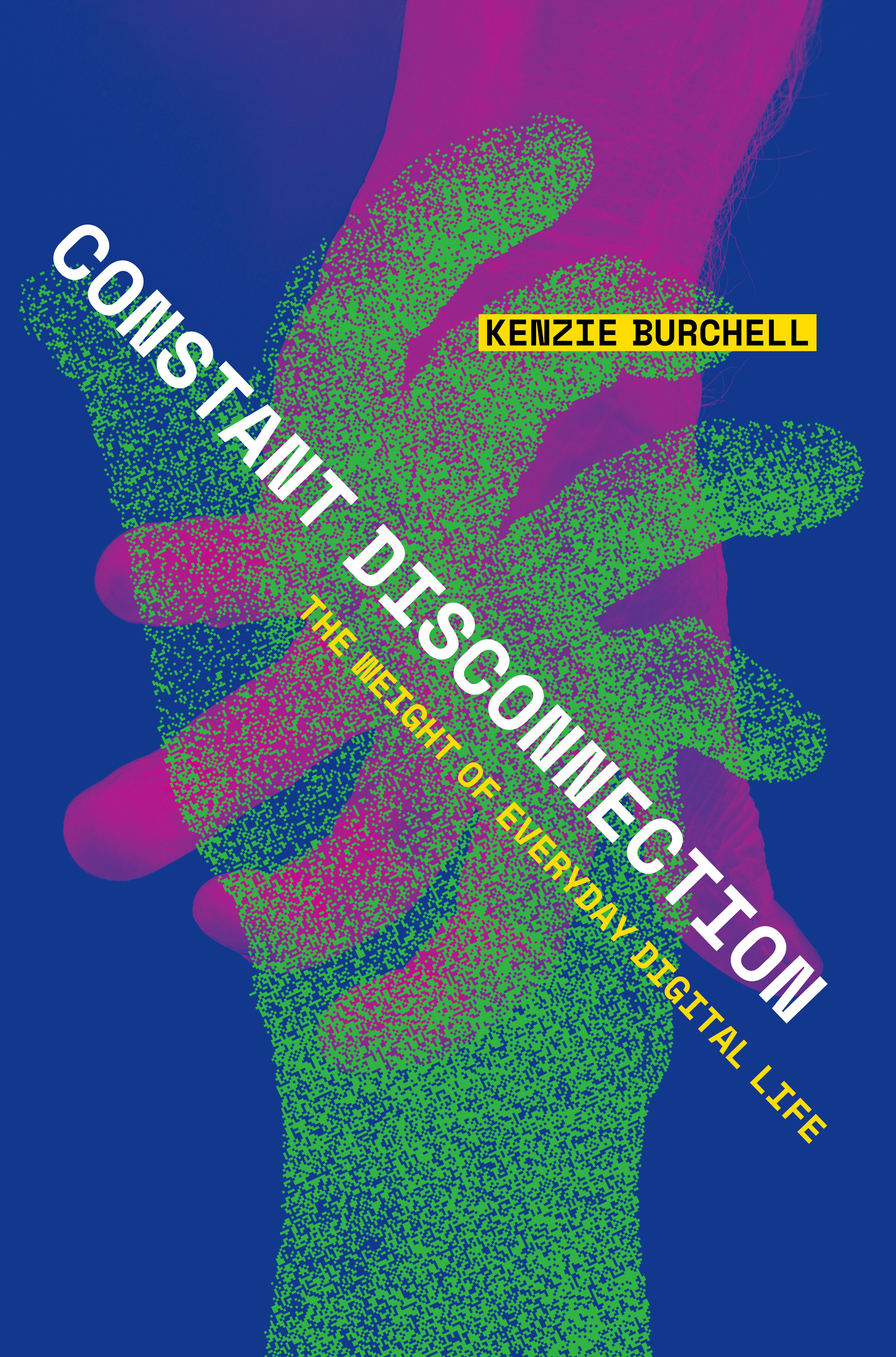
Constant Disconnection
The weight of constant digital connection is the default condition of working life, home life, and everyday personal life – driving us to engage more with platforms than with people, a new state of constant disconnection that we cannot escape. Overflowing email inboxes, deluges of mobile phone notifications and torrents of social media posts—the flow of communication in its abundance is today's individualized interface for interpersonal and professional practices. Communication technologies and their use are both the needle and the thread of the wider social tapestry of everyday contemporary life. This ever-changing communication environment is where the neoliberal economic policies of the West and the commercial imperatives of the platform and data-mining industries meet. It is where the contradictions they produce can be felt day-to-day by citizens-turned-users. How does it feel to live at the pressure points of intersecting economic realities and why does it matter? Drawing on extensive sociological research, Burchell examines how individuals try to manage connection as participation in everyday life and how, on a larger scale, the ever-expanding knowledge, communication, and data-driven economies depend on the very pressures that result from our disparate communication needs. With so much time spent managing the pressures of our communication environment, we often overlook the way media technologies produce systemic tensions that are reshaping how we interact with each other and what we understand to be social connection today.
eBook

We need to talk : how to have conversations that matter
\"From NPR veteran Celeste Headlee, [a] ... guide to the lost art of conversation\"-- Provided by publisher.
Book

Intercultural Dialogue in Practice
This book explores the wide-ranging terminology relevant to intercultural dialogue. It reports on a research project that explored the management of value judgment in foreign language education to overcome prejudice, which is a key dynamic in intercultural dialogue that brings many other factors into play.
eBook