
Catalogue Search | MBRL


Are you sure you want to remove the book from the shelf?

{{itemTitle}}
796,372
result(s) for
"Communication and technology"
Sort by:


Unruly speech : displacement and the politics of transgression
Unruly Speech explores how Uyghurs in China and in the diaspora transgress sociopolitical limits with \"unruly\" communication practices in a quest for change. Drawing on research in China, the United States, and Germany, Saskia Witteborn situates her study against the backdrop of displacement and shows how naming practices and witness accounts become potent ways of resistance in everyday interactions and in global activism. Featuring the voices of Uyghurs from three continents, Unruly Speech analyzes the discursive and material force of place names, social media, surveillance, and the link between witnessing and the discourse on human rights. The book provides a granular view of disruptive communication: its global political moorings and socio-technical control. The rich ethnographic study will appeal to audiences interested in migration and displacement, language and social interaction, advocacy, digital surveillance, and a transnational China.
eBook


The future of the Internet : and how to stop it
This extraordinary book explains the engine that has catapulted the Internet from backwater to ubiquity-and reveals that it is sputtering precisely because of its runaway success. With the unwitting help of its users, the generative Internet is on a path.
eBook

Can you hear me? : how to connect with people in a virtual world
Communicating virtually is cool, useful, and becoming more universal every day. But the actual communication is often quite bad. Indeed, everyone agrees that the quality of human connection we feel in virtual meetings, email, and other forms of virtual communication is awful. Worse than boring, virtual communication very often leads to misunderstandings, because it deprives us of the emotional knowledge that helps us understand context. How can we fix this? A key problem is that we are busy trying to replicate the experience of a face-to-face meeting in the virtual world, assuming the same rules apply. That is a big mistake. We need to shift our focus and energy to a new challenge, unique to the virtual era. As communication expert Nick Morgan argues in this essential book, recent research suggests that we need to learn to consciously deliver a whole set of cues, both verbal and nonverbal, that we used to deliver unconsciously in the previrtual era. Indeed, we need to update all our rules of connection for the virtual sphere, rethinking them from the beginning and avoiding the mistake of assuming that they are inherently similar to face-to-face connections. Can You Hear Me? explains and guides you through this important process, describing what the current research reveals about what works and what doesn't in virtual communications, and creating a new set of rules and practical tips for how to connect with people--your team, your audience, your organization--when you can't be physically present. If you work or manage in an organization that has more than one office or customers who aren't nearby, Can You Hear Me? is your essential communications manual for twenty-first-century work.-- Provided by publisher
Book

Postal Culture
The nationalization of the postal service in Italy transformed post-unification letter writing as a cultural medium. Both a harbinger of progress and an expanded, more efficient means of circulating information, the national postal service served as a bridge between the private world of personal communication and the public arena of information exchange and production of public opinion. As a growing number of people read and wrote letters, they became part of a larger community that regarded the letter not only as an important channel in the process of information exchange, but also as a necessary instrument in the education and modernization of the nation.
In Postal Culture , Gabriella Romani examines the role of the letter in Italian literature, cultural production, communication, and politics. She argues that the reading and writing of letters, along with epistolary fiction, epistolary manuals, and correspondence published in newspapers, fostered a sense of community and national identity and thus became a force for social change.
eBook


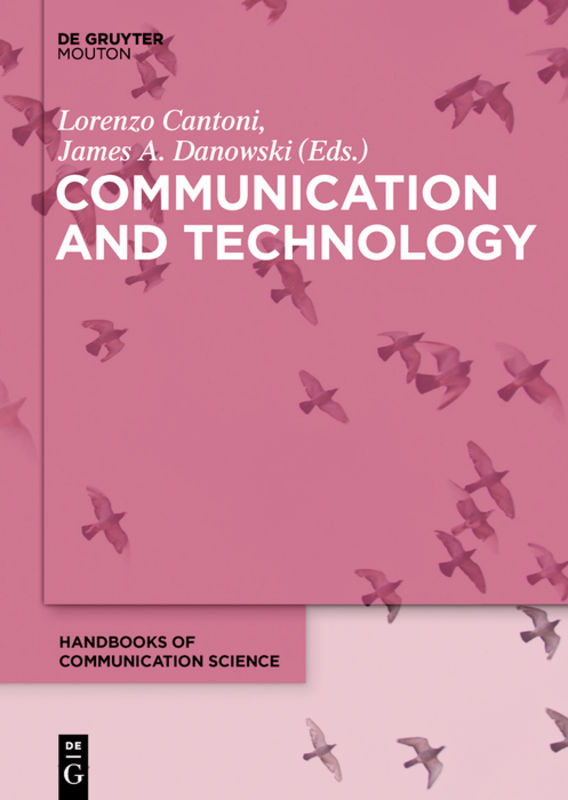
Communication and Technology
This handbooks series aims to integrate knowledge of communication structures and processes. It is global in orientation, dedicated to cultural and epistemological diversity as well as different scholarly approaches. The series features volumes on 'messages, codes and channels', 'mode of address: communication situations and context', 'methodology in communication science' and 'application areas'. The latter features volumes devoted to a large range of specialist areas of communication science. The series as a whole aims at meeting the needs of undergraduates, postgraduates, academics and researchers across the area of communication studies.
eBook