
Catalogue Search | MBRL


Are you sure you want to remove the book from the shelf?

{{itemTitle}}
3,737
result(s) for
"Communication in folklore."
Sort by:


Tradition in the Twenty-First Century
InTradition in the Twenty-First Century, eight diverse contributors explore the role of tradition in contemporary folkloristics. For more than a century, folklorists have been interested in locating sources of tradition and accounting for the conceptual boundaries of tradition, but in the modern era, expanded means of communication, research, and travel, along with globalized cultural and economic interdependence, have complicated these pursuits. Tradition is thoroughly embedded in both modern life and at the center of folklore studies, and a modern understanding of tradition cannot be fully realized without a thoughtful consideration of the past's role in shaping the present.
Emphasizing how tradition adapts, survives, thrives, and either mutates or remains stable in today's modern world, the contributors pay specific attention to how traditions now resist or expedite dissemination and adoption by individuals and communities. This complex and intimate portrayal of tradition in the twenty-first century offers a comprehensive overview of the folkloristic and popular conceptualizations of tradition from the past to present and presents a thoughtful assessment and projection of how \"tradition\" will fare in years to come. The book will be useful to advanced undergraduate or graduate courses in folklore and will contribute significantly to the scholarly literature on tradition within the folklore discipline.Additional Contributors: Simon Bronner, Stephen Olbrys Gencarella, Merrill Kaplan, Lynne S. McNeill, Elliott Oring, Casey R. Schmitt, and Tok Thompson
eBook

Folklore: An identity born of shared grief
The article formulates a common base for the meaning of grief in an intricate folk society. As an expression of identity emanating from human memory, folklore projects something essential in human attitudes and grievances. It provides a channeling perspective of human communicative patterns of transcending quotidian discourses. Folklore is a constant awareness of conscious identity until something changes in the secondary loss of cultural falling. Folklore is not the primary loss of tangible things. There is a lot to ponder about when it comes to claims asserted to the role of grief and identity. Lack of \"self-clarity\" that comes with shared grief results in the questioning of folk-hood. The idea of \"letting go\" has left many grievers shut doors of the past. The paper examines how shared grief effectively centers around the formation of self-identity. In application to contemporary folk apprehension, folklore is not inherited out of familial kinship but from traditional insights. Folklore appears to be relevant in taking a verifiable digression in showing an advanced comprehension of the subject of study. Reconstruction of factual past valorizes folklore as a paradigm of unaccounted recovery. Grief permeates folklore, as a result, folklore is choked with solace and lurking shadowy pasts. This article tenuously relies on the \"hows\" of identity-grief production and the challenges inherent to endowing folkloristic experiences in shared grief. The article concludes on the positive implications of folklore in retaining a sense of who one is, through distinguished grief.
Journal Article


The Uncoiling Python
There are many collections of African oral traditions, but few as carefully organized asThe Uncoiling Python.Harold Scheub, one of the world's leading scholars of African oral traditions and folklore, explores the ways in which oral traditions have served to combat and subvert colonial domination in South Africa. From the time colonial forces first came to southern Africa in 1487, oral and written traditions have been a bulwark against what became 350 years of colonial rule, characterized by the racist policies of apartheid.The Uncoiling Python: South African Storytellers and Resistanceis the first in-depth study of oral tradition as a means of survival.In open insurrections and other subversive activities Africans resisted the daily humiliations of colonial rule, but perhaps the most effective and least apparent expression of subversion was through indigenous storytelling and poetic traditions. Harold Scheub has collected the stories and poetry of the Xhosa, Zulu, Swati, and Ndebele peoples to present a fascinating analysis of how the apparently harmless tellers of tales and creators of poetry acted as front-line soldiers.
eBook
Performance and Ethnography
Performance and Ethnography: Dance, Drama, Music revisits the territory of the performance orientation, touching on anthropology, dance, folklore, music and theatre to look for present trends in both the ethnography of performance and performance ethnography. One of the main concerns of this volume is with an embodied, affective and sensory ethnography that privileges encounters between ethnographer, participants and practices as key to understanding and knowledge. Another is the extent to wh.
eBook
It was like a fever
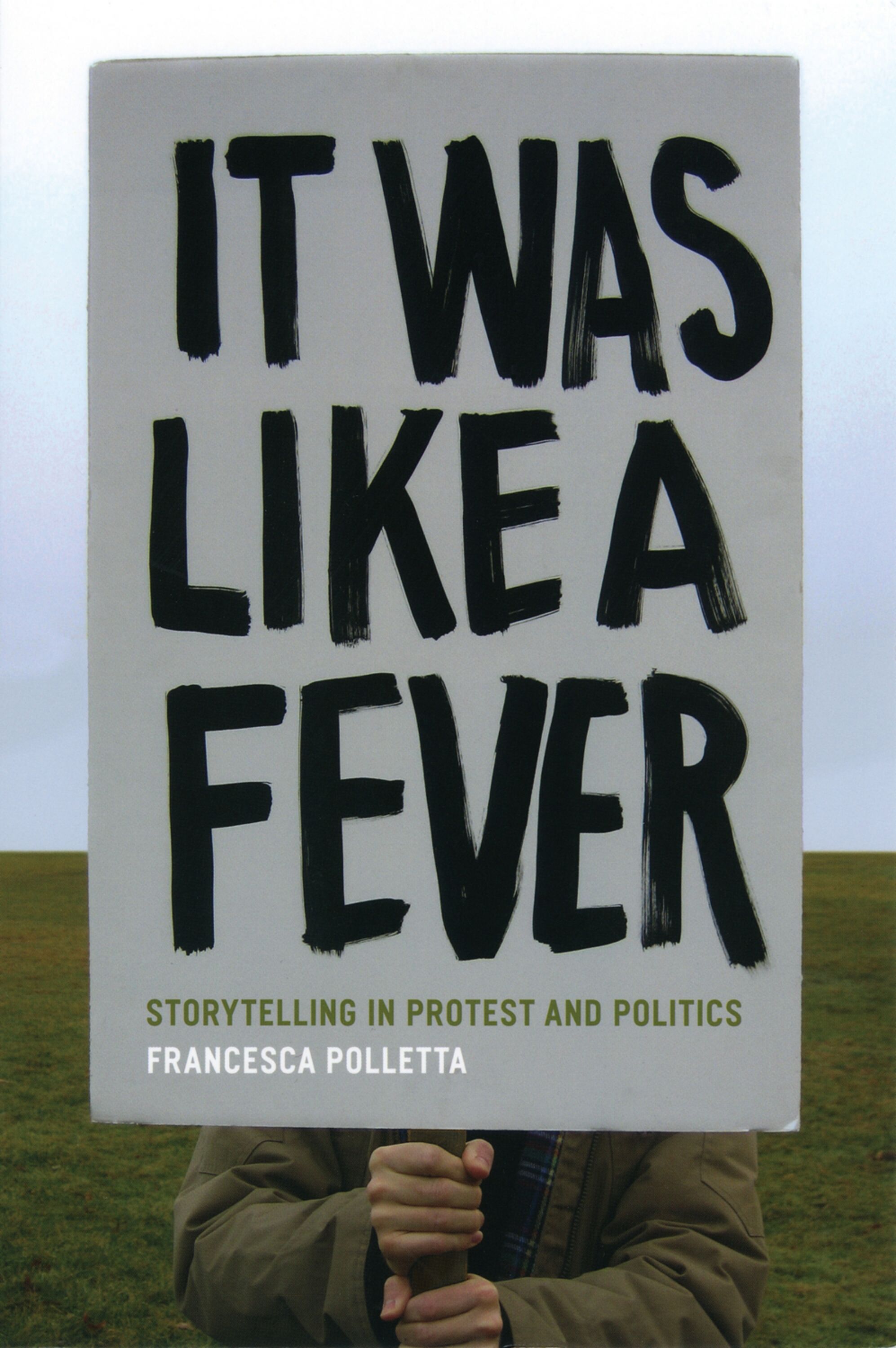
Activists and politicians have long recognized the power of a good story to move people to action. In early 1960 four black college students sat down at a whites-only lunch counter in Greensboro, North Carolina, and refused to leave. Within a month sit-ins spread to thirty cities in seven states. Student participants told stories of impulsive, spontaneous action—this despite all the planning that had gone into the sit-ins. “It was like a fever,” they said. Francesca Polletta’s It Was Like a Fever sets out to account for the power of storytelling in mobilizing political and social movements. Drawing on cases ranging from sixteenth-century tax revolts to contemporary debates about the future of the World Trade Center site, Polletta argues that stories are politically effective not when they have clear moral messages, but when they have complex, often ambiguous ones. The openness of stories to interpretation has allowed disadvantaged groups, in particular, to gain a hearing for new needs and to forge surprising political alliances. But popular beliefs in America about storytelling as a genre have also hurt those challenging the status quo. A rich analysis of storytelling in courtrooms, newsrooms, public forums, and the United States Congress, It Was Like a Fever offers provocative new insights into the dynamics of culture and contention.
eBook
Talk and more talk
Much of Caribbean culture is oral. This video investigates oral 'literature' in the region and includes the work of many of the Caribbean's best oral performers and 'composers.' It features Louise Bennett, Paul Keens-Douglas, Edward Brathwaite, Michael Smith, Mutabaruka, Jeannette Layne-Clarke, Bruce St. John, and Dennis 'Sprangalang' Hall.
Streaming Video