
Catalogue Search | MBRL


Are you sure you want to remove the book from the shelf?

{{itemTitle}}
2,741
result(s) for
"Communism Developing countries"
Sort by:
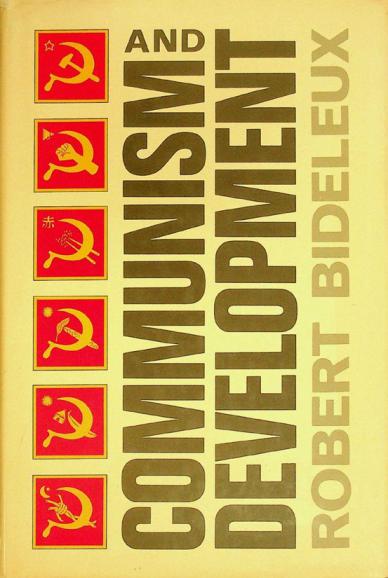

Red star over the third world
From Cuba to Vietnam, from China to South Africa, the October Revolution inspired millions of people beyond the territory of Russia. The Revolution proved that the masses could not only overthrow autocratic governments, but also form an opposing government in their own image. The new idea that the working class and the peasantry could be allied, combined with the clear strength and necessity of a vanguard party, guided multiplying revolutions across the globe.This book explains the ideological power of the October Revolution in the Global South. From Ho Chì Minh to Fidel Castro, to reflections on polycentric Communism and collective memories of Communism, it shows how, for a brief moment, another world was possible.It is not a comprehensive study, but a small book with a large hope - that a new generation will come to see the importance of this revolutionary spirit for the working class and peasantry in the parts of the world that suffered under the heel of colonial domination for centuries.
eBook
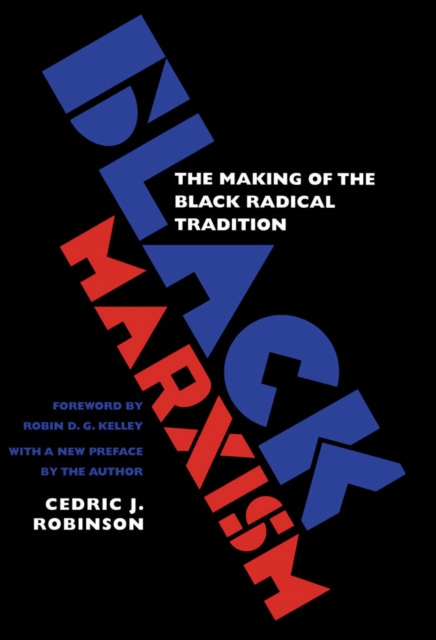
Black marxism : the making of the Black radical tradition
In this ambitious work, first published in 1983, Cedric Robinson demonstrates that efforts to understand black people's history of resistance solely through the prism of Marxist theory are incomplete and inaccurate. Marxist analyses tend to presuppose European models of history and experience that downplay the significance of black people and black communities as agents of change and resistance. Black radicalism must be linked to the traditions of Africa and the unique experiences of blacks on western continents, Robinson argues, and any analyses of African American history need to acknowledge this.To illustrate his argument, Robinson traces the emergence of Marxist ideology in Europe, the resistance by blacks in historically oppressive environments, and the influence of both of these traditions on such important twentieth-century black radical thinkers as W. E. B. Du Bois, C. L. R. James, and Richard Wright.
eBook

The End of the Cold War and the Third World
This book brings together recent research on the end of the Cold War in the Third World and engages with ongoing debates about regional conflicts, the role of great powers in the developing world, and the role of international actors in conflict resolution.
Most of the recent scholarship on the end of the Cold War has focused on Europe or bilateral US-Soviet relations. By contrast, relatively little has been written on the end of the Cold War in the Third World: in Asia, Africa, and Latin America. How did the great transformation of the world in the late 1980s affect regional conflicts and client relationships? Who \"won\" and who \"lost\" in the Third World and why do so many Cold War-era problems remain unresolved? This book brings to light for the first time evidence from newly declassified archives in Russia, the United States, Eastern Europe, as well as from private collections, recent memoirs and interviews with key participants. It goes further than anything published so far in systematically explaining, both from the perspectives of the superpowers and the Third World countries, what the end of bipolarity meant not only for the underdeveloped periphery so long enmeshed in ideological, socio-political and military conflicts sponsored by Washington, Moscow or Beijing, but also for the broader patterns of international relations.
This book will be of much interest to students of the Cold War, war and conflict studies, third world and development studies, international history, and IR in general.
eBook

Post-Soviet Social
The Soviet Union created a unique form of urban modernity, developing institutions of social provisioning for hundreds of millions of people in small and medium-sized industrial cities spread across a vast territory. After the collapse of socialism these institutions were profoundly shaken--casualties, in the eyes of many observers, of market-oriented reforms associated with neoliberalism and the Washington Consensus. InPost-Soviet Social, Stephen Collier examines reform in Russiabeyondthe Washington Consensus. He turns attention from the noisy battles over stabilization and privatization during the 1990s to subsequent reforms that grapple with the mundane details of pipes, wires, bureaucratic routines, and budgetary formulas that made up the Soviet social state.
Drawing on Michel Foucault's lectures from the late 1970s,Post-Soviet Socialuses the Russian case to examine neoliberalism as a central form of political rationality in contemporary societies. The book's basic finding--that neoliberal reforms provide a justification for redistribution and social welfare, and may work to preserve the norms and forms of social modernity--lays the groundwork for a critical revision of conventional understandings of these topics.
eBook

Is Chinese urbanisation unique?
The future of cities in China is becoming increasingly important, not just within China but globally. China’s urban population has grown from about 200 million in 1980 to about 800 million or 59% in 2018: that is about twice the total population of the USA and 1.5 times the total population of the EU. China has over 100 cities with over a million people. There are also more and more papers being written about urbanisation in China. However, urban development in China is very unlike urban development in the west or in many other developing countries. Despite the growth of a large, dynamic market sector, China is still a Communist country in terms of the pervasive and leading role of the party and the state. The question posed in this commentary is whether urbanisation in China is unique; or, to be more precise, whether the post-reform Chinese experience of urbanisation since around 1980 is so unusual that it constitutes an entirely unique case which lies outside conventional generalisations about urban change processes. This question links to recent discussions of comparative urbanism in which various scholars have grappled with questions about the generalisability of urban theory and experience. The tentative conclusion is that Chinese urbanisation may be unique and is certainly not easily subsumed into standard discussions about urban development and urban change.
中国城市的未来变得越来越重要,这不仅仅是对中国而言,对全球而言都是如此。中国的城市人口从1980年的2亿左右增长到2018年的8亿左右,即59%,是美国总人口的两倍,也是欧盟总人口的1.5倍。中国有100多个城市的人口超过100万。关于中国城市化的论文也越来越多。然而,中国的城市发展与西方(或许还有许多其他发展中国家)的城市发展非常不同。尽管中国有一个庞大而充满活力的市场部门,但就党和政府的普遍主导作用而言,中国仍然是一个共产主义国家。这篇评论中提出的问题是中国的城市化是否独一无二;或者,更准确地说,中国自1980年左右以来经历的改革后城市化是否如此不寻常,以至于构成了一个完全独特的案例,超出了对城市变革过程的常规概括。这个问题与最近关于比较城市化的讨论有关,在这种讨论中,许多学者都在努力解决关于城市理论和经验的普遍性的问题。我们的初步结论是,中国的城市化或许是独一无二的,肯定不容易被纳入关于城市发展和城市变革的标准讨论。
Journal Article

Plastic Money
In the United States, we now take our ability to pay with plastic for granted. In other parts of the world, however, the establishment of a \"credit-card economy\" has not been easy. In countries without a history of economic stability, how can banks decide who should be given a credit card? How do markets convince people to use cards, make their transactions visible to authorities, assume the potential risk of fraud, and pay to use their own money? Why should merchants agree to pay extra if customers use cards instead of cash?
In Plastic Money, Akos Rona-Tas and Alya Guseva tell the story of how banks overcame these and other quandaries as they constructed markets for credit cards in eight postcommunist countries. We know how markets work once they are built, but this book develops a unique framework for understanding how markets are engineered from the ground up-by selecting key players, ensuring cooperation, and providing conditions for the valuation of a product. Drawing on extensive interviews and fieldwork, the authors chronicle how banks overcame these hurdles and generated a desire for their new product in the midst of a transition from communism to capitalism.
eBook

Resolving the Democracy Paradox: Democratization and Women's Legislative Representation in Developing Nations, 1975 to 2009
Increasing levels of democratic freedoms should, in theory, improve women's access to political positions. Yet studies demonstrate that democracy does little to improve women's legislative representation. To resolve this paradox, we investigate how variations in the democratization process—including pre-transition legacies, historical experiences with elections, the global context of transition, and post-transition democratic freedoms and quotas—affect women's representation in developing nations. We find that democratization's effect is curvilinear. Women in non-democratic regimes often have high levels of legislative representation but little real political power. When democratization occurs, women's representation initially drops, but with increasing democratic freedoms and additional elections, it increases again. The historical context of transition further moderates these effects. Prior to 1995, women's representation increased most rapidly in countries transitioning from civil strife—but only when accompanied by gender quotas. After 1995 and the Beijing Conference on Women, the effectiveness of quotas becomes more universal, with the exception of postcommunist countries. In these nations, quotas continue to do little to improve women's representation. Our results, based on pooled time series analysis from 1975 to 2009, demonstrate that it is not democracy—as measured by a nation's level of democratic freedoms at a particular moment in time—but rather the democratization process that matters for women's legislative representation.
Journal Article

Negotiating conservation and competition: national parks and ‘victory-over-communism’ diplomacy in South Korea
Focusing on South Korean biologists and their efforts to establish national parks in the 1960s and 1970s, I illuminate the ways in which they negotiated their relationship with the ecological diplomacy of the International Union for Conservation of Nature (IUCN) and the anti-communist and developmentalist diplomacy of the South Korean government. To justify their activities, these South Korean biologists emphasized the importance of nature conservation activities in the competition for international recognition and economic development with their northern counterparts. The national-park initiative was thus subsumed into the politics of this legitimacy competition between the two Koreas, or what I call ‘victory-over-communism’ diplomacy. The IUCN's influence over South Korea was limited to the extent that both the government and scientists recognized the diplomatic merit they could gain in the context of their Cold War competition and developmentalism. It is also shown how, during the short detente period of the two Koreas, South Korean biologists used victory-over-communism diplomacy to renew their government's attention to their activities. This Korean episode contributes to the wider perspective of decentralizing the Cold War history of environmental diplomacy in the free-world bloc by illustrating the importance of its entanglement with the Cold War politics surrounding Asian developmentalism.
Journal Article

Public Health, Democracy, and Transition
Democracy is generally associated with governmental accountability, better public policy choices and public health. However, there is limited evidence about how political regime transition impacts public health. We use two samples of the states around the world to trace the impact of regime transition on public health: the first sample comprises 29 post-communist states, along with 20 consolidated democracies, for the period of 1970–2014; the second sample is a subsample of the same 29 post-communist states but only for the period of transition, 1990–2014. We find that the post-communist states experienced some decline in life expectancy in the first few years of transition (1990–1995). Yet, with a steady increase in the measure of democracy from 1995 onwards, life expectancy significantly improved and infant mortality decreased. Therefore, in the long run, democratization has had a positive impact on both the life expectancy and infant mortality of citizens of the post-communist states.
Journal Article