
Catalogue Search | MBRL


Are you sure you want to remove the book from the shelf?

{{itemTitle}}
705
result(s) for
"Communism Nepal."
Sort by:

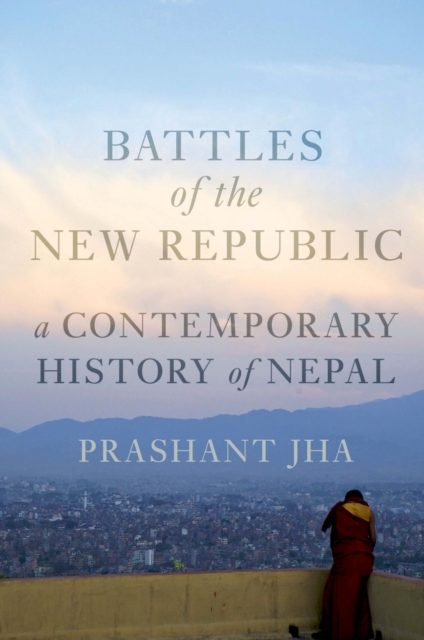
Battles of the new republic : a contemporary history of Nepal
Battles of the New Republic: A Contemporary History of Nepal is a story of Nepal's transformation from war to peace, monarchy to republic, a Hindu kingdom to a secular state, and a unitary to a potentially federal state. Part-reportage, part-history, part-analysis, part-memoir, and part-biography of the key characters, the book breaks new ground in political writing from the region. With access to the most powerful leaders in the country as well as diplomats, it gives an unprecedented glimpse into Kathmandu's high politics. But this is coupled with ground-level reportage on the lives of ordinary citizens of the hills and the plains, striving for a democratic, just and equitable society. It tracks the hard grind of political negotiations at the heart of the instability in Nepal. It traces the rise of a popular rebellion, its integration into the mainstream, and its steady decline. It investigates Nepal's status as a partly-sovereign country, and reveals India's overwhelming role. It examines the angst of having to prove one's loyalties to one's own country, and exposes the Hindu hill upper-caste dominated power structures. Battles of the New Republic is a story of the deepening of democracy, of the death of a dream, and of that fundamental political dilemma - who exercises power, to what end, and for whose benefit.
eBook

Nepal at the Precipice
In the past decade, 12,000 Nepalis have died in an increasingly brutal civil war that pits a backward-looking monarchy and an abusive military against fanatical Maoist rebels. To help solve the crisis, the rest of the world must convince both sides that there is a third way.
Magazine Article

Reconstructing Nepal, One Step at a Time
\"It was an indication of dramatically changed times when Nepal's lower house of parliament convened on April 27 [2006], almost four years after it had been dissolved. Missing from the scene was the royal scepter that was customarily placed on the king's seat behind the speaker's chair as a symbolic presence of the monarch during parliamentary proceedings. There could not have been a surer signal that King Gyanendra Bir Bakram Shah had been excluded from this representative gathering of the sovereign Nepalese people. The sitting of the House of Representatives was the denouement of country-wide demonstrations that had begun on April 6.\" (Far Eastern Economic Review) The author discusses the events that led to Nepal's King Gyanendra stepping down in April 2006 and highlights some key factors in what will affect a successful transition \"on the road to a constituent assembly.\"
Magazine Article

Maoists at the Hearth
The Maoist insurgency in Nepal lasted from 1996 to 2006, and at the pinnacle of their armed success the Maoists controlled much of the countryside. Maoists at the Hearth, which is based on ethnographic research that commenced more than a decade before the escalation of the civil war in 2001, explores the daily life in a hill village in central Nepal, during the \"People's War.\" From the everyday routines before the arrival of the Maoists in the late 1990s through the insurgency and its aftermath, this book examines the changing social relationships among fellow villagers and parties to the conflict.War is not an interruption that suspends social processes. Life in the village focused as usual on social challenges, interpersonal relationships, and essential duties such as managing agricultural work, running households, and organizing development projects. But as Judith Pettigrew shows, social life, cultural practices, and routine activities are reshaped in uncertain and dangerous circumstances. The book considers how these activities were conducted under dramatically transformed conditions and discusses the challenges (and, sometimes, opportunities) that the villagers confronted.By considering local spatial arrangements and their adaptation, Pettigrew explores people's reactions when they lost control of the personal, public, and sacred spaces of the village. A central consideration of Maoists at the Hearth is an exploration of how local social tensions were realized and renegotiated as people supported (and sometimes betrayed) each other and of how villager-Maoist relationships (and to a lesser extent villager-army relationships), which drew on a range of culturally patterned preexisting relationships, were reforged, transformed, or renegotiated in the context of the conflict and its aftermath.
eBook

Dispatches From the People's War in Nepal
A Maoist revolution has been raging in Nepal since 1996. In 1999, Li Onesto became the first foreign journalist to travel deep into the guerrilla zones. Allowed unprecedented access, she interviewed political leaders, guerrilla fighters, villagers in areas under Maoist control, and relatives of those killed by government forces.
Millions in Nepal now live in areas under guerrilla control. Peasants are running grass-roots institutions, exercising what they call 'people's power'. Li Onesto describes these transformations -- the establishment of new governing committees and courts, the confiscation and re-division of land, new cultural and social practices, and the emergence of a new outlook.
Increasingly, the UK and US have directly intervened to provide political and military support to the counter-insurgency efforts of the Nepalese regime. Onesto analyzes this in the context of the broader international situation and the 'war on terrorism'.
eBook

India’s Troubled Relations with Kathmandu
This article analyzes factors behind the rapid deterioration of India–Nepal relations since September 2015, when Nepal’s Constituent Assembly adopted a new constitution. Nepal’s Madhesis, roughly 30 percent of Nepal’s population, concentrated in the southern plain region, rejected the constitution, as it did not address the grievances against which they had been protesting. The Madhesi demands were also supported by India. In fast-tracking the adoption of the constitution, Nepal’s major party leaders had also shunned India’s advice. India escalated by imposing an economic blockade on landlocked Nepal from the major transit points along the India-Nepal border; Nepal called it an unjustified “blockade.” Kathmandu, in turn, moved closer to India’s top rival, China, to thwart the Indian pressure. China’s role has continued to rise after India opened the transit points in early 2016. Nepal’s relations with India took a further plunge in 2020 as Nepal objected to the inclusion of some of Nepal’s westernmost areas in India’s revised map. Nepal’s post-monarchy politics and China’s leveraging of its economic and political strength to grow its influence in Nepal have raised new challenges to the hitherto dominant role that India has historically played. India’s growing strategic closeness to the United States further complicates Nepal’s relations with its influential neighbors. The historic tendency on the part of Nepal’s political leaders to seek foreign support in their factional and interparty rivalries has further widened the scope for external meddling.
Journal Article

Nepal in 2019
After decades of instability, a stable government in Nepal offered many promises, but despite progress in some sectors, the government has become less popular in the last two years. The Communist Party’s ideological ambivalence, shown by its questionable policies and activities with regard to democratization, free expression, inclusion, and governance, is probably responsible for its fading credibility among the masses.
Journal Article
Nepal in 2018
The Communist Party of Nepal raised hope for stability and rapid development after winning a comfortable majority in local, provincial, and federal elections, but power concentration, partisanship, and factionalism prevented it from delivering, while intolerance toward dissidents, illiberal actions, and mono-ethnic policies generated criticism and reduced its popularity within a year.
Journal Article

Frustrated and Confused: Mapping the Socio-political Struggles of Female Ex-combatants in Nepal
The Communist Party of Nepal (Maoist) declared an armed insurrection against the State in February 1996; they began to attack police posts and gradually the insurrection was sparked all over the country, lasting for ten years. Consequently, it caused 17,886 deaths, 79,571 displacements, 1,530 disappearance, 3,142 abductions, 8,935 disabilities, and left 620 children orphaned (MoPR 2016). In the armed conflict 20 percent of Maoist combatants were women. After several rounds of negotiations, the armed conflict ended in November 2006, with the signing of the Comprehensive Peace Agreement (CPA) between the Government of Nepal and the then Communist Party of Nepal (Maoist) that demanded disarmament, demobilization and reintegration (DDR) of the Maoist ex-combatants. Among the ex-combatants the DDR process for reintegrating female ex-combatants was more complicated. This paper examines the DDR process with a specific focus on ex-combatants. Focus group interviews, key informant interviews, roundtable discussions, and direct interviews with the female- ex-combatants were the methods used in collecting data, in addition to secondary sources. This paper argues that the DDR was not only contested, but also procedurally flawed, and therefore not able to produce the desired result. Because the DDR was a complex, socio-psychological and politico-economic process and required sensitive handling, key Nepali actors and international supporters failed to properly deal with the DDR. The DDR process was largely gender-blind and therefore, the female ex-combatants suffered more in terms of their social relations, specific needs and achieving livelihood security. The approach of United Mission to Nepal (UNMIN) was one of the reasons; consequently, its engagement was terminated without completing the DDR process mainly because it failed to internalize gender sensitivity and local complexity.
Journal Article