
Catalogue Search | MBRL


Are you sure you want to remove the book from the shelf?

{{itemTitle}}
1,358
result(s) for
"Communism Romania."
Sort by:


Remembering Communism
Remembering Communism examines the formation and transformation of the memory of communism in the post-communist period. The majority of the articles focus on memory practices in the post-Stalinist era in Bulgaria and Romania, with occasional references to the cases of Poland and the GDR. Based on an interdisciplinary approach, including history, anthropology, cultural studies and sociology, the volume examines the mechanisms and processes that influence, determine and mint the private and public memory of communism in the post-1989 era. The common denominator to all essays is the emphasis on the process of remembering in the present, and the modalities by means of which the present perspective shapes processes of remembering, including practices of commemoration and representation of the past.
eBook


Disrupted landscapes
The fall of the Soviet Union was a transformative event for the national political economies of Eastern Europe, leading not only to new regimes of ownership and development but to dramatic changes in the natural world itself. This painstakingly researched volume focuses on the emblematic case of postsocialist Romania, in which the transition from collectivization to privatization profoundly reshaped the nation's forests, farmlands, and rivers. From bureaucrats abetting illegal deforestation to peasants opposing government agricultural policies, it reveals the social and political mechanisms by which neoliberalism was introduced into the Romanian landscape.
eBook


Revolution, democratic transition and disillusionment
This book develops a fresh and challenging perspective on the transition from communism to capitalism. Drawing on a wide and diverse range of material and texts, it argues that transition and democratisation studies should turn their attention towards processes of illusion formation and disillusionment as key to understanding the shift from one ideological framework to another. The author provides alternative approaches to otherwise classical sites of examination of social change – such as revolutions and the emergence of civil society – and proposes a number of new possible sites by analysing the politics of self-reflection, the element of shock inherent in any transition and the role of visual narratives in negotiating change. The chapters are inspired by unique interviews and discussions with the leaders of the Timisoara Revolution, the Group of Social Dialogue – the first civil society organisation in post-communist Romania, the leading author of the 'Presidential Report Analysing the Communist Dictatorship in Romania' and an innovative group of photographers tracing the Romanian transition through images.
eBook

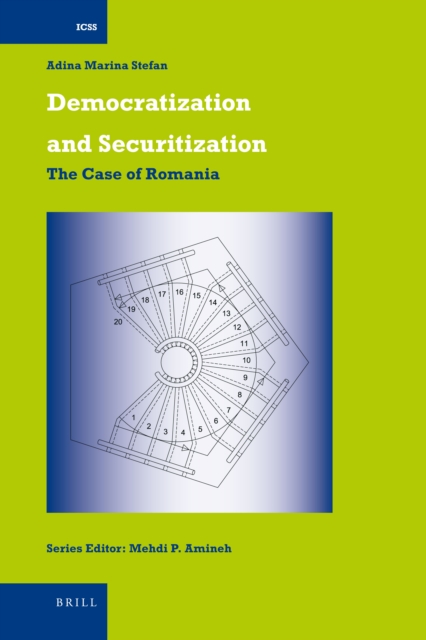
Democratization and Securitization
Focusing on the political, societal and environmental fields, Adina Stefan investigates in Securitization and Democratization the contribution of both political and civil society actors to the democratization and securitization processes in Romania after 1989.
eBook

Birth of democratic citizenship : women and power in modern Romania
\"What is it like to be a woman living through the transition from communism to democracy? What effect does this have on a woman's daily life, on her concept of herself, her family, and her community? Birth of Democratic Citizenship presents the stories of women in Romania as they describe their experiences on the journey to democratic citizenship. In candid and revealing conversations women between the ages of 24 and 83 explain how they negotiated their way through radical political transitions that had a direct impact on their everyday lives. Women who grew up under communism explore how these ideologies influenced their ideas of marriage, career, and a woman's role in society. Younger generations explore how they interpret civic rights and whether they incorporate these rights into their relationships with their family and community. Beginning with an overview of the role women have played in Romania from the late 18th century to today, Birth of Democratic Citizenship explores how the contemporary experience of women in postsocialist countries developed. The women speak about their reliance on, and negotiations with, communities, ranging from family and neighbors to local and national political parties. Birth of Democratic Citizenship argues that the success of democracy will largely rely on the equal incorporation of women in the political and civic development of Romania. In doing so, it encourages frank consideration of what modern democracy is and what it will need to be to succeed in the future\"-- Provided by publisher.
Book

Of Red Dragons and Evil Spirits
The collection of well researched chapters assesses the uses and misuses of history 25 years after the collapse of Soviet hegemony in Eastern Europe. As opposed to the emphasis on the recovery of memory or revival of national histories that seemed to be the prevelant historiographical approaches of the 1990s, the last decade has seen a particular set of narratives equating Nazism and communism and so providing opportunities to exonerate wartime collaboration, cast the nation as victim even when its government was allied with Germany, and acknowledge the Jewish Holocaust while obfuscating its meaning and significance. In their comparative analysis the authors are also interested in new practices of performing ‘Europeanness’. Therefore their presentations of Slovak, Hungarian, Romanian, Bulgarian, Serbian, Bosnian, Croatian and Slovenian post-communist memory politics move beyond the common national myths in order to provide a new insight into transnational interactions and exchanges in Europe in general. The juxtaposition of these politics, the processes in other parts of Europe, the modes of remembering shaped by displacement and the transnational memory practices enable a close encounter with the divergences and assess the potential of the formation of common, European memory practices.
eBook