
Catalogue Search | MBRL


Are you sure you want to remove the book from the shelf?

{{itemTitle}}
8
result(s) for
"Communism and culture -- Czechoslovakia -- History -- 20th century"
Sort by:


The Greengrocer and his TV
The 1968 Soviet invasion of Czechoslovakia brought an end to the Prague Spring and its promise of \"socialism with a human face.\" Before the invasion, Czech reformers had made unexpected use of television to advance political and social change. In its aftermath, Communist Party leaders employed the medium to achieve \"normalization,\" pitching television stars against political dissidents in a televised spectacle that defined the times.
The Greengrocer and His TVoffers a new cultural history of communism from the Prague Spring to the Velvet Revolution that reveals how state-endorsed ideologies were played out on television, particularly through soap opera-like serials. In focusing on the small screen, Paulina Bren looks to the \"normal\" of normalization, to the everyday experience of late communism. The figure central to this book is the greengrocer who, in a seminal essay by Václav Havel, symbolized the ordinary citizen who acquiesced to the communist regime out of fear.
Bren challenges simplistic dichotomies of fearful acquiescence and courageous dissent to dramatically reconfigure what we know, or think we know, about everyday life under communism in the 1970s and 1980s. Deftly moving between the small screen, the street, and the Central Committee (and imaginatively drawing on a wide range of sources that include television shows, TV viewers' letters, newspapers, radio programs, the underground press, and the Communist Party archives), Bren shows how Havel's greengrocer actually experienced \"normalization\" and the ways in which popular television serials framed this experience.
Now back by popular demand, socialist-era serials, such asThe Woman Behind the CounterandThe Thirty Adventures of Major Zeman, provide, Bren contends, a way of seeing-literally and figuratively-Czechoslovakia's normalization and Eastern Europe's real socialism.
eBook

Worlds of dissent : Charter 77, the Plastic People of the Universe, and Czech culture under Communism
'Worlds of Dissent' analyzes the myths of Central European resistance popularized by Western journalists and historians, and replaces them with a picture of the struggle against state repression as the dissidents themselves understood, debated, and lived it. In the late 1970s, when Czech intellectuals, writers, and artists drafted Charter 77 and called on their government to respect human rights, they hesitated to name themselves 'dissidents'. Their personal and political experiences, diverse, uncertain, nameless, have been obscured by victory narratives that portray them as larger-than-life heroes who defeated Communism in Czechoslovakia.
Book

Worlds of Dissent
Worlds of Dissent analyzes the myths of Czech resistance popularized by Western journalists and historians, and replaces these heroic victory narratives with a picture of the struggle against state repression as dissidents themselves understood and lived it. Their diaries, letters, and essays convey the texture of dissent in a closed society.
eBook
Worlds of Dissent
Worlds of Dissent analyzes the myths of Central European resistance popularized by Western journalists and historians, and replaces them with a picture of the struggle against state repression as the dissidents themselves understood, debated, and lived it. In the late 1970s, when Czech intellectuals, writers, and artists drafted Charter 77 and called on their government to respect human rights, they hesitated to name themselves \"dissidents.\" Their personal and political experiences—diverse, uncertain, nameless—have been obscured by victory narratives that portray them as larger-than-life heroes who defeated Communism in Czechoslovakia. Jonathan Bolton draws on diaries, letters, personal essays, and other first-person texts to analyze Czech dissent less as a political philosophy than as an everyday experience. Bolton considers not only Václav Havel but also a range of men and women writers who have received less attention in the West—including Ludvík Vaculík, whose 1980 diary The Czech Dream Book is a compelling portrait of dissident life. Bolton recovers the stories that dissidents told about themselves, and brings their dilemmas and decisions to life for contemporary readers. Dissidents often debated, and even doubted, their own influence as they confronted incommensurable choices and the messiness of real life. Portraying dissent as a human, imperfect phenomenon, Bolton frees the dissidents from the suffocating confines of moral absolutes. Worlds of Dissent offers a rare opportunity to understand the texture of dissent in a closed society.
eBook
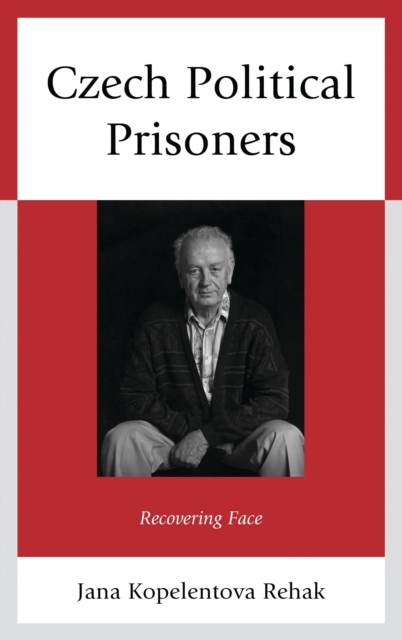
Czech political prisoners
Czech Political Prisoners: Recovering Face is the story of men and women who survived Czechoslovakian concentration camps under the Communist regime. Men and women disappeared, were arrested, imprisoned, interrogated, tortured, put on trial, convicted, and sentenced to forced labor camps. In 1948 in Czechoslovakia, political others became political prisoners. New forms of political practices developed under the institution of the totalitarian Czechoslovakian communist state. This new regime of totalitarian political power produced culturally specific forms of organized political violence. Between 1948 and 1989 some citizens recognized by the state as political others were subjected to such ritualized political violence. The link between ritualized violence and state subjects' political passage laid the groundwork for the formation of new social identities. In the post-totalitarian state, the political other from the socialist era remains other through distinct desires and acts of coming to terms with the experience of organized violence. Like other members of the Czech and Slovak states, former prisoners are now facing the post-totalitarian remaking of life. In contrast to society at large, the political prisoners' recovery from the totalitarian past has proven that the ethics of political life—individual and communal coming to terms with the past—is closely related and crucial to their efforts toward reconciliation. Today, in the Czech Republic, as well as in other post-socialist countries, the desire to reconcile is not limited to survivors of camps, prisoners, and dissidents. People from the youngest generation are asking questions about crimes, punishment, and forgiveness related to the Communist regime in central and eastern Europe. The purpose of this story is to expose individual and communal experience, subjectivity, and consciousness hidden in the ruins of memory of Socialism in Czechoslovakia.
eBook

Industrial Design and the Czechoslovak Pavilion at EXPO '58: Artistic Autonomy, Party Control and Cold War Common Ground
The socialist industrial designs displayed in Czechoslovakia's EXPO '58 pavilion spoke a visual language understood on both sides of the Iron Curtain, making the pavilion a site of common ground between East and West. The showcase was also a point of convergence between Czechoslovak visual artists and Communist Party authorities who engaged in complex political negotiations in the years after Stalin's death. Visual artists vied for liberation from socialist realism's constraints, although they kept their demands within limits to avoid risking Party backlash. Communist Party leaders wanted domestic stability and saw improving the living standard as a tactic for insuring popular support. They increasingly perceived industrial design to be a visual-arts activity with special promise. Well-designed furniture, textiles, glass, ceramics and other consumer goods could generate state income useful for raising the living standard at home and earning hard currency abroad. The Party needed the designers' cooperation to achieve efficient, attractive production within the command economy. In the Brussels showcase communist authorities compromised with visual artists helping to insure the latter's support and success, demonstrating that culture in postwar Czechoslovakia was not merely imposed 'from above' by omnipotent authorities but could be the outcome of multidirectional negotiations between various competing interests.
Journal Article

Worlds of Dissent: Charter 77, the Plastic People of the Universe, and Czech Culture under Communism
Glassheim reviews Worlds of Dissent: Charter 77, the Plastic People of the Universe, and Czech Culture under Communism by Jonathan Bolton.
Book Review