
Catalogue Search | MBRL


Are you sure you want to remove the book from the shelf?

{{itemTitle}}
7,720
result(s) for
"Communist International"
Sort by:

Revolutionaries for the right : anticommunist internationalism and paramilitary warfare in the Cold War
\"Freedom fighters. Guerrilla warriors. Soldiers of fortune. The many civil wars and rebellions against communist governments drew heavily from this cast of characters. Yet from Nicaragua to Afghanistan, Vietnam to Angola, Cuba to the Congo, the connections between these anticommunist groups have remained hazy and their coordination obscure. Yet as Kyle Burke reveals, these conflicts were the product of a rising movement that sought paramilitary action against communism worldwide. Tacking between the United States and many other countries, Burke offers an international history not only of the paramilitaries who started and waged small wars in the second half of the twentieth century but of conservatism in the Cold War era\"-- Provided by publisher.
Book

The Communist Movement at a Crossroads
The proceedings and resolutions from three enlarged plenums of the Executive Committee of the Communist International (Comintern) in 1922-23. Valuable for understanding the world revolutionary movement in Lenin's time, as well as the subsequent evolution of the Comintern.
eBook


Stumbling Its Way through Mexico
Stumbling Its Way through Mexico records the early
attempts by the Moscow-based Communist International to organize
and direct a revolutionary movement in Mexico. The period
studied, from 1919 to 1929, was characterized at the beginning by
a wave of revolutions in Europe that the Bolsheviks expected to
grow into an international phenomenon. However, contrary to their
expectations, the revolutionary tide ebbed, and the new age they
had expected receded into an uncertain future. In response,
Moscow sent agents and recruited local leaders worldwide to
sustain and train local revolutionary movements and to foment
what they saw as an inevitable seizure of power by Communist-led
workers. Unlike the Soviet seizure of power in Russia, the
Mexican Revolution of 1910–1920 had not changed the
fundamental character of the nation-state. However, it did
represent a sea change in the relationship between the state and
society. When the Bolshevik Revolution broke out in Russia in
1917, Mexican workers already had generations of experience in
the struggle against oppression, in forming class solidarity, in
organizing strikes, and had tasted both success and failure. For
decades in their workplaces, Mexicans had debated how to end the
exploitation of labor and practice international solidarity.
Mexico had an indigenous labor movement acting with some success
to establish a place in a new Mexico. The agents that Moscow
chose to lead the Communist movement in Mexico lacked an
understanding of the local situation and presumed a lack of
indigenous confidence and experience that doomed to failure their
efforts to impose external control over the labor movement. Based
on documents found principally in the Soviet archives recently
opened to the public,
Stumbling Its Way through Mexico is an invitation to
rethink the history of Communism in Mexico and Latin America.
Copublication with the Centro de Investigaciones y
Estudios Superiores en Antropologia Social.
eBook

The Nanyang revolution : the Comintern and Chinese networks in Southeast Asia, 1890-1957
\"The Nanyang Revolution In this innovative reading the development of the Malayan Communist Party (MCP) is explored in the context of an emerging nationalism in Southeast Asia, the interplay of overseas Chinese networks and the Comintern. Based on extensive new archival material, Anna Belogurova shows how the MCP was shaped by the historical contingencies of anti-imperialism in Southeast Asia, long-term Chinese migration trends, networks, identity, and the organizational practices of the Comintern. This is the story of how a group of left-leaning Chinese migrant intellectuals engaged with global forces to create a relevant and lasting Malayan national identity, providing fresh international perspectives on the history of Malaysia, Chinese communism, the Cold War and decolonisation\"-- Provided by publisher.
Book
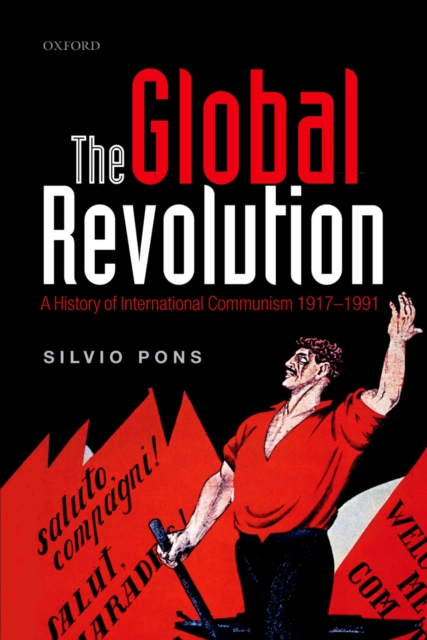
The Global Revolution
A leading European historian offers a fresh analysis of communism as a global movement that played a major part in the formation of our modern world - from the birth of Soviet Russia and the revolution in China to the Cold War and the impact of Western-led processes of globalization.
eBook

Secret cables of the Comintern, 1933-1943
\"Drawing on secret and therefore candid coded telegraphs exchanged between Communist Party leaders around the world and their overseers at the Communist International (Comintern) headquarters in Moscow, this book uncovers key aspects of the history of the Comintern and its significant role in the Stalinist ruling system during the years 1933 to 1943. New information on aspects of the People's Front in France, civil wars in Spain and China, World War II, and the extent of the Comintern's cooperation with Soviet intelligence is brought to light through these archival records, never examined before\"-- Provided by publisher.
Book

Secret Cables of the Comintern, 1933-1943
Drawing on secret and therefore candid coded telegraphs exchanged between Communist Party leaders around the world and their overseers at the Communist International (Comintern) headquarters in Moscow, this book uncovers key aspects of the history of the Comintern and its significant role in the Stalinist ruling system during the years 1933 to 1943. New information on aspects of the People's Front in France, civil wars in Spain and China, World War II, and the extent of the Comintern's cooperation with Soviet intelligence is brought to light through these archival records, never examined before.
eBook

The globalization of Chinese propaganda : international power and domestic political cohesion
\"As China becomes more deeply engaged with the outside world its propaganda authorities confront a dilemma: how can they maintain domestic ideological cohesion in the face of an influx of foreign information and ideas while also convincing skeptical international audiences that China's rise is a good news story? This book examines the Chinese propaganda system in the era of globalization, exploring connections between the Chinese Communist Party's desire for domestic political control and its vision for the development of China's international power. Investigating areas such as Chinese attitudes to soft power, the recent international expansion of the Chinese media, and the authorities' reaction to public opinion crises at home and abroad, Edney shows that in order to understand Chinese attempts to influence international views it is necessary to examine the power of propaganda in China's domestic political system\"-- Provided by publisher.
Book
The Communist International and US Communism, 1919-1929
This book examines the development of the Communist Party in the United States in its first decade, from 1919 to 1929. It argues that the Communist International played an important role in the early part of this decade in forcing the party to \"Americanise\". By the late 1920s, however, the Comintern, reflecting the Stalinistation of the Soviet Union, intervened into the American party to ensure the Stalinisation of American Communism.
eBook