
Catalogue Search | MBRL


Are you sure you want to remove the book from the shelf?

{{itemTitle}}
3,975
result(s) for
"Communities Fiction."
Sort by:

The valley at the centre of the world
\"The thing he felt ending was not just one person, or even one generation; it was older, and had, in truth, been ending for a long time . . . It was a chain of stories clinging to stories, of love clinging to love. It was an inheritance he did not know how to pass on. Shetland: a place of sheep and soil, of harsh weather, close ties and an age-old way of life. A place where David has lived all his life, like his father and grandfather before him, but where he abides only in the present moment. A place where Sandy, a newcomer but already a crofter, may have finally found a home. A place that Alice has fled to after the death of her husband. But times do change - island inhabitants die, or move away, and David worries that no young families will take over the chain of stories and care that this valley has always needed, while others wonder if it was ever truly theirs to join. In the wind and sun and storms from the Atlantic, these islanders must decide: what is left of us when the day's work is done, the children grown, and all our choices have been made?\"--Provided by publisher.
BOOK

Jewelweed : a novel
Paroled after doing time in prison, Blake Bookchester attempts to reconnect with single mother Danielle Workhouse, who works for Buck and Amy Roebuck at their mansion while her son, Ivan, explores the woods with a precocious friend.
Book
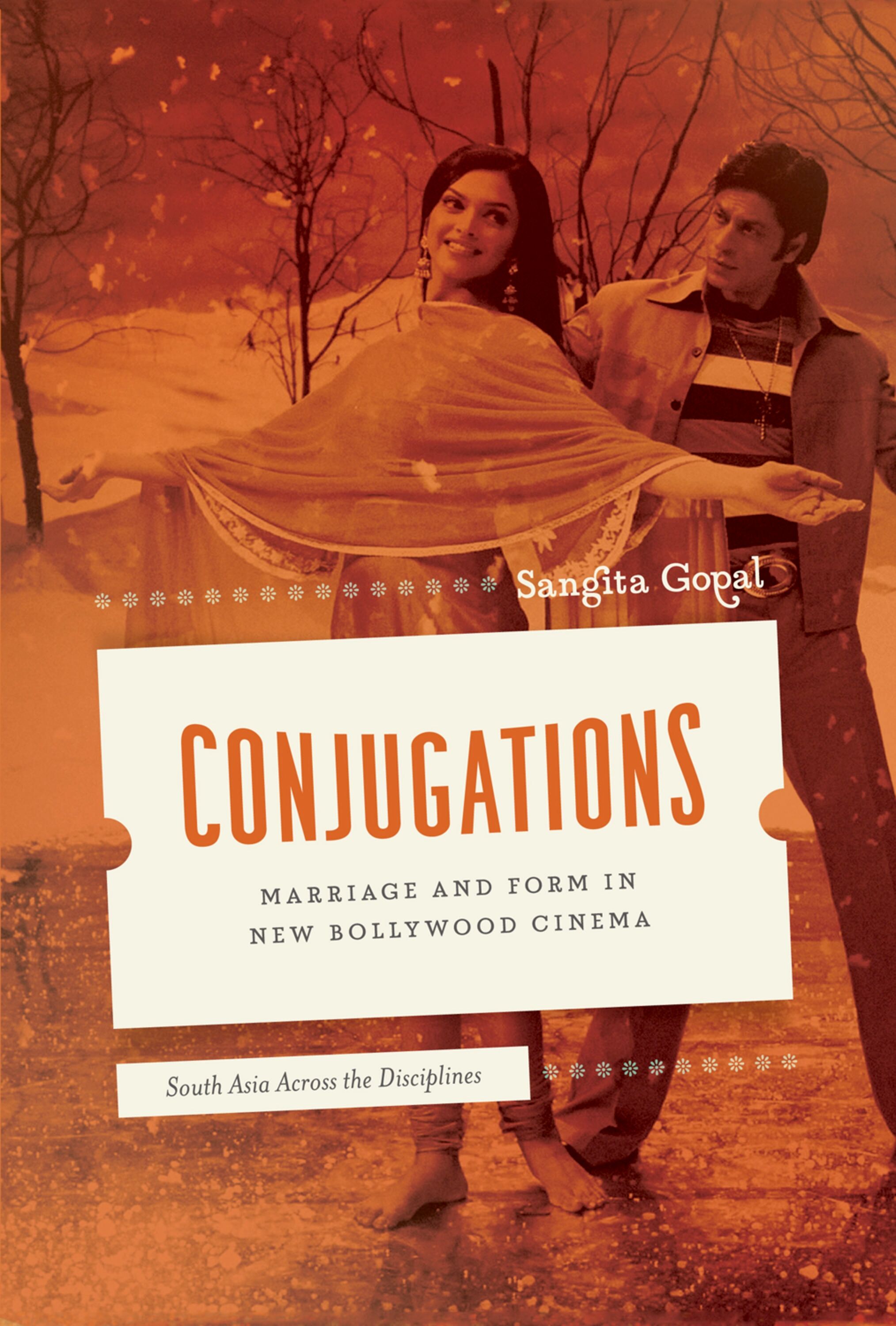
Conjugations
Bollywood movies have been long known for their colorful song-and-dance numbers and knack for combining drama, comedy, action-adventure, and music. But when India entered the global marketplace in the early 1990s, its film industry transformed radically. Production and distribution of films became regulated, advertising and marketing created a largely middle-class audience, and films began to fit into genres like science fiction and horror. In this bold study of what she names New Bollywood, Sangita Gopal contends that the key to understanding these changes is to analyze films' evolving treatment of romantic relationships.
Gopalargues that the form of the conjugal duo in movies reflects other social forces in India's new consumerist and global society. She takes a daring look at recent Hindi films and movie trends—the decline of song-and-dance sequences, the upgraded status of the horror genre, and the rise of the multiplex and multi-plot—to demonstrate how these relationships exemplify different formulas of contemporary living. A provocative account of how cultural artifacts can embody globalization's effects on intimate life, Conjugations will shake up the study of Hindi film.
eBook


New Visions of Community in Contemporary American Fiction
In this engaging, optimistic close reading of five late twentieth-century novels by American women, Magali Cornier Michael illuminates the ways in which their authors engage with ideas of communal activism, common commitment, and social transformation. The fictions she examines imagine coalition building as a means of moving toward new forms of nonhierarchical justice; for ethnic cultures that, as a result of racist attitudes, have not been assimilated, power with each other rather than power over each other is a collective goal.Michael argues that much contemporary American fiction by women offers models of care and nurturing that move away from the private sphere toward the public and political. Specifically, texts by women from such racially marked ethnic groups as African American, Asian American, Native American, and Mexican American draw from the rich systems of thought, histories, and experiences of these hybrid cultures and thus offer feminist and ethical revisions of traditional concepts of community, coalition, subjectivity, and agency.Focusing on Amy Tan’s The Joy Luck Club, Barbara Kingsolver’s The Bean Trees and Pigs in Heaven, Ana Castillo’s So Far from God, and Toni Morrison’s Paradise, Michael shows that each writer emphasizes the positive, liberating effects of kinship and community. These hybrid versions of community, which draw from other-than-dominant culturally specific ideas and histories, have something to offer Americans as the United States moves into an increasingly diverse twenty-first century. Michael provides a rich lens through which to view both contemporary fiction and contemporary life.
eBook


Buzzword or fuzzword: an event study of the metaverse in the Chinese stock market
Purpose“Metaverse” has become a buzzword in the Chinese stock market. However, it remains unclear whether a firm's metaverse-related announcements will elicit positive stock market reactions. Whether and how stakeholder reactions are influenced by a firm's metaverse-related readiness also needs to be further explored. This study aims to discuss the aforementioned objective.Design/methodology/approachThe authors derived a set of factors based on readiness theory and business ecosystem literature and extend them into the context of the metaverse. The authors used a sample of 642 Chinese listed firms in 2021 to investigate the hypotheses through the event study.FindingsThe study’s findings show that metaverse coverage induces a positive stock market reaction, but it is subject to three moderating effects. The authors introduce the novel concepts of IT readiness, ecosystem readiness and digital infrastructure readiness as the moderators. Stakeholders perceive metaverse announcements as overhyped, and stock prices do not fluctuate significantly after a metaverse announcement when the listed firms are not ready to embrace the metaverse.Originality/valueThis study is one of the first that introduces the event study method into the metaverse research, and it reveals that different levels of readiness influence stakeholders' evaluations and reactions to corporate metaverse coverage. This provides empirical evidence on metaverse development in China from the stock market's perspective.
Journal Article