
Catalogue Search | MBRL


Are you sure you want to remove the book from the shelf?

{{itemTitle}}
3,014
result(s) for
"Communities Great Britain."
Sort by:


Disadvantaged by where you live?
Disadvantaged by where you live? distils lessons from work on neighbourhoods carried out within the Cities Research Centre of the University of the West of England over the past seven years. It offers a major contribution to academic debates on the neighbourhood both as a sphere of governance and as a point of public service delivery under New Labour since 1997. The book explores how 'the neighbourhood' has been used in policy in the UK; what the 'appropriate contribution' of neighbourhood governance is and how this relates to concepts of multi-level governance; the tensions that are visible at the neighbourhood level and what this tells us about wider governance issues. The book explores and reflects on the notion of neighbourhood governance from a variety of perspectives that reflect the unique depth and breadth of the Centre's research programme. Neighbourhood governance is examined in relation to: multi-level governance and city-regions; local government; mainstreaming; cross-national differences in neighbourhood policy; community and civil society; diversity; different conceptions of democracy; and, evaluation and learning. In doing so, the book identifies useful conceptual tools for analysing the present and future contribution of policy to neighbourhoods.
eBook

Pragmatic Utopias : ideals and communities, 1200-1630
The contributors to this festschrift explore the ways in which men and women tried to put their ideals into practice, sometimes alone, but more commonly in the shared environment of cloister, college or city, during the medieval era.
Book

The Making of Eurosceptic Britain
Offering a radical interpretation of a major political issue, Chris Gifford moves beyond existing narrative and institutional accounts of Britain and Europe to present a theoretically coherent and unique perspective on this troubled relationship. He acknowledges that populist Euroscepticism has become fundamental to constituting Britain and 'Britishness' in a post-imperial context, despite membership of the European Union. Organized chronologically, this interesting study provides lucid overviews of key periods in the British-European Union relationship. It combines political economy with political identity to illustrate how forms of Euroscepticism have become embedded across the British political class and culture. The book focuses not on outlining history or the impact of British integration on British institutions, but on the ways in which elite behaviour towards European integration should be analyzed as practices and discourses that use Euroesceptism to construct Britain and distinctive British political projects.
eBook

Me, me, me? : the search for community in post-war England
Many commentators tell us that, in today's world, everyday life has become selfish and atomised-that individuals live only to consume. But are they wrong? In Me, Me, Me, Jon Lawrence re-tells the story of England since the Second World War through the eyes of ordinary people-including his own parents- to argue that, in fact, friendship, family, and place all remain central to our daily lives, and whilst community has changed, it is far from dead. He shows how, in the years after the Second World War, people came increasingly to question custom and tradition as the pressure to conform to societal standards became intolerable. And as soon as they could, millions escaped the closed, face-to-face communities of Victorian Britain, where everyone knew your business. But this was not a rejection of community per se, but an attempt to find another, new way of living which was better suited to the modern world. Community has become personal and voluntary, based on genuine affection rather than proximity or need. We have never been better connected or able to sustain the relationships that matter to us. Me, Me, Me? makes that case that it's time we valued and nurtured these new groups, rather than lamenting the loss of more 'real' forms of community-it is all too easy to hold on to a nostalgic view of the past.
Book

The making of Eurosceptic Britain
Offering a radical interpretation of a major political issue, Chris Gifford moves beyond existing narrative and institutional accounts of Britain and Europe to present a theoretically coherent and unique perspective on this troubled relationship. He acknowledges that populist Euroscepticism has become fundamental to constituting Britain and 'Britishness' in a post-imperial context, despite membership of the European Union. Organized chronologically, this interesting study provides lucid overviews of key periods in the British-European Union relationship. It combines political economy with political identity to illustrate how forms of Euroscepticism have become embedded across the British political class and culture. The book focuses not on outlining history or the impact of British integration on British institutions, but on the ways in which elite behaviour towards European integration should be analyzed as practices and discourses that use Euroesceptism to construct Britain and distinctive British political projects.
eBook

Communal violence in the British Empire : disturbing the Pax
\"The first comprehensive study of religious, ethnic and communal violence in the British Empire\"-- Provided by publisher.
Book
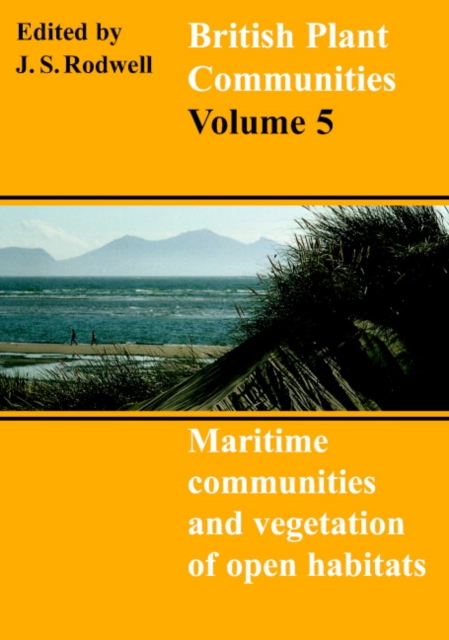
British Plant Communities: Volume 5, Maritime Communities and Vegetation of Open Habitats
British Plant Communities is the first systematic and comprehensive account of the vegetation types of this country. It covers all natural, semi-natural and major artificial habitats in Great Britain (but not Northern Ireland), representing the fruits of fifteen years of research by leading plant ecologists. The book breaks new ground in wedding the rigorous interest in the classification of plant communities that has characterized Continental phytosociology with the deep concern traditional in Great Britain to understand how vegetation works. The published volumes have been greeted with universal acclaim, and the series has become firmly established as a framework for a wide variety of teaching, research and management activities in ecology, conservation and land-use planning.
eBook

Securing an urban renaissance
This collection adds weight to an emerging argument that suggests that policies in place to make cities better places are inextricably linked to an attempt to civilize, pacify and regulate crime and disorder in urban areas, contributing to a vision of an urban renaissance which is perhaps as much about control as it is about the broader physical and social renewal of our towns and cities. The book has three key themes: the theories, strategies and assumptions underpinning the securing of 'Urban Renaissance'; the agendas of current urban policy in the field of crime control; and, thirdly, the role of communities within these agendas. The book provides focused discussions and engagement with these issues from a range of scholars who examine policy connections that can be traced between social, urban and crime policy and the wider processes of regeneration in British towns and cities. The book also seeks to develop our understanding of policies, theories and practices surrounding contemporary British urban policy where a move from concerns with 'urban renaissance' to those of sustainable communities clearly intersect with issues of community security, policing and disorder. Providing a rare disciplinary crossover between urban studies, criminology and community studies, Securing an Urban Renaissance will be essential reading for academics and students in criminology, social policy and human geography concerned with the future of British cities and the political debates shaping the regulation of conduct, crime and disorder in these spaces.
eBook

Poverty, Community and Health
01
02
Despite plentiful evidence on poverty and reduced health chances and on the benefits of co-operative social networks and social capital, the nature of the relationship between them remains uncertain. Yet an enhanced understanding is needed if we are to gain, not only a more effective purchase on social processes involved in well-being, or on links between poverty and place, but also of the stratagems people adopt to challenge or cope with social and economic difficulties and resist their deleterious effects. Drawing on key concepts and on community studies conducted in East London housing estates, this book brings together diverse strands of influence on participatory community life and individual well-being. Residents' rich narratives are used to emphasize the significance of different social network patterns for mediating disadvantage and happiness. The book makes a timely contribution to post 2010 policy agendas and to current political debates on the 'big society' and the 'good society'.
02
02
If we are becoming increasingly disconnected from our local communities, are there implications for health, well being and happiness, particularly for people on low incomes? This book looks at the interplay between poor people, poor communities and poor health, with a particular focus on social networks as key linkages.
13
02
VICKY CATTELL Honorary Senior Lecturer at Queen Mary, University of London, UK, and a Visiting Senior Research Fellow at Middlesex University, UK. She has lectured in Sociology, Social Policy and Politics. Her research and publications cover poverty, community and social networks in poor neighbourhoods, health and well being, and public spaces.
31
02
This book explores the role of co-operative social networks in mediating the effects of disadvantage on well being
19
02
Examines how disconnection from communities impacts on health, wellbeing and happiness Focuses on impact of those with low incomes Addresses the post-2010 policy climate and current political ideas on 'the big society' and the nature of 'the good society'
04
02
Acknowledgements List of Abbreviations Introduction: Social Murder Utopian Dreams? Researching Poverty, Community and Health Community Resilience Community Demoralisation and Resistance Social Capital in Urban Neighbourhoods: the Potential for Unity and Division Well-being and Happiness: Balancing Community with Independence Social Network Characteristics and Health and Well-Being Conclusions: Poverty, Community and Health in the 'Good Society' Bibliography Index
eBook