
Catalogue Search | MBRL


Are you sure you want to remove the book from the shelf?

{{itemTitle}}
5,277
result(s) for
"Community Sport Development"
Sort by:

Sport For Development
Sport is increasingly regarded as a powerful tool in international development. In this comprehensive introduction to the area of 'sport-for-development', leading researcher Fred Coalter critically evaluates the strengths and weaknesses and successes and failures of sport-for-development policies and programs.
Beginning with an outline of the historical development of policies of sport-for-development, this book explores the objectives that remain central to international sport-for-development initiatives, including issues of defining and measuring impacts, the development of self-efficacy and leadership skills, female empowerment, HIV/AIDS awareness and social capital. Drawing on a wealth of fieldwork experience and empirical data from the most extensive monitoring and evaluation project ever undertaken with sport-for-development organisations, this is an unparalleled and fully integrated assessment of theory, policy and practice in international sport-for-development.
Sport-for-development: What game are we playing is essential reading for any student or practitioner with an interest in sport-for-development, sports policy or international development.
eBook

Sport Policy and Development
Who makes sport policy and why do we need it?
What is the purpose of sport development programmes?
Sport Policy and Development answers these questions and more by closely examining the complex relationships between modern sport, sport policy and development and other aspects of the wider society. These important issues are explored via detailed case studies of key aspects of sport policy and sport development activity, including:
school sport and physical education
social inclusion
health
elite sport
sporting mega-events.
Each case study demonstrates the ways in which the sport policy and development fields have changed, and are continually changing in response to the increasing political, social and cultural significance of sport. The book helps the reader to understand the complexities of the sport policy-making process, the increasing intervention of government in the sport policy and development fields, and how the short-term, ever-changing and frequently contradictory political priorities of government come to impact on the practice of sport policy and development.
Accessible and engaging, this textbook is an invaluable introduction to sport policy and sport development for students, practitioners and policy-makers alike.
Daniel Bloyce is Senior Lecturer in the Sociology of Sport and Exercise and Co-Director of the Chester Centre for Research into Sport and Society at the University of Chester, UK. He is a co-editor of the International Journal of Sport Policy .
Andy Smith is Senior Lecturer in the Sociology of Sport and Exercise at the University of Chester, UK. He is a co-editor of the International Journal of Sport Policy , and co-author of Disability, Sport and Society and An Introduction to Drugs in Sport. Both books are published by Routledge (2009).
List of Tables. Acknowledgements. List of Abbreviations. Introduction 1. The Sport Policy Process: a Sociological Perspective 2. The Emergence and Development of Sport Policy 3. Youth Sport Development: Physical Education, Schools Sport and Community Club Links 4. Community Sport Development: Promoting Social Inclusion 5. Community Sport Development: Promoting Health 6. Elite Sport Development: Promoting International Success 7. The Politics and Policy of Mega-Events: A Case Study of London 2012. References. Index.
\"In a context of ever-growing state involvement in sport, here is a much- needed, comprehensive review of all areas of sport policy, paying equal attention to policy development, implementation, and the outcomes which, as this book shows, are usually rather different to all the key actors' intentions \", Professor Ken Roberts, School of Sociology and Social Policy, University of Liverpool
\"An extremely useful teaching aid ... It makes a clear, concise and important contribution to the existing sport policy literature\", Peter Millward, Managing Leisure
\"Many books aspire to be both accessible to practitioners and academics but encounter problems truly speaking to the former. This book does so by using accessible language and adopting a strong narrative throughout each of the chapters making the reader keen to find out what happens next in the sports development policy story. It also manages to engage all aspects of the sports development spectrum from elite sport through to grass roots activity. For those specialising in either area, this book will provide valuable insights into the broader context for sport.\", Amy Shephard, Leisure Studies
eBook
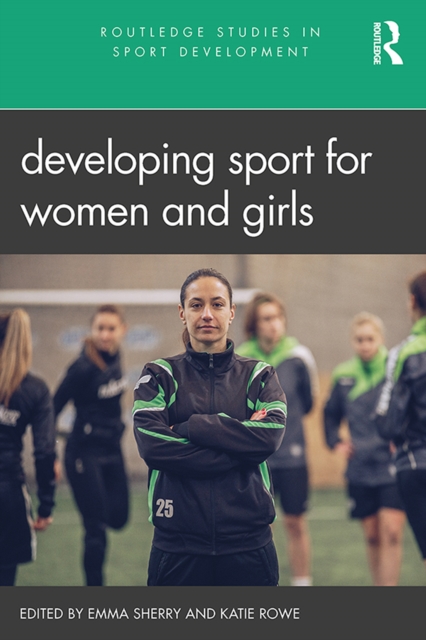
Developing Sport for Women and Girls
Women and girls are often excluded from organised sport or face challenges in accessing sport or developing within sport. This is the first book to focus on sport development for women and girls. It provides a theoretical and practical framework for readers in the emerging field of sport development.
Developing Sport for Women and Girls examines both the development of sport, and development through sport with expert contributions from Australasia, North America and Europe. It offers critical analysis of contemporary sport development, from high performance pathways to engaging diverse communities to the use of sport to empower women and girls. Each chapter explores various contexts of sport development and sport for development theory with a specific focus on women and girls. It covers key topics such as health, education, sexual orientation and participation across the lifecourse, and features international case studies in every chapter.
This is essential reading for students, academics, researchers and practitioners working in the area of sport development or sport management.
eBook

Inclusion and Exclusion Through Youth Sport
'We can reach far more people through sport than we can through political or educational programmes. In that way, sport is more powerful than politics. We have only just started to use its potential to build up this country. We must continue to do so.' – Nelson Mandela
Nelson Mandela's statement reflects a widely held view that sport can contribute in unique and far-reaching ways to the delivery of important social outcomes. But is this really the case? Can sport bring people from different backgrounds together, and in so doing act as a force for social transformation and change? In the language of policymakers and practitioners, can sport contribute to social inclusion or could it be argued that sport acts to marginalize and disadvantage some groups in society? In other words could sport reinforce, rather than challenge, social inequality?
Focusing on youth sport as a touchstone sector of sport in society, this book examines the theoretical and empirical bases of arguments for the role of sport in social inclusion agendas. Authors are drawn from around the world and offer critical perspectives on assumptions underpinning the bold claims made about the power of sport. This book represents the most up-to-date and authoritative source of knowledge on inclusion and exclusion in youth sport. As such, it is essential reading for those who want to use sport to 'make a difference' in young people's lives. It is, therefore, recommended for students, researchers, policy makers and practitioners working in sports development, sports coaching, sport studies or physical education.
Preface Introduction Section 1. Understanding Exclusion 1. The will for inclusion: Bothering the inclusion/exclusion discourses of sport, Doune Macdonald, Kelly Knez, Alison Nelson & Louise McCuaig (Queensland, Australia) 2. Understanding social exclusion and sport, Michael Collins (Gloucestershire, UK) 3. Sport and Social Exclusion: An Economic Perspective, Paul Downward & Simona Rasciute (Loughborough, UK) 4. Sport, Social Divisions and Social Inequality, Grant Jarvie (University of Stirling, UK) 5. \"I’ve Lost My Football…\": Rethinking Gender, the Hidden Curriculum, and Sport in the Global Context, Laura Azzarito (Loughborough, UK) 6. Ability as an exclusionary concept in youth sport, Peter Hay (Queensland, Australia) 7. Sexuality and Youth Sport, Ian Wellard (Canterbury, UK) 8. The embodiment of religious culture and exclusionary practices in youth sport (Birmingham, UK) 9. Sporting fat: Youth sport and the obesity ‘epidemic’, Lisette Burrows & McCormack(Otago, New Zealand) Section 2. Moving Towards Inclusion 10. Young People’s Voices in Sport, Ann MacPhail (Limerick, Ireland) 11. Lessons Learned about Gender Equity and Inclusion in Physical Education, Kimberly Oliver and Nate McCaughtry (New Mexico State & Wayne State, USA) 12. Children’s Talent Development in Sport: Effectiveness or Efficiency? Jean Côté Colleen Coackley and Mark Bruner (Queen’s University at Kingston, Canada) 13. Disability Sport and Inclusion Donna Goodwin and Danielle Peers (University of Alberta, Canada) 14. Facilitating positive experiences of physical education and school sport for Muslim girls Haifaa Jawad, Tansin Benn, & Symeon Dagkas (University of Birmingham, UK) 15. Sport and youth inclusion in the Majority world (Tess Kay, Brunel University, UK) 16. Physical Education for All: The Impact of Curriculum on Student Choice, Deborah Tannehill (Limerick, Ireland) 17. Dance and Social Inclusion: Possibilities and Challenges, Michael Gard & Doug Risner (Charles Sturt, Australia & Wayne State University USA)
Symeon Dagkas is a lecturer in the school of education, University of Birmingham, UK. His research interests lie in intersectional issues in sport participation through the examination of multiple layers of disadvantage including socioeconomic factors, ethnicity, gender and religion.
Kathleen Armour is Professor of Education and Sport in the School of Education, and Head of the Department of Sport Pedagogy, University of Birmingham, UK. Her main research interest is career-long professional learning for teachers and coaches, and its impact on young people's learning in physical education and sport
eBook
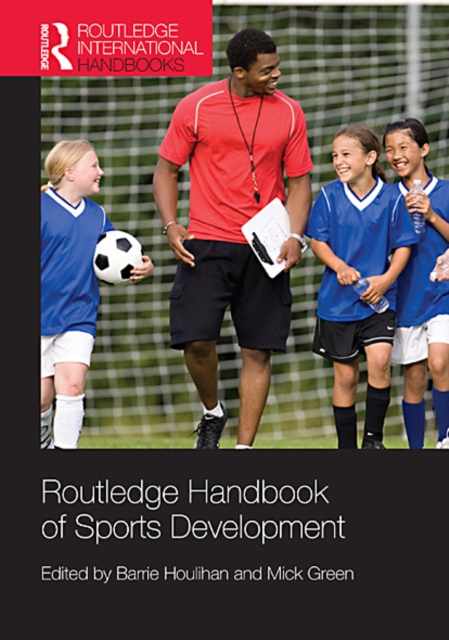
Routledge Handbook of Sports Development
Sports development has become a prominent concern within both the academic study of sport and within the organisation and administration of sport. Now available in paperback, the Routledge Handbook of Sports Development is the first book to comprehensively map the wide-ranging territory of sports development as an activity and as a policy field, and to offer a definitive survey of current academic knowledge and professional practice.
Spanning the whole spectrum of activity in sports development, from youth sport and mass participation to the development of elite athletes, the book identifies and defines the core functions of sports development, exploring the interface between sports development and cognate fields such as education, coaching, community welfare and policy. The book presents important new studies of sports development around the world, illustrating the breadth of practice within and between countries, and examines the most important issues facing practitioners within sports development today, from child protection to partnership working.
With unparalleled depth and breadth of coverage, the Routledge Handbook of Sports Development is the definitive guide to policy, practice and research in sports development. It is essential reading for all students, researchers and professionals with an interest in this important and rapidly evolving discipline.
eBook

Qualitative Research in Sport Management
Good qualitative research can help sport management researchers and industry professionals solve difficult problems and better understand their organisations, stakeholders, and performance. Now in a fully revised and extended new edition, this book is a user-friendly introduction to qualitative methods in sport management. Covering the full research process from research planning to reporting results, this edition includes expanded coverage of cutting-edge areas, including digital and social media research, critical realism, and social network analysis.
The book examines the reflective and interrogative processes required for developing effective qualitative research questions and includes a deeper discussion of ontology and epistemology in the light of today's rapidly changing society. It takes the reader step-by-step through essential and emerging qualitative methods, from actor network theory and ethnography to computer-assisted data analysis and sampling typologies. Every chapter includes examples of real qualitative research, including shorter \"research briefs\" and extended case studies, reflecting the exciting qualitative research that is currently occurring in sport business and management, and highlighting the links between research and sport management practice.
This is essential reading for courses in sport management, sport business, sport policy, sport marketing, sport media, and communications. It provides students, researchers, and practitioners with the knowledge and skills to undertake qualitative research while deepening their understanding of how the social world can be perceived and interpreted through a particular theoretical lens.
Useful online materials include recommended readings and PowerPoint slides.
eBook
Youth Sport, Physical Activity and Play
Sport, physical activity and play are key constituents of social life, impacting such diverse fields as healthcare, education and criminal justice. Over the past decade, governments around the world have begun to place physical activity at the heart of social policy, providing increased opportunities for participation for young people. This groundbreaking text explores the various ways in which young people experience sport, physical activity and play as part of their everyday lives, and the interventions and outcomes that shape and define those experiences.
The book covers a range of different sporting and physical activities across an array of social contexts, providing insight into the way in which sport, physical activity and play are interpreted by young people and how these interpretations relate to broader policy objectives set by governments, sporting organisations and other NGOs. In the process, it attempts to answer a series of key questions including:
How has sport policy developed over the last decade?
How do such policy developments reflect changes at the broader political level?
How have young people experienced these changes in and through their sporting lives?
By firmly locating sport, physical activity and play within the context of recent policy developments, and exploring the moral and ethical dimensions of sports participation, the book fills a significant gap in the sport studies literature. It is an important reference for students and scholars from a wide-range of sub-disciplines, including sports pedagogy, sports development, sport and leisure management, sports coaching, physical education, play and playwork, and health studies.
eBook
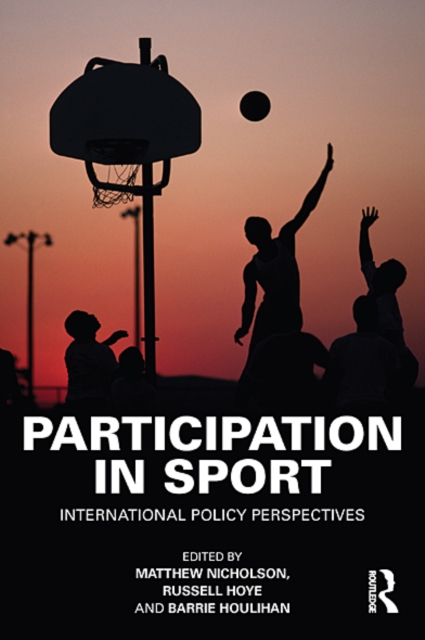
Participation in Sport
Although there is growing interest from governments in participation levels in sport, the extent to which governments actively promote ‘sport for all’ and their motives for doing so vary greatly. This is the first book to examine the sport participation policies of national governments across the world and to offer a comparative analysis of the motives for, and successes and failures of those policies.
Organized around a series of sixteen national case studies, including the UK, the US, Australia, China and India, the book enables students and practitioners to compare and contrast the development, implementation and impact of sport participation policies throughout the world. An introductory chapter provides a framework for understanding and interpreting those case studies and each chapter then addresses the following key themes:
national structures for sport
national sporting cultures
participation levels in organized sport
the nature and extent of government intervention
implementation of governmental policy
the impact of government policy.
With contributions from many of the world’s leading experts on sport policy and sport development, this book is essential reading for anybody with an interest in the role of governments in relation to supporting and regulating their citizens’ involvement in sport.
1. Introduction 2. England 3. The Netherlands 4. Germany 5. Norway 6. Hungary 7. Bulgaria 8. Finland 9. South Africa 10. India 11. China 12. Singapore 1 3. Japan 14. Australia 1 5. New Zealand 16. United States of America 17. Canada 18. Conclusion
Matthew Nicholson is Associate Professor of Sport Management in the Centre for Sport and Social Impact at La Trobe University, Australia. His research interests focus on sport policy and development, the contribution of sport to social capital and the relationship between sport and the media. His most recent books include Sport and Policy: Issues and Analysis (2010), Sport Management: Principles and Applications (2009), Sport and Social Capital (2008), A National Game (2008) and Sport and the Media: Managing the Nexus (2007).
Russell Hoye is Professor of Sport Management and Director of the Centre for Sport and Social Impact at La Trobe University, Australia. His main research areas focus on the governance of sports organizations, the impacts of public policy on sport and the engagement of volunteers in sport. His most recent books include Sport and Policy: Issues and Analysis (2010), Sport Management: Principles and Applications (2009), Sport and Social Capital (2008) and Sport Governance (2007).
Barrie Houlihan is Professor of Sport Policy in the Institute of Sport and Leisure Policy in the School of Sport, Health and Exercise Sciences at Loughborough University, UK. He has written widely on many aspects of sport policy including doping, sport development, theorizing the sport policy process and sport and young people. His most recent books include Sport and Policy: Issues and Analysis (2010), Comparative Elite Sport Development: Systems, Structures and Public Policy (2008) and Sport Policy: A Comparative Analysis of Stability and Change (2007).
eBook

Strategic Sport Development
The field of sports development is becoming ever more professional, with the levels of expertise in planning and efficiency required of those working in private or national sports institutions higher than they have ever been. In response to this, strategic sports development has emerged as a means of applying business strategies to the context of sports development. Strategic Sports Development is the first book to directly address this important new field.
The book comprehensively explains the strategic concepts and techniques that sports students and practitioners across the UK and internationally need to understand. It includes:
national and local case studies that appraise existing strategic management practice in sports development
separate full introductions to sports development and business strategy
a range of tasks and resources that encourage the reader to develop knowledge, skills and competencies through the application of theory to practical examples
the application of strategic management principles to the development of sport and development through sport
everything the reader needs to engage meaningfully with the relevant National Occupational Standards for the sport development profession.
Strategic Sports Development is designed to help students develop the practical skills needed to contribute to development strategy in a vocational context, and give practitioners the confidence and know-how to improve the strategic development of their sports organization. This book is essential reading for all students and practitioners of strategic sports development, and a valuable resource for students of sports management or development in general.
Stephen Robson is a Senior Lecturer in Sport Development at Leeds Metropolitan University, UK. As well as leading the Sport Development degree, he also leads the teaching of strategic management. Stephen has extensive experience of working on national level projects related to employability and CPD in strategic sport development.
Kirstie Simpson is Deputy Head of the Department of Sport and Exercise Science at the University of Chester, UK. She began her career in local authority sport development and is now leading programmes in Sport Development and Sport Coaching. Her main research interest lies in the monitoring and evaluation of sport interventions.
Lee Tucker is a Senior Lecturer in Sport Development at Leeds Metropolitan University, UK. He is currently doing a PhD examining the transformational potential of sport. His main research interests are around sociology of sport as well as the politics of sport.
Chapter 1. Introduction Chapter 2. Internal Analysis Chapter 3. The External Environment Chapter 4. Making Strategic Choices in Sport Development Chapter 5. Strategic Performance Management 1: strategic implementation Chapter 6. Strategic Performance Management 2: evaluating strategic sport development Chapter 7. Strategic Partnerships Chapter 8. Politics, Policy and Sport Development Chapter 9. Strategic Leadership Chapter 10. A different ball game? In pursuit of greater strategic collaboration between sport-specific and community sport development Chapter 11. Towards a ‘Community Practice’ approach
eBook
Lifelong Engagement in Sport and Physical Activity
Sport and physical activity should now be understood as lifelong activity, beginning in childhood, and accessible to participants of all levels of ability. This book offers an overview of some of the core concerns underlying lifelong engagement in sport and physical activity, encompassing every age and phase of engagement. The book explores key models of engagement from around the world, as well as specific areas of research that will help the reader understand this important topic.
In adopting a lifespan approach, the book pays particular attention to sport and physical activity during childhood and adolescence as well as transitions into adulthood, the developmental periods when participation in sport and physical activity are most likely to decline. Understanding more about participation during these early years is important for sustaining participation during adulthood. The book also addresses issues relating to sport and physical activity during adulthood, across a range of different populations, while a final section examines sport and physical activity among older adults, an often overlooked, but growing segment of society in this context.
Lifelong Engagement in Sport and Physical Activity is important reading for undergraduate and postgraduate students in teacher education, sport and coaching science, and for health promoters, coaches, teachers and relevant bodies and organizations in sport and education.
This book is published in partnership with ICSSPE, and is part of the Perspectives series
eBook