
Catalogue Search | MBRL


Are you sure you want to remove the book from the shelf?

{{itemTitle}}
450
result(s) for
"Community development -- Cross-cultural studies"
Sort by:

Culture, Education, and Community : expressions of the postcolonial imagination
\"Lavia and Mahlomaholo re-examine how postcolonial theories might contribute to understandings about education in Culture, Education, and Community. They provide a critical space in which to interrogate the ways in which postcolonial voices are imagined and struggle to be valued, heard, and responded to. The book takes the imagination of the postcolonial and the experience of postcoloniality as its focus, acknowledging that postcolonialism is a troubling, unsettling, and ambiguous concept requiring re-visiting and re-interpretation\"-- Provided by publisher.
Book
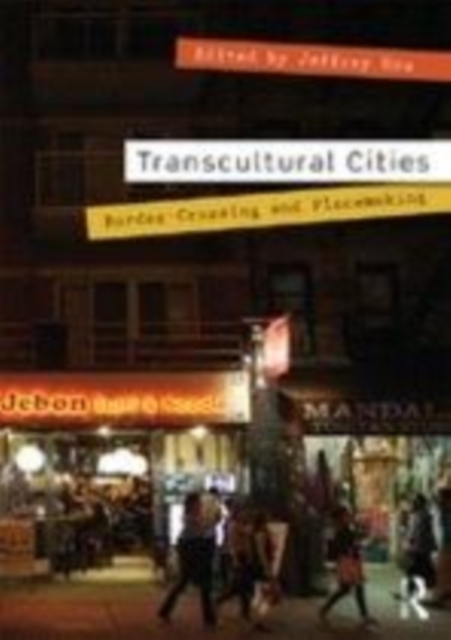
Transcultural Cities
Transcultural Cities uses a framework of transcultural placemaking, cross-disciplinary inquiry and transnational focus to examine a collection of case studies around the world, presented by a multidisciplinary group of scholars and activists in architecture, urban planning, urban studies, art, environmental psychology, geography, political science, and social work. The book addresses the intercultural exchanges as well as the cultural trans-formation that takes place in urban spaces. In doing so, it views cultures not in isolation from each other in today's diverse urban environments, but as mutually influenced, constituted and transformed.
In cities and regions around the globe, migrations of people have continued to shape the makeup and making of neighborhoods, districts, and communities. For instance, in North America, new immigrants have revitalized many of the decaying urban landscapes, creating renewed cultural ambiance and economic networks that transcend borders. In Richmond, BC Canada, an Asian night market has become a major cultural event that draws visitors throughout the region and across the US and Canadian border. Across the Pacific, foreign domestic workers in Hong Kong transform the deserted office district in Central on weekends into a carnivalesque site. While contributing to the multicultural vibes in cities, migration and movements have also resulted in tensions, competition, and clashes of cultures between different ethnic communities, old-timers, newcomers, employees and employers, individuals and institutions.
In Transcultural Cities Jeffrey Hou and a cross-disciplinary team of authors argue for a more critical and open approach that sees today's cities, urban places, and placemaking as vehicles for cross-cultural understanding.
eBook

Educating \good\ citizens in a globalising world for the twenty-first century
What is needed to be a 'good' citizen for the twenty-first century? And how can schools and curricula address this question? This book addresses these questions and what it means to be a 'good citizen' in the twenty-first century by exploring this concept in two different, but linked, countries. China is a major international power whose citizens are in the midst of a major social and economic transformation. Australia is transforming itself into an Asian entity in multiple ways and is influenced by its major trading partner - China. Yet both rely on their education systems to facilitate and guide this transformation as both countries search for 'good' citizens. The book explores the issue of what it means to be a 'good citizen' for the 21st century at the intersection between citizenship education and moral education. The issue of what constitutes a 'good citizen' is problematic in many countries and how both countries address this issue is vitally important to understanding how societies can function effectively in an increasingly interconnected world. The book contends that citizenship education and moral education in both countries overlap on the task of how to educate for a 'good citizen'. Three key questions are the focus of this book: 1. What is a 'good citizen' in a globalizing world? 2. How can 'good citizenship' be nurtured in schools? 3. What are the implications of the concept of 'good citizen' in education, particularly the school curriculum? [Publisher website, ed].
Book
Culture, education, and community
\"Lavia and Mahlomaholo re-examine how postcolonial theories might contribute to understandings about education in Culture, Education, and Community. They provide a critical space in which to interrogate the ways in which postcolonial voices are imagined and struggle to be valued, heard, and responded to. The book takes the imagination of the postcolonial and the experience of postcoloniality as its focus, acknowledging that postcolonialism is a troubling, unsettling, and ambiguous concept requiring re-visiting and re-interpretation.\" -- Provided by publisher. Machine generated contents note: -- Imagining the Postcolonial -- Jennifer Lavia and Sechaba Mahlomaholo * Postcolonial Thought: A means for thinking through educational research? -- Laurette Bristol * Analysing sustainable empowering learning environments through a community cultural wealth perspective -- Sechaba Mahlomaholo * Images of Us -- Lorraine Singh * Radical Visions: Reimagining Indigenous Education in the Postcolonial World -- Bob Lingard and Greg Vass Bob Lingard.
eBook
Education, autonomy and democratic citizenship
Across the globe educators are being required to respond to a changing political environment.New nations emerge out of the collapse of old empires; new democracies struggle out of old structures of oppression.
eBook

Young Children From Three Diverse Cultures Spontaneously and Consistently Prepare for Alternative Future Possibilities
This study examined future-oriented behavior in children (3-6 years; N = 193) from three diverse societies—one industrialized Western city and two small, geographically isolated communities. Children had the opportunity to prepare for two alternative versions of an immediate future event over six trials. Some 3-year-olds from all cultures demonstrated competence, and a majority of the oldest children from each culture prepared for both future possibilities on every trial. Although there were some cultural differences in the youngest age groups that approached ceiling performance, the overall results indicate that children across these communities become able to prepare for alternative futures during early childhood. This acquisition period is therefore not contingent on Western upbringing, and may instead indicate normal cognitive maturation.
Journal Article
Cultural Influences on Toddlers' Prosocial Behavior: How Maternal Task Assignment Relates to Helping Others
This cross-cultural study investigates how maternal task assignment relates to toddlers' requested behavior and helping between 18 and 30 months. One hundred seven mother-child dyads were assessed in three different cultural contexts (rural Brazil, urban Germany, and urban Brazil). Brazilian mothers showed assertive scaffolding (serious and insistent requesting), whereas German mothers employed deliberate scaffolding (asking, pleading, and giving explanations). Assertive scaffolding related to toddlers' requested behavior in all samples. Importantly, assertive scaffolding was associated with toddlers' helping in rural Brazil, whereas mothers' deliberate scaffolding related to toddlers' helping behavior in urban Germany. These findings highlight the role of caregivers' socialization practices for the early ontogeny of helping behavior and suggest culture-specific developmental pathways along the lines of interpersonal responsibility and personal choice.
Journal Article

Teachers' learning through an online lesson study: an analysis from the expansive learning perspective
PurposeThis study aimed to explore how a group of Chinese primary mathematics teachers learned through conducting an online cross-cultural lesson study between China and Australia.Design/methodology/approachAn expansive learning theory was adopted to examine teachers' learning through collective activities across different activity systems. Multiple data sets including videos of research lessons, debriefings and audios of interviews were collected. From the expansive learning perspective, based on a fine-grained qualitative data analysis, various contradictions (as driving forces of learning) were identified and the ways of resolving the contradictions (as enactment of learning) were located to feature teacher learning throughout the online lesson study process.FindingsTeachers' expansive learning includes enhancing teachers' MKT and Mathematics TPACK, developing instructional design skills and capabilities in addressing challenges occurring in the virtual environment were identified.Research limitations/implicationsTheoretically, the study illustrated how expansive learning theory could be utilized to examine teacher collaborative learning in the online cross-cultural lesson study. Practically, this study showed that reiterative cycles and experts' facilitation are crucial to expansive learning for linking research to classroom practice. However, this study did not focus on student learning in the virtual environment. Australian teachers' reciprocal learning through the online lesson study also requires further exploration.Originality/valueBoth online lesson study and cross-cultural collaboration are innovative. The expansive learning lens are creatively used to examine the complexity of teacher learning in such a novel environment.
Journal Article
Effective schooling for the community
This book offers a new perspective on the management of schools by bringing together the knowledge and understanding of school effectiveness and community education. Tony Townsend argues that the core activity of the school, to provide a learning environment for children, should be supplemented by educational activities that service the needs of the community as a whole. He offers a model for the development of the `core-plus' school, including practical ideas for school leaders to build strategies for improving school programme possiblities and processes to encourage greater community involvement.
eBook

Individuals’ Social Identity and Pro-Environmental Behaviors: Cross-Cultural Evidence from 48 Regions
Individual pro-environmental behaviors (PEBs) are essential for addressing critical global environmental challenges. Drawing on the social identity approach, this study examines how different types of social identity (including world, national, regional, and city identities) influence individuals’ engagement in PEBs. Using data from the seventh wave of the World Values Survey (2017–2022), which includes responses from 60,577 participants across 48 regions, a hierarchical linear model was used to analyze these relationships. The results show that world identity has a stronger effect than city, national, or regional identity on green orientation and subsequently on PEBs, emphasizing environmental sustainability as a global priority. Moreover, previous cross-cultural research has focused on individualistic and collectivistic cultures. Our study introduces a novel perspective to the existing literature by examining the moderating effect of long-term versus short-term societal orientations. The findings indicate that long-term cultural orientations strengthen the influence of green orientation on PEBs. This study provides actionable insights for researchers, practitioners, and policymakers seeking to develop culturally sensitive strategies to promote sustainable behaviors.
Journal Article