
Catalogue Search | MBRL


Are you sure you want to remove the book from the shelf?

{{itemTitle}}
1,164
result(s) for
"Community development Developing countries History."
Sort by:


The Aid Triangle
The Aid Triangle focuses on the human dynamics of international aid and illustrates how the aid system incorporates power relationships, and therefore relationships of dominance. Using the concept of a triangle of dominance, justice and identity, this timely work explains how the experience of injustice is both a challenge and a stimulus to personal, community and national identity, and how such identities underlie the human potential that international aid should seek to enrich. This insightful new critique provides for the reader an innovative and constructive framework for producing more empowering and more effective aid.
eBook
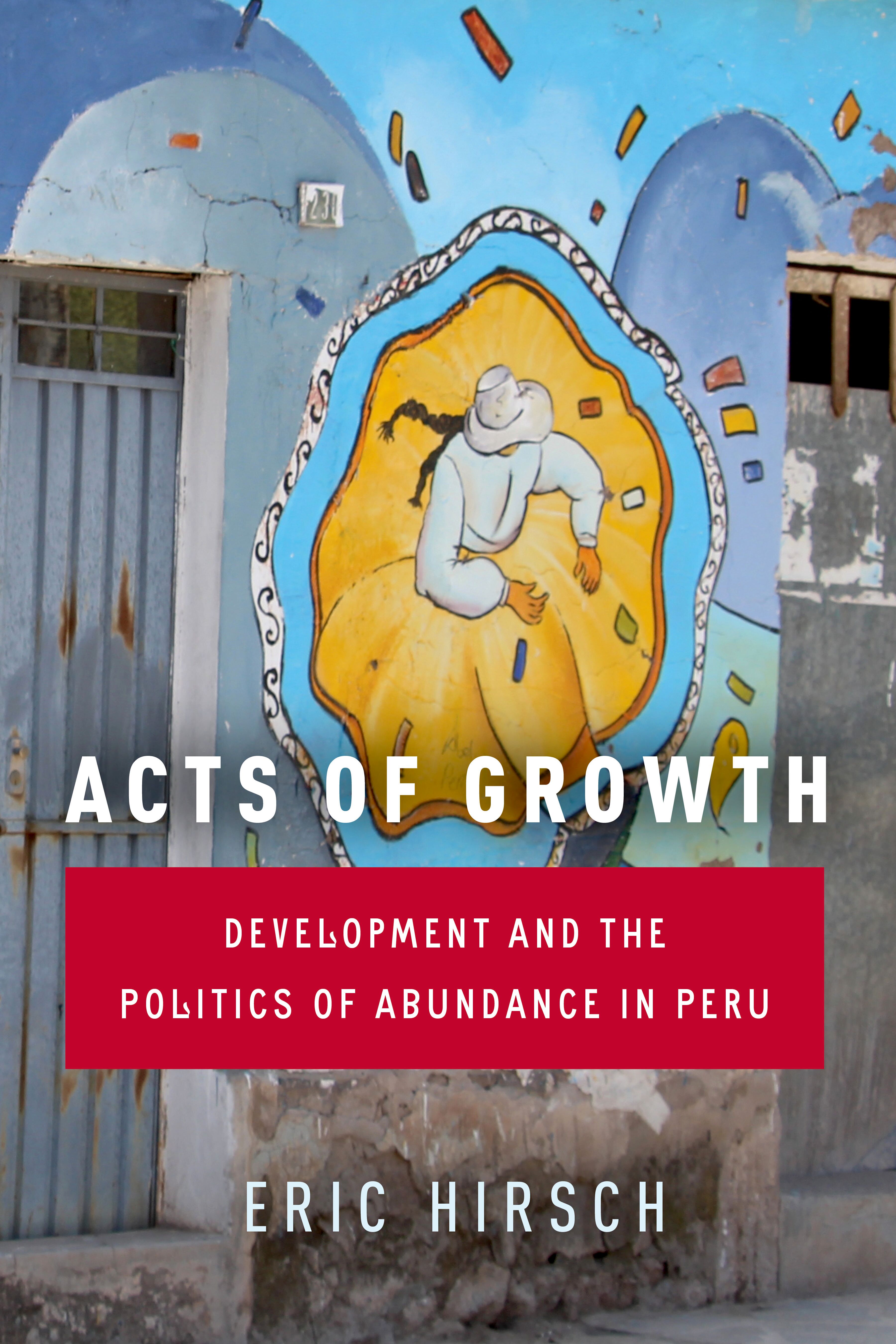
Acts of growth : development and the politics of abundance in Peru
Over the last decade, Peru has experienced a spectacular mining boom and astronomical economic growth. Yet, for villagers in Peru's southern Andes, few have felt the material benefits. With this book, Eric Hirsch considers what growth means—and importantly how it feels. Hirsch proposes an analysis of boom-time capitalism that starts not from considerations of poverty, but from the premise that Peru is wealthy. He situates his work in a network of villages near new mining sites, agricultural export markets, and tourist attractions, where Peruvian prosperity appears tantalizingly close, yet just out of reach. This book centers on small-scale development investments working to transform villagers into Indigenous entrepreneurs ready to capitalize on Peru's new national brand and access the constantly deferred promise of national growth. That meant identifying as Indigenous, where few actively did so; identifying as an entrepreneur, in a place where single-minded devotion to a business went against the tendency to diversify income sources; and identifying every dimension of one's daily life as a resource, despite the unwelcome intimacy this required. Theorizing growth as an affective project that requires constant physical and emotional labor, Acts of Growth follows a diverse group of Andean residents through the exhausting work of making an economy grow.
eBook

Resource abundance and economic development
Since the 1960s the resource-poor countries have grown much faster than the resource-rich ones. This reflects basic differences in the speed of industrialization and the nature of the political state that are rooted in the natural resource endowment. Most resource-rich countries experienced a growth collapse in the 1960s and 1970s. This book shows.
eBook

Dutch Deltas
In Dutch Deltas, Werner Scheltjens examines the emergence, functions and structure of the Low Countries' maritime transport system between ca. 1300 and 1850. Scheltjens introduces the delta as a suitable geographical unit of analysis for understanding the regional economic origins of communities of maritime transporters. The author proves that changes in maritime trade networks and in the structure of regional economies entailed a process of specialisation, which led to the emergence of 'professional' maritime transport communities and the development of an integrated maritime transport market with Amsterdam and Rotterdam as its main centres.Dutch Deltas offers the first comprehensive study of the economic geography of the Low Countries' maritime transport sector and its long-term development between 1300 and 1850.
eBook

The right to research : historical narratives by refugee and Global South researchers
Refugees and displaced people rarely figure as historical actors, and almost never as historical narrators and historians. The Right to Research offers a critical reflection on what history means, who narrates it, and what happens when those long excluded from authorship bring their knowledge and perspectives to bear.
eBook

Poverty alleviation in rural China: policy changes, future challenges and policy implications
Purpose
Poverty alleviation is a global challenge. Human society has never ceased to fight against poverty. China was once the developing country with the largest rural poor population in the world. Remarkable achievements have been made in China’s antipoverty program over the past decades, shaping a unique poverty reduction strategy with Chinese characteristics. The purpose of this paper is to first review the history of China’s rural reform and antipoverty, and then analyze the related policy systems, mechanism innovations and future challenges in poverty alleviation and development. At last, some specific policy implications were provided.
Design/methodology/approach
Literature on China’s antipoverty history was reviewed and mechanism innovations on targeted poverty alleviation strategy were investigated.
Findings
Along with the deepening of the rural reform, the poverty alleviation and development in new China have undergone six stages, and experienced a transformation from relief-oriented to development-oriented poverty alleviation. The object of poverty alleviation has gradually targeted with a transformation from poor counties/areas to villages/households, and the effectiveness of poverty alleviation is also gradually improved. However, the increase in the difficulty of antipoverty, fragile ecological environment, rapid population aging and rural decline poses challenges to the construction of a well-off society in an all-round way in China. Specific antipoverty measures were put forward based on the investigation. Finally, the authors emphasize the importance of strengthening the study of poverty geography.
Originality/value
This study investigates the history of China’s antipoverty policy and analyzes the future challenges for implementing targeted poverty alleviation policy. These findings will lay a foundation for the formulation of China’s antipoverty policies after 2020, and provide experience for poverty alleviation in other developing countries around the world.
Journal Article

Parliaments as peacebuilders in conflict-affected countries
The changing nature of conflict and the increase in intrastate conflict during the 1990s, followed by its slow decline since the turn of the century, have led to changing priorities in the field of conflict resolution. No longer is the international community solely concerned with resolving existing conflicts; it also is managing emerging conflicts to ensure that they do not flare into violent conflict. This book outlines some of the strategies parliaments and parliamentarians can adopt to reduce the incidence of conflict and effectively manage conflict when it does emerge. It is hoped that by developing a better understanding of the nexus between parliament, poverty, and conflict parliamentarians will be more aware of the array of options open to them as they seek to contribute to conflict management in conflict-affected societies.
eBook

Sustainability the Environment and Urbanisation
The 1992 Rio Summit and subsequent literature and debate has focused on 'green' issues such as biodiversity, climate change and marine pollution. Much less has been written concerning the 'brown' agenda: factors such as poor sanitation and water quality, air pollution and housing problems which are particularly prevalent in Third World cities.
Sustainability, the Environment and Urbanisation provides a comprehensive overview of the brown agenda, with case studies and examples from a number of Southern countries. It looks at the broad economic context behind the problems and covers the conceptual issues of sustainability, infrastructure and health programmes, as well as assessing environmental appraisal methods.
Clearly written, with contributions from some of the leading experts in the field, the book will appeal to students on environmental and developmental courses, researchers, and all those concerned with the 'healthy cities' movement.
eBook