
Catalogue Search | MBRL


Are you sure you want to remove the book from the shelf?

{{itemTitle}}
251
result(s) for
"Community development Great Britain History."
Sort by:


Poverty, Community and Health
01
02
Despite plentiful evidence on poverty and reduced health chances and on the benefits of co-operative social networks and social capital, the nature of the relationship between them remains uncertain. Yet an enhanced understanding is needed if we are to gain, not only a more effective purchase on social processes involved in well-being, or on links between poverty and place, but also of the stratagems people adopt to challenge or cope with social and economic difficulties and resist their deleterious effects. Drawing on key concepts and on community studies conducted in East London housing estates, this book brings together diverse strands of influence on participatory community life and individual well-being. Residents' rich narratives are used to emphasize the significance of different social network patterns for mediating disadvantage and happiness. The book makes a timely contribution to post 2010 policy agendas and to current political debates on the 'big society' and the 'good society'.
02
02
If we are becoming increasingly disconnected from our local communities, are there implications for health, well being and happiness, particularly for people on low incomes? This book looks at the interplay between poor people, poor communities and poor health, with a particular focus on social networks as key linkages.
13
02
VICKY CATTELL Honorary Senior Lecturer at Queen Mary, University of London, UK, and a Visiting Senior Research Fellow at Middlesex University, UK. She has lectured in Sociology, Social Policy and Politics. Her research and publications cover poverty, community and social networks in poor neighbourhoods, health and well being, and public spaces.
31
02
This book explores the role of co-operative social networks in mediating the effects of disadvantage on well being
19
02
Examines how disconnection from communities impacts on health, wellbeing and happiness Focuses on impact of those with low incomes Addresses the post-2010 policy climate and current political ideas on 'the big society' and the nature of 'the good society'
04
02
Acknowledgements List of Abbreviations Introduction: Social Murder Utopian Dreams? Researching Poverty, Community and Health Community Resilience Community Demoralisation and Resistance Social Capital in Urban Neighbourhoods: the Potential for Unity and Division Well-being and Happiness: Balancing Community with Independence Social Network Characteristics and Health and Well-Being Conclusions: Poverty, Community and Health in the 'Good Society' Bibliography Index
eBook

Poverty, community, and health : co-operation and the good society
\"Despite plentiful evidence on poverty and reduced health chances and on the benefits of co-operative social networks and social capital, the nature of the relationship between them remains uncertain. Yet an enhanced understanding is needed if we are to gain, not only a more effective purchase on social processes involved in well-being, or on links between poverty and place, but also of the stratagems people adopt to challenge or cope with social and economic difficulties and resist their deleterious effects. Drawing on key concepts and on community studies conducted in East London housing estates, this book brings together diverse strands of influence on participatory community life and individual well-being. Residents' rich narratives are used to emphasize the significance of different social network patterns for mediating disadvantage and happiness. The book makes a timely contribution to post 2010 policy agendas and to current political debates on the 'big society' and the 'good society'\"-- Provided by publisher.
Book
The Co-operative Movement and Communities in Britain, 1914-1960
The co-operative movement has played a notable role in the retail, wholesale, productive, political, educational and cultural life of Britain. As a movement it has consciously represented consumer interests and has carried out work in the arena of consumer protection. However, its study has suffered relative neglect when compared to research into the Labour Party, trade unions and the wider politics of retail and consumption. This book reassesses the impact of the co-operative movement on various communities in Britain during the period 1914-1960, providing a comprehensive account of the grass roots influence of co-operatives during both war and peace.
This is a national study with a local dimension. It considers how national directives and perspectives were locally applied, if indeed they were applicable within the context of individual societies. Each chapter focuses on a different aspect of the co-operative movement by examining various societies in England, Scotland and Wales. Particular attention is paid to the midlands, due to the movement's expansion here during the interwar period, with consideration also given to comparative developments in Europe. The author explores: the movement's relationship with other labour organizations; its cultural and social aspects (including the role sport played in co-operative societies); the politicization of the movement and local response to the formation of the Co-operative Party; the education of co-operators; what co-operative membership entailed and how co-operative ideology was expressed; the economic impact membership could have on families (including the provision of financial assistance and credit); and the co-operative movement's development alongside consumer activism.
The book is a major national study of the growth of Co-operation during this crucial period of British social, economic and consumer history. Given the few modern scholarly works on Co-operation, it is a timely and much needed reassessment.
eBook

The co-operative movement and communities in Britain, 1914-60
This book provides the first major national study of the growth of co-operation and its impact on British society during this crucial period of war and peace
Book

Free churches and society : the nonconformist contribution to social welfare 1800-2010
Many of the key improvements to social conditions in the United Kingdom have been made by Christians.Most of us would be able to think of such key Anglican figures as William Wilberforce, Anthony Ashley Cooper, Earl of Shaftesbury or Dr Thomas Barnardo, but lesser known contributions were made behind the scenes by significant members.
eBook

Building sustainable communities
In 2003 the Labour Government published its ambitious Sustainable Communities Plan. It promised to bring about a 'step change' in the English planning system and a new emphasis on the construction of more balanced, cohesive, and competitive places. This book uses historical and contemporary materials to document the ways in which policy-makers, in different eras, have sought to use state powers and regulations to create better, more balanced, and sustainable communities and citizens. It charts the changes that have take place in community-building policy frameworks, place imaginations, and core spatial policy initiatives in the UK since 1945. In so doing, it examines the tensions that have emerged within spatial policy over the types of places that should be created and the forms of mobility and fixity required to create them. It also shows that there are significant lessons that can be learnt from the experiences of the past. These can be used to inform contemporary policy debates over issues such as migration, uneven development, key worker housing, and sustainability. The book will be an important text for students and researchers in geography, urban studies, planning, and modern social history. It will also be of interest to practitioners working in central and local government, voluntary organisations, community groups, and those involved in the planning and design of sustainable communities.
eBook
The rural economy of England : collected essays
No one has done more to emphasise the significance of the land in early modern England that Joan Thirsk, whose writings are both an important contribution to its history and point the way for future research. The subjects of this collection include the origin and nature of the common fields, Tudor enclosures, the Commonwealth confiscation of Royalist land and its subsequent return after the Restoration, inheritance customs, and the role of industries in the rural economy, among them stocking knitting.
eBook
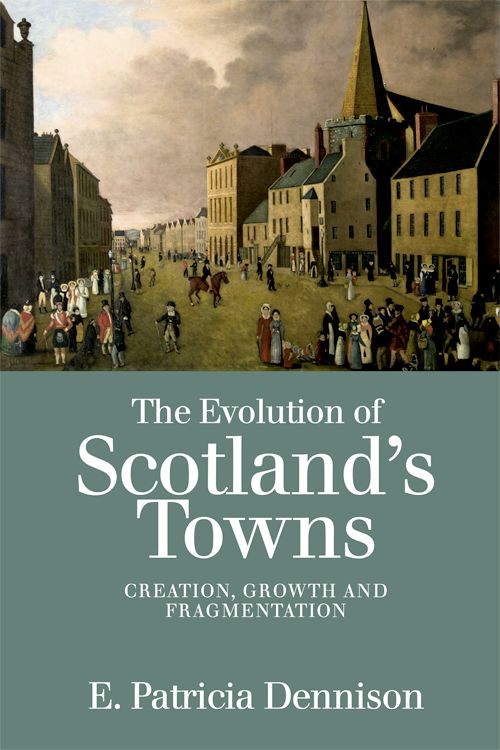
The Evolution of Scotland’s Towns
This pioneering book tells the story of urban development in Scotland over the course of a millennium, drawing on original research into more than thirty towns, from the smallest settlements to major cities.
eBook

Lairds, land and sustainability
Scotland is at the heart of modern sustainable upland management. This collection of cutting edge studies is a first-to-press synthesis of studies carried out by the Centre for Mountain Studies at Perth College, which will be both enlightening and relevant to upland managers across Britain and Europe.
eBook