
Catalogue Search | MBRL


Are you sure you want to remove the book from the shelf?

{{itemTitle}}
98
result(s) for
"Community theater Developing countries."
Sort by:


Evaluation of a pilot, community-led mental illness de-stigmatization theater intervention in rural Uganda
Background
In rural areas of low- and middle- income countries, mental health care is often unavailable and inaccessible, and stigma is a major barrier to treatment. Destigmatization can increase treatment-seeking attitudes, community support, and acceptance of individuals suffering from mental illness. This study’s primary objective was to evaluate the impact of a community-led, theater-based destigmatization campaign for mental illness conducted in the Busoga region of Eastern Uganda.
Methods
One hundred residents of the Busoga region were randomly selected via cluster sampling to complete a structured questionnaire assessing mental health stigma. Four focus groups were conducted for qualitative data on mental health stigma. Common misconceptions and specific points of stigma were identified from these responses, and local village health team personnel developed and performed a culturally-adapted theatrical performance addressing these points. Changes in perceptions of mental illness were measured among 57 attendees using two measures, the Broad Acceptance Scale (designed to reflect factors that contribute to structural stigma) and Personal Acceptance Scale (designed to reflect factors that contribute to interpersonal, or public stigma), before and after the performance.
Results
There was a significant increase in acceptance according to the Broad Acceptance Scale (
p
< .001) and Personal Acceptance Scale (
p
< .001). Qualitative responses from play attendees also indicated a decrease in stigma and an increased sense of the importance of seeking treatment for mentally ill patients.
Conclusion
This study shows community-led, theater intervention may be an effective tool for the destigmatization of mental illness in rural areas of Uganda. Larger studies are needed to further test the efficacy of this approach and potential for longer-term scalabilityand sustainability.
Journal Article

Tales of treatment and new perspectives for global health research on antimicrobial resistance
Global health champions modernism and biomedical knowledge but tends to neglect knowledge, beliefs and identities of rural communities in low-income and middle-income countries. The topic of antimicrobial resistance represents these common challenges, wherein the growing emphasis on public engagement offers a yet underdeveloped opportunity to generate perspectives and forms of knowledge that are not typically incorporated into research and policy. The medical humanities as an interdisciplinary approach to illness and health behaviour play a central role in cultivating this potential—in particular, through the field’s emphasis on phenomenological and intersubjective approaches to knowledge generation and its interest in dialogue between medicine, the humanities and the broader public.We present a case study of public engagement that incorporates three medical humanities methods: participatory co-production, photographic storytelling and dialogue between researchers and the public. Situated in the context of northern Thailand, we explore subcases on co-production workshops with villagers, tales of treatment shared by traditional healers and dialogue surrounding artistic display in an international photo exhibition. Our starting assumption for the case study analysis was that co-produced local inputs can (and should) broaden the understanding of the sociocultural context of antimicrobial resistance.Our case study illustrates the potential of medical humanities methods in public engagement to foreground cultural knowledge, personal experience and ‘lay’ sensemaking surrounding health systems and healing (including medicine use). Among others, the engagement activities enabled us to formulate and test locally grounded hypotheses, gain new insights into the social configuration of treatment seeking and reflect on the relationship between traditional healing and modern medicine in the context of antimicrobial resistance. We conclude that medical-humanities-informed forms of public engagement should become a standard component of global health research, but they require extensive evaluation to assess benefits and risks comprehensively.
Journal Article

Urban climate change, livelihood vulnerability and narratives of generational responsibility in Jinja, Uganda
There is an urgent need to understand lived experiences of climate change in the context of African cities, where even small climate shocks can have significant implications for the livelihoods of the urban poor. This article examines narratives of climate and livelihood changes within Jinja Municipality, Uganda, emphasizing how Jinja's residents make sense of climate change through their own narrative frames rather than through the lens of global climate change discourses. We demonstrate how the onset of climate change in Jinja is widely attributed to perceived moral and environmental failings on the part of a present generation that is viewed as both more destructive than previous generations and unable to preserve land, trees and other resources for future generations. A focus on local ontologies of climate change highlights how the multiple, intersecting vulnerabilities of contemporary urban life in Jinja serve to obfuscate not only the conditions of possibility of an immediate future, but the longer-term horizons for future generations, as changing weather patterns exacerbate existing challenges people face in adapting to wider socio-economic changes and rising livelihood vulnerability. This form of analysis situates changing climate and environments within the context of everyday urban struggles and emphasizes the need for civic participation in developing climate change strategies that avoid the pitfalls of climate reductionism. The article draws on more than 150 qualitative interviews, generational dialogue groups, and creative methods based on research-led community theatre. Il est urgent de comprendre les expériences vécues du changement climatique dans le contexte de villes africaines, où même de faibles chocs climatiques peuvent avoir d'importantes implications pour l'économie locale, et celle des pauvres urbains en particulier. Cet article examine des récits de changement climatique et de changement de moyens de subsistance dans la municipalité de Jinja (Ouganda), en soulignant comment les résidents de Jinja donnent un sens au changement climatique à travers leurs propres cadres narratifs plutôt qu’à travers le prisme du discours global sur le changement climatique. Les auteurs démontrent comment l'apparition du changement climatique à Jinja est largement attribuée à ce qui est perçu comme des défaillances morales et environnementales de la part d'une génération actuelle considérée plus destructive que la génération précédente et incapable de préserver les terres, les arbres et autres ressources pour les générations futures. Un examen des ontologies locales du changement climatique révèle comment les multiples vulnérabilités croisées de la vie urbaine contemporaine à Jinja servent à obscurcir non seulement les conditions de possibilité d'un futur immédiat, mais également les horizons à plus long terme de générations futures, étant donné que les régimes météorologiques changeants exacerbent les difficultés que rencontrent actuellement les populations à s'adapter aux changements socioéconomiques plus larges et à la vulnérabilité croissante des moyens de subsistance. Cette forme d'analyse situe l’évolution du climat et de l'environnement dans le contexte des difficultés urbaines quotidiennes et souligne le besoin, pour les citoyens, de participer à l’élaboration de stratégies de changement climatique qui évitent les écueils du réductionnisme climatique. L'article s'appuie sur plus de 150 entretiens qualitatifs, des groupes de dialogue générationnel et des méthodes créatives basées sur du théâtre communautaire de recherche.
Journal Article
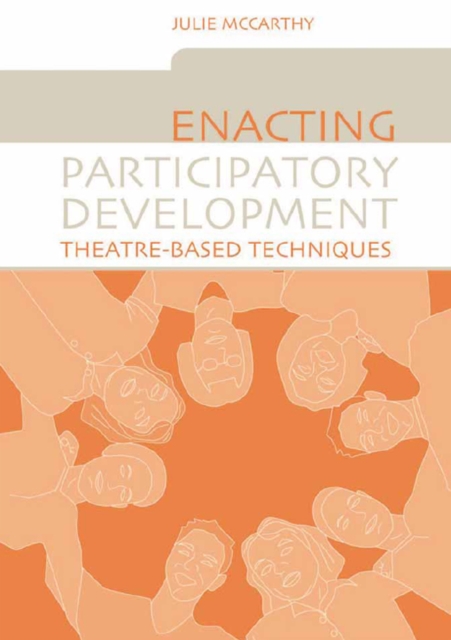
Enacting Participatory Development
Theatre can play an essential role in addressing issues of power in social, political and cultural relationships, and acting as a catalyst for personal and societal change. This comprehensive and lively sourcebook advocates the use of theatre in participatory development as a way for groups to discover their own goals and aspirations, and to develop strategies for improving their lives based on need and experience.
The first part presents 140 exercises designed to be used at all stages of participatory workshops ranging from initial ice-breakers and warm ups to exercises dealing with conflict resolution, power relations, issue-based work and project evaluation. Each exercise is explained in an easy-to-follow format and is followed by commentaries from experienced field practitioners. The second part contextualises theatre for development practice within current debates on empowerment and participation, and presents case studies illustrating the diverse contexts in which theatre for development can be used.
eBook

STRUCTURAL FACTORS, GENDER ROLES, AND HIV/AIDS PREVALENCE IN SOUTH AFRICA: IS THEATRE MISSING THE POINT?
Structural factors such as unemployment and its attendant poverty remains one of the most overlooked but critical factor in the fight against HIV/AIDS in South Africa. Health communication scholars have at various times established the link between poverty and high risk sexual behaviour in Africa and most parts of the third world countries. Theatre's HIV/AIDS campaigns have failed to fully address this issue in the design of their performances in schools/communities across the country (South Africa). In a recent research conducted in the three provinces of South Africa involving three theatre groups, findings indicate that while theatre focuses on behaviour change, it has failed to critically examine one of the major factors-unemployment and poverty-that influences high risk sexual behaviour. This paper, argues that though structural factors have contributed to the high prevalence levels of HIV/AIDS in South Africa, theatre's performances in most parts of the country have not given them the attention they deserve.
Journal Article

Striving for a better world: Lessons from Freire in Grenada, Jamaica and Australia
The author of this paper considers the influence of Paulo Freire's pedagogical philosophy on educational practice in three different geographical/political settings. She begins with reflections on her experience as a facilitator at Freire's seminar, held in Grenada in 1980 for teachers and community educators, on the integration of work and study. This case demonstrates how Freire's method of dialogic education achieved outcomes for the group of thoughtful collaboration leading to conscientisation in terms of deep reflection on their lives as teachers in Grenada and strategies for decolonising education and society. The second case under consideration is the arts-based pedagogy shaping the work of the Area Youth Foundation (AYF) in Kingston, Jamaica. Young participants, many of them from tough socio-economic backgrounds, are empowered by learning how to articulate their own experiences and relate these to social change. They express this conscientisation by creating stage performances, murals, photo-novella booklets and other artistic products. The third case study describes and evaluates the Honey Ant Reader project in Alice Springs, Australia. Aboriginal children, as well as the adults in their community, learn to read in their local language as well as Australian Standard English, using booklets created from Indigenous stories told by community Elders, featuring local customs and traditions. The author analyses how the \"Freirean\" pedagogy in all three cases exemplifies the process of encouraging the creation of knowledge for progressive social change, rather than teaching preconceived knowledge. This supports her discussion of the extent to which this is authentic to the spirit of the scholar/teacher Paulo Freire, who maintained that in our search for a better society, the world has to be made and remade. Her second, related aim is to raise questions about how education aligned with Freirean pedagogy can contribute to moving social change from the culture circle to the public sphere. L'auteure de cet article examine l'influence de la philosophie pédagogique de Paulo Freire sur la pratique éducative appliquée dans trois environnements géopolitiques différents. Elle débute par une réflexion sur sa propre expérience d'animatrice lors d'un séminaire freirien tenu en 1980 à Grenade pour des enseignants et éducateurs communautaires sur l'association de la théorie et de la pratique. Son analyse atteste que la méthode freirienne de l'éducation dialogique a obtenu des résultats auprès d'un groupe de collaboration attentive menant à une conscientisation, en termes de réflexion approfondie sur la vie d'enseignants à Grenade, ainsi que de stratégies en vue de la décolonisation de l'éducation et de la société. Le second sujet d'étude concerne la pédagogie fondée sur l'art qui détermine le travail de la fondation pour la jeunesse Area Youth Foundation (AYF) à Kingston (Jamaïque). Les jeunes participants, issus en majorité de contextes socioéconomiques difficiles, acquièrent au cours de l'apprentissage la capacité d'exprimer leurs expériences et de les relier au changement social. Ils manifestent cette prise de conscience par la création de spectacles, de peintures murales, de romansphotos et d'autres réalisations artistiques. La troisième étude décrit et évalue le projet Honey Ant Reader à Alice Springs (Australie). Des enfants aborigènes et les adultes de leur communauté apprennent à écrire à la fois dans leur langue locale et en anglais australien standard, à l'aide de brochures reproduisant les récits autochtones transmis par les anciens de la collectivité et relatant les coutumes et traditions locales. L'auteure démontre que la pédagogie « freirienne » illustre dans chacune de ces trois situations la démarche de stimuler la création de savoirs en vue d'un changement social progressif, qui remplacent les connaissances enseignées préétablies. Cette démonstration soutient son analyse sur le degré de fidélité à l'esprit du chercheur et enseignant Paulo Freire, qui affirmait que dans notre recherche d'une société meilleure, nous devons inventer et réinventer le monde. Le second objectif de l'auteure, connexe au premier, consiste à soulever des questions sur la contribution éventuelle d'une éducation alignée sur la pédagogie freirienne à extraire le changement social du cercle de la culture pour l'élargir à la sphère publique.
Journal Article

'The show must go on' : Older entertainers making music in the community in Melbourne, Australia
Globally countries are faced with an aging population and Australia is no different. This creates challenges for the maintenance of well-being which can be enhanced by active engagement in society. There is extensive research that confirms that engagement in music by older people is positively related to individual and community well-being. Music engagement encompasses a range of social participation and has the potential to recognise the contribution of older people to their local communities. Music participation can contribute to a better quality of life, particularly in relation to health and happiness. There are many possible forms of music engagement. This study is part of an on-going Deakin University and Monash University research project, Well-being and ageing: community, diversity and the arts in Victoria. This article focuses on three members of a mixed voluntary singing group formed by older residents of an outer suburban community in Melbourne, Australia. This group, The Skylarkers, were established in 1999 as a four-part choir. Over the years the nature of the choir has changed under subsequent music directors. Since 2009 the group has focused on music theatre repertoire and performance style. Membership of the group is fluid reflecting changing life circumstances of the members but the ensemble is resilient. This small amateur music theatre group is based in suburban Melbourne, rehearses weekly and performs regularly at retirement villages, nursing homes and facilities for senior citizens. This article presents a phenomenological qualitative single case study of members of the Skylarkers. In this study, interview data were gathered in 2011-2012 and analysed using interpretative phenomenological analysis. Two significant themes emerged that concern musical self-identity and gaining a sense of purpose and fulfilment. The Skylarkers are more than a choir; they are an amateur entertainment troupe that engages with each other and the wider community. This resilient group holds true to the motto 'the show must go on'. [Author abstract]
Journal Article

Balancing risk? First year performing arts students' experience of a community arts event
This study examines participants' responses to first year students' street performances as a non-placement work-integrated learning (WIL) activity over a two year period. The street performance assessment task formed part of a regional community arts event titled, Heritage Weekend, in the City of Ballarat, Victoria, Australia. The purpose of the study was to determine: (1) community perception, (2) continuous improvement, and (3) future needs. Data was collected through surveying participants' post-viewing of the street performances, students' reflective notes, and a recorded focus group interview. The findings indicated that audience members require additional assistance to value the students' street performances, and that students require more guidance around researching the sites of practice, understanding group work dynamics, relaxation methods, intra- and interpersonal skill development, conflict resolution and how to effectively build community relations with the local government council. From the findings, specific recommendations for continual improvement are made. These include offering an explanation of the street performances' historical and aesthetic connections to the building sites for audience members, affording battery operated body-microphones and light rostrum for improved sight lines, delivering group dynamics information and arranging opportunities for students to engage more effectively with the council. While the recommendations in this study are intended to advance the field of research that evaluates non-placement WIL performing arts curriculum in higher education, the findings are relevant to any group-based performance activity in learning and teaching. [Author abstract, ed]
Journal Article

No Room at the International Table: The Importance of Designing Effective Litmus Tests for Minority Protection at Home
Despite being at the forefront of the development of human rights law, minority rights as a sui generis discourse has slipped away from the forefront of the international human rights regime. This has occurred despite the continued salience of questions concerning identity in international law and politics. This paper argues that the closing down of space at international level has meant that further developments protecting individuals irrespective of their identity, are more likely to come at national level, and suggests theaters, theories, and models in various states, where minorities are currently negotiating policies that are worth considering and replicating elsewhere.
Journal Article