
Catalogue Search | MBRL


Are you sure you want to remove the book from the shelf?

{{itemTitle}}
935
result(s) for
"Community-based corrections."
Sort by:

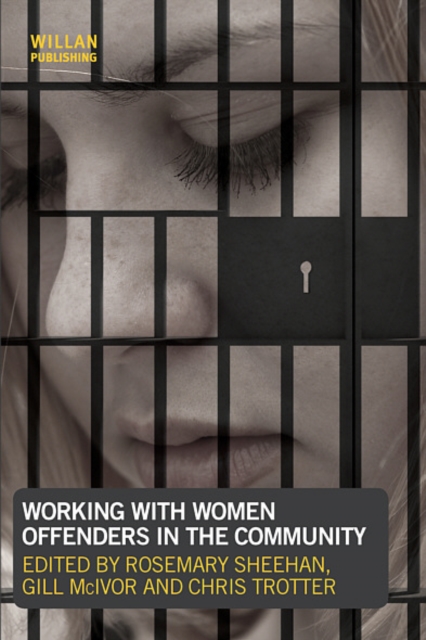
Working with Women Offenders in the Community
Though many more women offenders are supervised in the community than in custody, much less is known about their needs and effective approaches to their supervision, support and treatment. Whilst there has been recent attention paid to responding to the needs of women in prison, negligible attention has been paid to women exiting prison, or on community based orders, and what is needed to work with them to reduce re-offending or entry into prison. Contributions to this book challenge policy-makers and corrections systems to concentrate more on community provision for women offenders and resist popular calls for more punitive responses to all offenders, women included. Contributors come from a wide range of countries including Australia, Canada, UK and USA. They argue that the criminogenic lens applied to women’s offending must be gender-responsive if systems are to be successful at addressing the disadvantage and risk associated with offending behaviour. Working With Women Offenders in the Community builds on ideas presented in the editors’ previous book, What Works With Women Offenders (2007) , extending the focus particularly on women offenders in the community rather than in prison. This book concentrates on women who have committed criminal offences and who may have been placed on probation or other community based court orders or who have been released from prison on parole. It discusses the work done by professional workers including probation officers, community corrections officers and specialist case managers in areas such as drug treatment, housing, mental health or employment programmes. This book will be of interest to professional probation officers, case managers, drug treatment workers and others who work with women offenders. It will also be essential reading for students of criminology, social work, psychology, sociology and other disciplines who have an interest in women offenders.
Introduction, Rosemary Sheean, Gill, McIvor and Chris Trotter 1. Female offenders in the community: the context of female crime, Briege Nugent and Nancy Louks 2. Policy developments in England and Wales, Carol Hodderman 3. Policy developments in the USA, Maureen Buell, Phyllis Modley and Patricia Van Voorhis 4. Policy developments in Australia, Rosemary Sheehan 5. Coercion and women offenders, Dolores Blackwell 6. Victimisation and governance: gender-responsive discourses and correctional practice, Shoshana Pollack 7. Working with women offenders in the community: a view from England and Wales, Loraine Gelsthorpe 8. Beyond youth justice: working with girls and young women who offend, Gilly Sharpe 9. Breaking the cycle: addressing cultural difference in rehabilitation programs, Dot Goulding 10. Women, drugs and community interventions, Margaret Malloch and Gill McIvor 11. Managing risk in the community: how gender matters, Janet T. Davidson 12. Who cares? Fostering networks and relationships in prison and beyond, Jo Deakin and Jon Spencer 13. Mentoring, Chris Trotter 14. Community mentoring in the United States: an evaluation of the Rhode Island Women's Mentoring Programe, Dawn M. Salgado, Judith B. Fox and Kristen Quinlan 15. Maintaining and restoring family for women prisoners and their children, Rosemary Sarri 16. Connecting to the community: a case study in women's resettlement needs and experiences, Becky Hayes Boober and Erica Hansen King 17. Working with women offenders in the community: what works?, Rosemary Sheehan, Gill McIvor and Chris Trotter
eBook
Gender-Responsive Risk Assessment in Corrections
Risk assessment in corrections allows practitioners to not only predict the likelihood of success for an offender and to identify areas to target for reduced risk. Such targets are argued to be different for men and women (Bloom, Owen & Covington, 2003). Bell examines the predictive validity of the Women's Risk/Needs Assessment on a sample of women and a sample of men. Results indicate that there are differences in the prevalence, co-occurrence, and predictive validity of risk/needs and strengths for men and women. Results support prior studies regarding gender-neutral risk assessment for male offenders. Additionally, her research demonstrates the importance of gender-responsive issues in the risk prediction of women in community corrections.
eBook

What Else Works?
What Else Works? has developed out of a growing awareness amongst practitioners that centralized notions of what works and 'one size fits all' approaches to work with offenders and other groups is inevitably limited in its scope and effectiveness.
The book seeks to dispel the view of probation service users as 'offenders', and socially excluded people as 'problems' to be managed and treated, and instead considers more creative alternatives to reduce both re-offending and social exclusion. These include working separately with women, black and minority ethnic groups, local community-focussed projects, in education and nature and conservation programmes. The reader is encouraged to think about past and current policy, practice, and the relationship between practitioners and offenders or other socially excluded people. Questions are raised as to whether, and how, practice could be different and contributors explore the theme of creative and change-focussed practice or focus on a particular approach to a practice.
This book will appeal to students on criminal justice, criminology and social work courses, professionals operating in these fields as well as the wider audience of professionals and academics who may engage with these 'service users' from a range of policy and practice perspectives.
eBook


Housing Instability Following Felony Conviction and Incarceration: Disentangling Being Marked from Being Locked Up
Objectives
I examine housing instability among individuals with a felony conviction but no incarceration history relative to formerly incarcerated individuals as a means of separating the effect of felon status from that of incarceration per se—a distinction often neglected in prior research. I consider mechanisms and whether this relationship varies based on gender, race/ethnicity, time since conviction, and type of offense.
Methods
I use National Longitudinal Survey of Youth 1997 data and restricted comparison group, individual fixed effects, and sibling fixed effects models to examine residential mobility and temporary housing residence during early adulthood.
Results
I find robust evidence that never-incarcerated individuals with felony convictions experience elevated risk of housing instability and residential mobility, even after adjusting for important mediators like financial resources and relationships. The evidence that incarceration has an additional, independent effect on housing instability is weaker, however, suggesting that the association between incarceration and housing instability found in prior studies may largely be driven by conviction status.
Conclusions
These findings reveal that conviction, independent of incarceration, introduces instability into the lives of the 12 million Americans who have been convicted of a felony but never imprisoned. Thus, research that attempts to identify an incarceration effect by comparing outcomes to convicted individuals who receive non-custodial sentences may obscure the important independent effect of conviction. Moreover, these findings highlight that the socioeconomic effects of criminal justice contact are broader than incarceration-focused research suggests. Consequently, reform efforts promoting the use of community corrections over incarceration may do less to reduce the harm of criminal justice contact than expected.
Journal Article

Juvenile Justice Reform and Restorative Justice
This book, based on a large-scale research project funded by the National Institute of Justice and the Robert Wood Johnson Foundation, provides an overview of the restorative justice conferencing programs currently in operation in the United States, paying particular attention to the qualitative dimensions of this, based on interviews, focus groups and ethnographic observation. It provides an unrivalled view of restorative justice conferencing in practice, and what the people involved felt and thought about it.
The book looks at four structural variations in the face-to-face form of restorative decision making: family group conferences, victim-offender mediation/dialogue, neighborhood accountability boards, peacemaking circles. The authors address two issues that have received limited research emphasis in restorative justice: the lack of clear and consistent standards, and the absence of testable theories of intervention that reflect what has become a rather diverse practice. In response the authors conclude with a proposed structure for principle-based evaluation designed to test emerging theories of restorative decision making.
Gordon Bazemore is Professor of Criminology, and Chair of the School of Criminology and Criminal Justice, at Florida Atlantic University.
Mara Schiff is Associate Professor of Criminology at Florida Atlantic University.
Foreword by Joe Hudson and Dennis Maloney Introduction 1. Restorative justice, restorative group conferencing, and juvenile justice 2. Principles to practice: intermediate outcomes, intervention theories, and conferencing tasks 3. Prevalence and scope of restorative decision-making: findings from a national inventory and survey on restorative conferencing for youth 4. Methodology for the qualitative study and description of conference stages and phases 5. Repairing harm in the conferencing environment 6. Stakeholder involvement in the conferencing environment 7. Community/government relationship and role transformation 8. Looking back and moving forward: conclusions, implications, and an agenda for future research. Appendix
eBook

Costing analysis of a Queensland community corrections hepatitis C screening program
Background
People involved with the criminal justice system typically have lower healthcare engagement and higher risk of hepatitis C virus (HCV) infection than the general population. Interventions run at community corrections centres have the potential to diagnose and treat previously unreached populations. This study aimed to estimate the cost per treatment initiation and cost per cure through HCV programs at community corrections centres.
Methods
Data were obtained over the period of July 2022 to July 2023 from screening clinics run by Hepatitis Queensland in four community corrections centres located in Brisbane, Australia. All non-drugcosts (presented in 2023 A$ without discounting) were included from the perspective of the clinics, including staff salaries, general practitioner (GP) fees, logistics, medical testing, incentives and overhead costs. Costs of follow up instances were estimated from total nurse follow-up time per clinic.
Results
The total non-drug cost accumulated over 33 clinics in the 13-month study period was $159,982. Among the 185 participants, 23 tested RNA positive (12%). At the end of the study period 8 participants had achieved sustained virologic response (SVR) and 6 were still on treatment. This resulted in a cost per cure of $19,998 or $11,427 per patient initiated on treatment. If GP costs were excluded (i.e. paid by Medicare and not the clinic) the cost per cure and cost per treatment initiation were $12,843 and $7,339 respectively.
Conclusions
As overall prevalence decreases and case finding becomes a greater challenge, providing HCV testing and treatment through community correctional centres may be a cost-effective way of reaching people living with HCV not engaged with healthcare.
Journal Article

State Medicaid Initiatives Targeting Substance Use Disorder in Criminal Legal Settings, 2021
Objectives. To document state Medicaid pre- and postrelease initiatives for individuals in the criminal legal system with substance use disorder (SUD). Methods. An Internet-based survey was sent in 2021 to Medicaid directors in all 50 US states and the District of Columbia to determine whether they were pursuing initiatives for persons with SUD across 3 criminal legal settings: jails, prisons, and community corrections. A 90% response rate was obtained. Results. In 2021, the majority of states did not report any targeted Medicaid initiatives for persons with SUD residing in criminal legal settings. Eighteen states and the District of Columbia adopted at least 1 Medicaid initiative for persons with SUD across the 3 criminal legal settings. The most commonly adopted initiatives were in the areas of medication for opioid use disorder treatment and Medicaid enrollment. Out of 24 possible initiatives for each state (8 initiatives across 3 criminal legal settings), the 2 most commonly adopted were (1) provision of medication treatment of opioid use disorder before release from criminal legal settings (16 states) and (2) facilitation of Medicaid enrollment through suspension rather than termination of Medicaid enrollment upon entry to a criminal legal setting (14 states). Initiatives pertaining to Medicaid SUD care coordination were adopted by the fewest (9) states. Conclusions. In 2021, states’ involvement in Medicaid SUD initiatives for criminal legal populations remained low. Increased adoption of Medicaid SUD initiatives across criminal legal settings is needed, especially knowing the high rate of overdose mortality among this group. ( Am J Public Health. 2024;114(5):527–530. https://doi.org/10.2105/AJPH.2024.307604 )
Journal Article

Conscience and Convenience: How Social Workers Pursue Rehabilitation in Chinese Community Corrections
The establishment of community corrections in China marks a restructuring of the Chinese penal field and a possibly differentiated arrangement of penal power. Social forces and community actors are now enabled and encouraged to participate in penal affairs and to share devolutionary penal power with the authoritarian state. Yet little research attention has been allotted to examine how these burgeoning social organizations, professional service providers, and community actors manage their participation in rehabilitative work and negotiate their rehabilitative aspirations with state ideologies and policy mandates as they work within Chinese community corrections (CCC). Drawing on observational data and in-depth interviews with social workers within CCC, we show the ways in which social workers actively create strategies to pursue their professional values of service and implement rehabilitative ideals and caring ethos while, at the same time, minimizing the risk of challenging state authority and jeopardizing penal policy priorities. Three devised approaches are presented, and their implications are discussed.
Journal Article