
Catalogue Search | MBRL


Are you sure you want to remove the book from the shelf?

{{itemTitle}}
49
result(s) for
"Commuters Time management."
Sort by:

Transit life : how commuting is transforming our cities
\"Commuting is a significant segment of everyday life and as city populations and boundaries expand, so do commutes. Transit Life is the first book to explore how commuting is transforming life in the twenty-first century city. Through rich and evocative accounts of commuting experiences, the book shows how everyday journeys through cities are changing the way that people negotiate their work-life balance; they are putting all manner of physical and emotional demands on the people involved; they are changing the nature of people's relationships; and they are creating new forms of enablement and constraint. Contrasting with more conventional quantitative approaches, Transit Life introduces a novel set of methods and ideas that can help us to understanding how commuting is generating new and unexpected forms of social change through the way that people socialize; the way that people work; the way that people use their leisure time; and the way that people inhabit the city.\"--Provided by publisher.
Book

Effects of high-speed rail on regional accessibility
A high-speed rail (HSR) system, which can be developed either by building a new segregated line or upgrading an existing line according to a given set of operational standards, is considered as a competitive solution to improve the accessibility of main destinations. Scientific literature has reported limited contributions regarding the impacts of such infrastructures on the regional systematic mobility and their negative effects on locations excluded from the service. To fill this gap, this paper proposes a method for assessing the implications of regional accessibility on work and study trips, by comparing the two HSR options mentioned above (new segregated or upgraded existing lines). Instead of considering static indicators (e.g., population), the number of train commuters and the variation in travel times for each of the local employment systems crossed by the railway are used as input data. This method is then applied to analyse the territories located along the Venice–Trieste line (in the north-eastern part of Italy) that are characterised by several medium-sized municipalities and crossed by two TEN-T lines. An upgrade of the existing line rather than the construction of a segregated HSR is preferable for local commuters in terms of average travel times and social equity, also considering the expected construction costs. These results complement traditional medium- and long-distance market analyses and may be useful for policymakers to define the most appropriate territorial strategies for the development of specific TEN-T stretches.
Journal Article

Short-term passenger flow prediction for urban rail systems: A deep learning approach utilizing multi-source big data
Predicting short-term passenger flow in urban rail transit is crucial for intelligent and real-time management of urban rail systems. This study utilizes deep learning techniques and multi-source big data to develop an enhanced spatial-temporal long short-term memory (ST-LSTM) model for forecasting subway passenger flow. The model includes three key components: (1) a temporal correlation learning module that captures travel patterns across stations, aiding in the selection of effective training data; (2) a spatial correlation learning module that extracts spatial correlations between stations using geographic information and passenger flow variations, providing an interpretable method for quantifying these correlations; and (3) a fusion module that integrates historical spatial-temporal features with real-time data to accurately predict passenger flow. Additionally, we discuss the model’s interpretability. The ST-LSTM model is evaluated with two large-scale real-world subway datasets from Nanjing and Chongqing. Experimental results show that the ST-LSTM model effectively captures spatial-temporal correlations and significantly outperforms other benchmark methods.
Journal Article

Congestion Behavior and Tolls in a Bottleneck Model with Stochastic Capacity
In this paper we investigate a bottleneck model in which the capacity of the bottleneck is assumed stochastic and follows a uniform distribution. The commuters' departure time choice is assumed to follow the user equilibrium principle according to mean trip cost. The analytical solution of the proposed model is derived. Both the analytical and numerical results show that the capacity variability would indeed change the commuters' travel behavior by increasing the mean trip cost and lengthening the peak period. We then design congestion pricing schemes within the framework of the new stochastic bottleneck model, for both a time-varying toll and a single-step coarse toll, and prove that the proposed piecewise time-varying toll can effectively cut down, and even eliminate, the queues behind the bottleneck. We also find that the single-step coarse toll could either advance or postpone the earliest departure time. Furthermore, the numerical results show that the proposed pricing schemes can indeed improve the efficiency of the stochastic bottleneck through decreasing the system’s total travel cost.
Journal Article

A data-driven system for cooperative-bus route planning based on generative adversarial network and metric learning
Faced with dynamic and increasingly diversified public transport requirements, bus operators are urged to propose operational innovations to sustain their competitiveness. In particular, ordinary bus operations are heavily constrained by well-established route options, and it is challenging to accommodate dynamic passenger flows effectively and with a good level of resource utilization performance. Inspired by the philosophy of sharing economy, many of the available transport resources on the road, such as minibuses and private vehicles, can offer opportunities for improvement if they can be effectively incorporated and exploited. In this regard, this paper proposes a metric learning-based prediction algorithm which can effectively capture the demand pattern and designs a route planning optimizer to help bus operators effectively deploy fixed routing and cooperative buses with traffic dynamics. Through extensive numerical studies, the performance of our proposed metric learning-based Generative Adversarial Network (GAN) prediction model outperforms existing ways. The effectiveness and robustness of the prediction-supported routing planner are well demonstrated for a real-time case. Further, managerial insights with regard to travel time, bus fleet size, and customer service levels are revealed by various sensitivity analysis.
Journal Article
Stable ride-sharing matching for the commuters with payment design
Ride-sharing enables reduction of private car usage for commuting. This paper proposes a stable matching model for the ride-sharing which aims to minimize the travel cost of all commuters. A payment for the ride-sharing is designed considering the equity and incentive. An algorithm based on the deferred acceptance algorithm is proposed for the model. To verify the model and algorithm, cases with different scales are presented based on Dalian. The results illustrate that the compensation, time window and driver-to-rider ratios can affect the successful matching rate.
Journal Article
Heterogeneity in departure time preferences, flexibility and schedule constraints
This study develops a latent class choice model of departure time preferences for morning commute trips by car. The model is empirically evaluated using a sample of car commuters (mainly) in the Greater Copenhagen region in Denmark. The model identifies three classes that differ in terms of their preferences for departure times, their schedule constraints and degree of flexibility, and their socio-demographics characteristics. Roughly 30% of the sample exhibits high flexibility and is quite willing to reschedule in response to ‘peak spreading’ travel demand management strategies; 50% of the sample is constrained in the afternoon and evening, and consequently, less responsive to these strategies; and 20% of the sample is constrained in the morning and afternoons, and least likely to reschedule. We demonstrate the value of our model framework for policy analysis over simpler choice model frameworks that do not explicitly account for the existence of population segments with distinct preferences for departure time behaviour. In particular, we demonstrate how forecasts from our model may differ substantially from corresponding forecasts from more conventional choice models.
Journal Article
Dominant charging location choice of commuters and non-commuters: a big data approach
This paper is focused on electric vehicle (EV) users’ dominant charging locations, where they get their EVs recharged more frequently. We particularly compared the dominant charging location choice of commuters and non-commuters using a unique one-month trajectory dataset collected from 76,774 actual private EVs in Beijing in January 2018. Specifically, we first grouped EV users for both commuters and non-commuters according to their dominant charging locations and then characterized and compared their charging patterns. Further, we associated the dominant charging location choice of EV users with their characteristics using a mixed logistic regression model. The results suggested that over 50% of the EV users were the Home Dominated users with most charging events occurring around home. Further, there were significant differences in charging patterns of EV users from different groups by dominant charging location, and also between commuters and non-commuters. Commuters tended to have a lower SOC than non-commuters when they got their EVs recharged. Moreover, the dominant charging location choice of EV users was significantly associated with their characteristics, including charging opportunities available and mobility patterns, and the association is different for commuters and non-commuters. The results are expected to be useful for deploying charging infrastructure.
Journal Article

A Two-Stage Model for Optimizing Intercity Multimodal Timetables and Passenger Flow Assignment Under Multiple Uncertainty Within Urban Agglomerations
In order to maximize passenger travel satisfaction and enhance the sustainability of the intercity multimodal transportation system, this paper proposes a two-stage model for intercity multimodal timetable coordination optimization under uncertainty. In the first stage, a robust spatio-temporal graph is built to allocate intermodal passenger flows in order to determine passengers’ route selection results to minimize the total travel cost. At the same time, explicit capacity constraints and transfer behaviors are considered in order to be more realistic. In addition, passengers can take multiple transportation modes (High-speed Rail, Ordinary Rail, EMU, and Coach) in a single trip. The outputs of the first stage are subsequently integrated into the second-stage interval multi-objective timetable optimization model to determine departure times and stopping patterns under uncertain dwell and travel times. It is able to achieve the maximum reduction of passenger travelling time and waiting time within the minimum timetable adjustment, which further improves the integration level of transportation services. To ensure the diversity and convergence of model solving on the basis of retaining uncertain information, we propose an integrated algorithm PSO-IMOEA-MC involving Particle Swarm Optimization algorithm (PSO) and Interval Many-objective Evolutionary Algorithm combined with Monte Carlo (IMOEA-MC). Finally, the effectiveness of the proposed two-stage model and algorithm is validated using three intercity networks: Beijing–Zhangjiakou, Chengdu–Chongqing, and Guangzhou–Qingyuan. The results demonstrate the performance of the method in finding high-level solutions that retain more uncertainty. The findings of this study provide technical support for timetable adjustments under diverse operational scenarios.
Journal Article
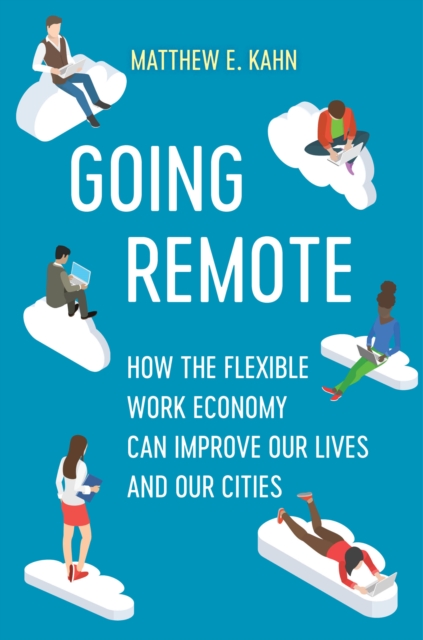
Going Remote
A leading urban economist's hopeful study of how shifts to
remote work can change all of our lives for the better. As
COVID-19 descended upon the country in 2020, millions of American
office workers transitioned to working from home to reduce risk of
infection and prevent spread of the virus. In the aftermath of this
shift, a significant number of workers remain at least partially
remote. It is clear that this massive experiment we were forced to
run will have long-term consequences, changing the shape of our
personal and work lives, as well as the urban landscape around us.
How will the rise of telecommuting affect workers' quality of life,
the profitability of firms, and the economic geography of our
cities and suburbs? Going Remote addresses the
uncertainties and possibilities of this moment. In Going
Remote , urban economist Matthew E. Kahn takes readers on a
journey through the new remote-work economy, revealing how people
will configure their lives when they have more freedom to choose
where they work and how they live. Melding ideas from labor
economics, family economics, the theory of the firm, and urban
economics, Kahn paints a realistic picture of the future for
workers, firms, and urban areas, big and small. As Kahn shows, the
rise of remote work presents especially valuable opportunities for
flexibility and equity in the lives of women, minorities, and young
people, and even for those whose jobs do not allow them to work
from home. Uncovering key implications for our quality of life,
Going Remote demonstrates how the rise of remote work can
significantly improve the standard of living for millions of people
by expanding personal freedom, changing the arc of how we live,
work, and play.
eBook