
Catalogue Search | MBRL


Are you sure you want to remove the book from the shelf?

{{itemTitle}}
49,988
result(s) for
"Comparative literature"
Sort by:


Disarming words
In a book that radically challenges conventional understandings of the dynamics of cultural imperialism, Shaden M. Tageldin unravels the complex relationship between translation and seduction in the colonial context. She examines the afterlives of two occupations of Egypt--by the French in 1798 and by the British in 1882--in a rich comparative analysis of acts, fictions, and theories that translated the European into the Egyptian, the Arab, or the Muslim.
eBook

Comparative literature : a very short introduction
Considering literature comparatively can help readers realize how much can be learned by looking beyond the horizon of their own cultures, discovering not only more about other literatures, but also about their own. Ben Hutchinson offers a history of comparative literature, placing it at the heart of literary criticism.
Book
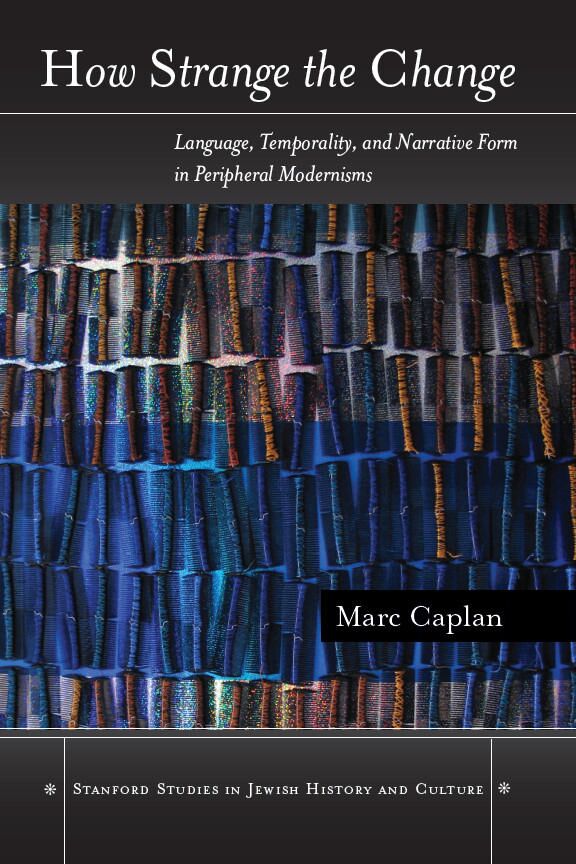
How Strange the Change
In this book, Marc Caplan argues that the literatures of ostensibly marginal modern cultures are key to understanding modernism. Caplan undertakes an unprecedented comparison of nineteenth-century Yiddish literature and twentieth-century Anglophone and Francophone African literature and reveals unexpected similarities between them. These literatures were created under imperial regimes that brought with them processes of modernization that were already well advanced elsewhere. Yiddish and African writers reacted to the liberating potential of modernity and the burdens of imperial authority by choosing similar narrative genres, typically reminiscent of early-modern European literatures: the picaresque, the pseudo-autobiography, satire, and the Bildungsroman. Both display analogous anxieties toward language, caught as they were between imperial, \"global\" languages and stigmatized native vernaculars, and between traditions of writing and orality. Through comparative readings of narratives by Reb Nakhman of Breslov, Amos Tutuola, Yisroel Aksenfeld, Cheikh Hamidou Kane, Isaac Meyer Dik, Camara Laye, Mendele Moykher-Sforim, Wole Soyinka, Y. Y. Linetski, and Ahmadou Karouma, Caplan demonstrates that these literatures' \"belated\" relationship to modernization suggests their potential to anticipate subsequent crises in the modernity and post-modernity of metropolitan cultures. This, in turn, leads him to propose a new theoretical model, peripheral modernism, which incorporates both a new understanding of \"periphery\" and \"center\" in modernity and a new methodology for comparative literary criticism and theory.
eBook

A companion to comparative literature
This title presents a collection of more than 30 original essays from established and emerging scholars, which explore the history, current state, and future of comparative literary studies.
Book
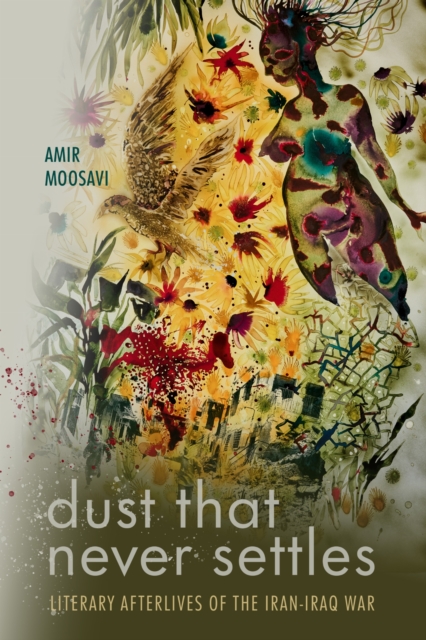
Dust that never settles : literary afterlives of the Iran-Iraq war
\"Lasting from September 1980 to August 1988, the Iran-Iraq War was the longest conventional war fought between two states in the twentieth century. It marked a period that began just after a revolutionary government in Iran became an Islamic Republic and Saddam Hussein consolidated power in Iraq. It ended with both wartime governments still in power, borders unchanged, yet hundreds of thousands of dead. Neither side emerged as a clear victor, but both sides would eventually claim victory in some form. Dust That Never Settles considers how Iraqi and Iranian writers have wrestled with representing the Iran-Iraq War and its legacy, from wartime to the present. It demonstrates how writers from both countries have transformed once militarized, officially sanctioned war literatures into literatures of mourning, and eventually, into vehicles of protest that presented powerful counternarratives to the official state narratives. In writing the f
eBook


A Sea of Languages
Reframing ongoing debates within literary studies in dynamic new ways,A Sea of Languageswill become a critical resource and reference point for a new generation of scholars and students on the intersection of Arabic and European literature.
eBook

Political systems
Examines a wide variety of international and historical political systems, inviting readers to compare their own system of government with different systems around the world.
Book

Ghost-Watching American Modernity:Haunting, Landscape, and the Hemispheric Imagination
In Ghost-Watching American Modernity, Maria del Pilar Blanco revisits nineteenth- and twentieth-century texts from Spanish America and the United States to ask how different landscapes are represented as haunted sites. Moving from foundational fictions to Westerns, Blanco explores the diverse ways in which ghosts and haunting emerge across the American hemisphere for authors who are preoccupied with evoking the experience of geographical transformations during a period of unprecedented development. The book offers an innovative approach that seeks to understand ghosts in their local specificity, rather than as products of generic conventions or as allegories of hidden desires. Its chapters pursue formally attentive readings of texts by Domingo Sarmiento, Henry James, Jose Marti, W. E. B. Du Bois, Juan Rulfo, Felisberto Hernandez, and Clint Eastwood. In an intervention that will reconfigure the critical uses of spectrality for scholars in U.S./Latin American Studies, narrative theory, and comparative literature, Blanco advances ghost-watching as a method for rediscovering haunting on its own terms.
eBook