
Catalogue Search | MBRL


Are you sure you want to remove the book from the shelf?

{{itemTitle}}
13,246
result(s) for
"Comparative philosophy"
Sort by:

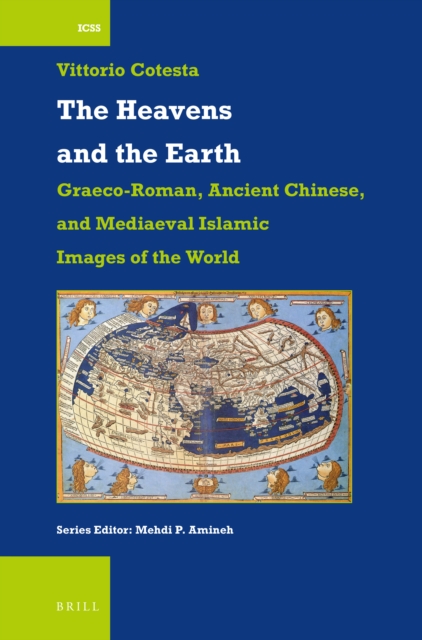
The Heavens and the Earth
Vittorio Cotesta's The Heavens and the Earth traces the origin of the images of the world typical of the Graeco-Roman, Ancient Chinese and Medieval Islamic civilisations. Each of them had its own peculiar way of understanding the universe, life, death, society, power, humanity and its destiny. The comparative analysis carried out here suggests that they all shared a common human aspiration despite their differences: human being is unique; differences are details which enrich its image. Today, the traditions derived from these civilisations are often in competition and conflict. Reference to a common vision of humanity as a shared universal entity should lead, instead, to a quest for understanding and dialogue.
eBook

How to think about the climate crisis : a philosophical guide to saner ways of living
\"In this compelling account of a problem we think we know inside out, Graham Parkes outlines the climatic predicament we are in, how we got here, and how we can think about it anew by covering the relevant history, science, economics, politics, and for the first time, the philosophy underpinning it all. Drawing on the wisdom of the ancients in both the Chinese and Western traditions, Parkes proposes practical responses, explaining how a greater awareness of non-Western philosophies, such as the Confucian political philosophy advocated by China, could help us remove obstructions and work towards a greener future\"-- Provided by publisher.
Book

On the Idea of Post-Comparative Philosophy
In this article, I briefly discuss contemporary debates about methodological issues in philosophy in Africa to raise concerns about the uptake of diverse philosophical resources at the heart of the global post-comparative method and suggest that the feasibility of the post-comparative method depends on the availability of robust and rich philosophical resources furnished by different traditions and their systematic uptake.
Journal Article


Human and World: Fichte and Wang Yangming on the Highest Good
In comparative philosophy, the study of Fichte and Wang Yangming has been largely overlooked. This article compares their views on the highest good and their approaches to the human–world relationship. Fichte sees the highest good as the realization of practical reason, achievable through religious faith and love for God, enabling individuals to transcend sensual desires and unify with God. Religious faith connects individuals to a higher existence, fostering moral actions. Wang Yangming, however, defines the highest good as the manifestation of conscience within, emphasizing internal cultivation and moral practice to achieve the unity of knowledge and action. Fichte’s approach relies on religious faith, while Wang Yangming’s focuses on self-cultivation. This study reveals the complementarity between Chinese and Western perspectives on the highest good, offering a new lens for cross-cultural dialogue and insights into the complex relationship between humans and the world.
Journal Article

The Role of Comparative Philosophy in Bosnia and Herzegovina
This collection of essays highlights that, despite its history of conflict, Bosnia and Herzegovina has a real enthusiasm for comparative philosophy. It illustrates the role of this type of philosophy in Bosnian culture and links it with developments in other parts of the world and other cultures.Part One consists of essays that have appeared, in slightly revised versions, in a number of journals and books that focus on relevant resources introducing this field in our region and especially Bosnia and Herzegovina, while Part Two consists of interviews with prominent scholars outside of this country.The book examines the challenges confronting the teaching of comparative philosophy within the university-level philosophy curriculum in Bosnia and Herzegovina and the surrounding countries in the Balkans, a part of the world where multicultural societies are the norm. Facing the twenty-first century, these confluences and cross-currents are increasingly gaining importance, especially in this region, with a comparativism of ethnocentrism and multiculturalism becoming a way of challenging stereotypes.
eBook

HAN-WEI-ZI phrase omitted: BUREAUCRATIC ADMINISTRATION IN HAN FEIZI phrase omitted AND MAX WEBER
In this essay, Han Feizi is compared to Max Weber. It is argued that comparing the two enables us to see a distinctive aspect of Han Feizi’s political thought. In particular, it is proposed that Weber’s theory of the modern state (especially bureaucratic administration) can provide us with a helpful lens for understanding the structure, inner logic, and implications of Han Feizi’s account of administration. Moreover, this comparison enables us to see clearly that the Han Feizi still has contemporary relevance. First Weber’s account of political order and bureaucratic administration is explained. Next, Han Feizi and Weber are compared by focusing on six characteristics of Weberian bureaucracy. Then some differences between Han Feizi and Weber are considered. Finally some philosophical implications of this comparison are outlined for contemporary political philosophers.
Journal Article