
Catalogue Search | MBRL


Are you sure you want to remove the book from the shelf?

{{itemTitle}}
41
result(s) for
"Competition, Unfair -- History"
Sort by:

The politics of fair trade : moving beyond free trade and protection
\" The Politics of Fair Trade argues that fair trade is more than just labels on specialty coffee products. Nor is fair trade just protectionism in disguise. Rather, fair trade is opposition to unrestricted trade based on sincere concerns about environmental and labor conditions abroad. Fair traders are not trying to protect jobs or the economy at home, but do not want to see workers exploited and the environment degraded in their trading partners. Academics and policymakers are ill equipped to deal with fair trade concerns because they wrongly assume trade preferences run along a single dimension from free trade to protection. This book introduces a multidimensional theory of trade policy preferences, arguing that people can oppose trade for different and unrelated reasons. The book then demonstrates, using public opinion data in the U.S. and EU and Congressional voting data in the U.S., that fair traders are sincere and not simply protectionists. The book demonstrates why fair trade poses a threat to free trade and argues that free traders should include stronger and enforceable labor and environmental standards in trade agreements in order to win the support of fair traders. Doing so will enable free trade to continue while also helping to improve conditions in developing countries, satisfying the concerns of both free traders and fair traders. \"-- Provided by publisher.
Book
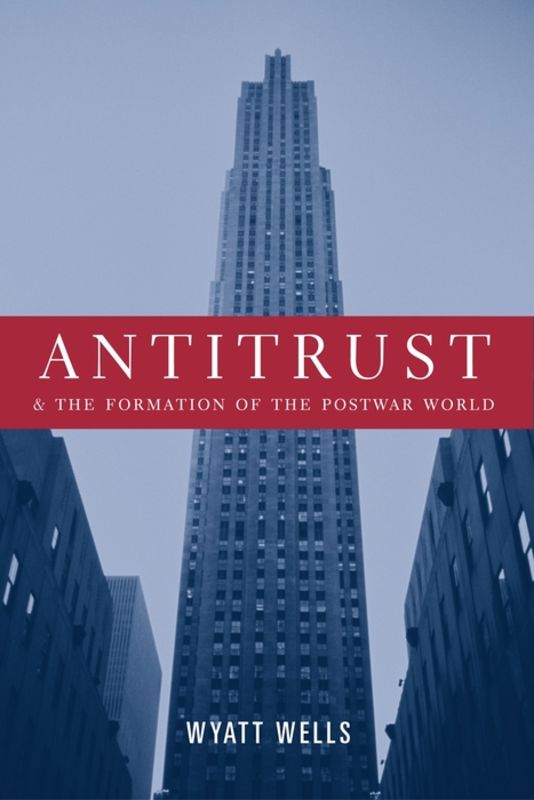
Antitrust and the Formation of the Postwar World
Today antitrust law shapes the policy of almost every large company, no matter where headquartered. But this wasn't always the case. Before World War II, the laws of most industrial countries tolerated and even encouraged cartels, whereas American statutes banned them. In the wake of World War II, the United States devoted considerable resources to building a liberal economic order, which Washington believed was necessary to preserving not only prosperity but also peace after the war. Antitrust was a cornerstone of that policy. This fascinating book shows how the United States sought to impose—and with what results—its antitrust policy on other nations, especially in Europe and Japan. Wyatt Wells chronicles how the attack on cartels and monopoly abroad affected everything from energy policy and trade negotiations to the occupation of Germany and Japan. He shows how a small group of zealots led by Thurman Arnold, who became head of the Justice Department's Antitrust Division in 1938, targeted cartels and large companies throughout the world: IG Farben of Germany, Mitsui and Mitsubishi of Japan, Imperial Chemical Industries of Britain, Philips of the Netherlands, DuPont and General Electric of the United States, and more. Wells brilliantly shows how subsequently, the architects of the postwar economy—notably Lucius Clay, John McCloy, William Clayton, Jean Monnet, and Ludwig Erhard—uncoupled political ideology from antitrust policy, transforming Arnold's effort into a means to promote business efficiency and encourage competition.
eBook

The poison eaters : fighting danger and fraud in our food and drugs
\"Formaldehyde, borax, salicylic acid. Today, these chemicals are used in embalming fluids, cleaning supplies, and acne medications. But in 1900, they were routinely added to food that Americans ate from cans and jars. Often products weren't safe because unregulated, unethical companies added these and other chemicals to trick consumers into buying spoiled food or harmful medicines. Chemist Harvey Washington Wiley recognized these dangers and began a relentless thirty-year campaign to ensure that consumers could purchase safe food and drugs, eventually leading to the creation of the U.S. Food and Drug Administration, or FDA. Acclaimed nonfiction and Sibert Honor winning author Gail Jarrow uncovers this intriguing history in her trademark style that makes the past enthrallingly relevant for today's young readers.\"--Amazon.
Book

politics of purity
Spearheaded by Harvey Washington Wiley, the Pure Food and Drugs Act of 1906 launched the federal regulation of food and drugs in the United States. Wiley is often lauded as a champion of public interest for bringing about a law that required healthful ingredients and honest labeling. Clayton Coppin and Jack High demonstrate, however, that Wiley was in fact surreptitiously allied with business firms that would benefit from regulation and moreover, that the law would help him build his government agency, the Federal Bureau of Chemistry.
Coppin and High discuss such issues as Wiley's efforts to assign the law's enforcement to his own bureau. They go on to expose the selectivity of Wiley's enforcement of the law, in which he manipulated commercial competition in order to reward firms that supported him and penalize those that opposed him. By examining the history of the law's movement, the authors show that, rather than acting in the public interest, Wiley used the Pure Food and Drugs Act to further his own power and success. Finally, they analyze government regulation itself as the outcome of two distinct competitive processes, one that takes place in the market, the other in the polity.
The book will interest scholars concerned with government regulation, including those in economics, political science, history, and business.
Clayton Coppin is a management consultant and historian, Koch Industries, Wichita. Jack High is Professor of Economics, George Mason University.
eBook


The Constitutional Protection of Capitalism
In 1945 a Labour government deployed Britain’s national autonomy and parliamentary sovereignty to nationalise key industries and services such as coal, rail, gas and electricity, and to establish a publicly-owned National Health Service. This monograph argues that constitutional constraints stemming from economic and legal globalisation would now preclude such a programme. It contends that whilst no state has ever, or could ever, possess complete freedom of action, nonetheless the rise of the transnational corporation means that national autonomy is now siginificantly restricted. The book focuses in particular on the way in which these economic constraints have been nurtured, reinforced and legitimised by the creation on the part of world leaders of a globalised constitutional law of trade and competition. This has been brought into existence by the adoption of effective enforcement machinery, sometimes embedded within the nation states, sometimes formed at transnational level. With Britain enmeshed in supranational economic and legal structures from which it is difficult to extricate itself, the British polity no longer enjoys the range and freedom of policymaking once open to it. Transnational legal obligations constitute not just law but in effect a de facto supreme law entrenching a predominantly neoliberal political settlement in which the freedom of the individual is identified with the freedom of the market. The book analyses the key provisions of WTO, EU and ECHR law which provide constitutional protection for private enterprise. It dwells on the law of services liberalisation, public monopolies, state aid, public procurement and the fundamental right of property ownership, arguing that the new constitutional order compromises the traditional ideals of British democracy.
eBook

Hipster Antitrust and Labor Monopsony: Why the Federal Trade Commission Should Throw a Punch at the UFC
Antitrust enforcement is entering a new age. It has long overlooked labor market monopsonies, instead focusing on product market monopolies. In recent years, though, empirical findings in economics literature uncovered that labor markets are far more concentrated than free-market economists theorized. Accordingly, former President Joe Biden issued a July 2021 executive order directing his administration to devote unprecedented attention to labor market competition. This Note argues that the Federal Trade Commission (\"FTC\") should bring an enforcement action against the Ultimate Fighting Championship (\"UFC\") to reform the labor market for mixed martial arts fighters. The UFC acquired monopsony power through a series of anticompetitive mergers, and it maintains its market dominance with exclusionary contracts that prevent competition for fighters' services. The FTC investigated the UFC for antitrust violations twice in the 2010s, but each inquiry yielded no action under lax enforcement regimes. Pursuing a case now would demonstrate the failures of old policy. Monopsony neglect allowed firms to anticompetitively obtain and entrench labor market power. In turn, concentrated economic power suppressed workers' wages far below what they would be in a market where employers compete for workers' labor.
Journal Article

Introduction to the Hungarian Cartel Regulation in the Interwar Period
WWI significantly influenced the development of private and trade law. The regulation of economic law institutions came up as a necessity. To protect the consumers’interests, the state interfered with private law affairs and regulated sharking procedures, unfair competition and cartel law. By taking European regulation results into account, cartel regulation organisations were introduced by the Cartel Act; the most important of them was the Cartel Court. This paper shows the most important steps of the antitrust regulation in Hungary’s special attention to the relevant European cartel regulations.
Journal Article

Just part of the game? Arms races, rivalry, and war
In this study, we look at the relationship of arms races to war, with appropriate consideration of rivalries. Are arms races more common in rivalries than in lesser competitions? Are they merely a consequence of rivalry competitions? How do the patterns of arms races map with those of war in rivalries? We explore these concerns with an empirical examination of rivalry and non-rivalry populations in the 1816—2000 period. In brief, we find that: arms races occur most frequently in the context of enduring rivalries; arms races are more likely in the middle and later stages of rivalry; the frequency of arms races is higher in rivalries with war than rivalries that do not experience war; and only when arms races occur in the later phases of rivalries is there an increased chance of war. Our study narrows the scope of the arms race—war relationship relative to past studies, demonstrating that the arms race—war relationship is conditional on rivalry processes.
Journal Article

The International Dimension of EU Competition Law and Policy
Modern competition law was first employed by countries over one hundred years ago in order to address issues relating to restrictions of trade at the national level. Recent international economic integration has weakened the distinction between the domestic and the international in several fields of economic activity, and consequently the laws which regulate such activity, competition law included. Several attempts to address the paradox of adopting national competition rules to address international issues have been made at the international, regional and (lately) bilateral levels. This book discusses the international dimension of EU competition law, and examines the position taken by the EU in four distinct categories of international agreements which are devoted to competition or include competition provisions. In particular, it analyses the EU's position with regard to bilateral enforcement cooperation agreements, bilateral free trade agreements, plurilateral-regional agreements and the long negotiations for the adoption of a multilateral competition regime.
eBook