
Catalogue Search | MBRL


Are you sure you want to remove the book from the shelf?

{{itemTitle}}
7,454
result(s) for
"Competition -- Mathematical models"
Sort by:


Monopsony in Motion
What happens if an employer cuts wages by one cent? Much of labor economics is built on the assumption that all the workers will quit immediately. Here, Alan Manning mounts a systematic challenge to the standard model of perfect competition. Monopsony in Motion stands apart by analyzing labor markets from the real-world perspective that employers have significant market (or monopsony) power over their workers. Arguing that this power derives from frictions in the labor market that make it time-consuming and costly for workers to change jobs, Manning re-examines much of labor economics based on this alternative and equally plausible assumption. The book addresses the theoretical implications of monopsony and presents a wealth of empirical evidence. Our understanding of the distribution of wages, unemployment, and human capital can all be improved by recognizing that employers have some monopsony power over their workers. Also considered are policy issues including the minimum wage, equal pay legislation, and caps on working hours. In a monopsonistic labor market, concludes Manning, the \"free\" market can no longer be sustained as an ideal and labor economists need to be more open-minded in their evaluation of labor market policies. Monopsony in Motion will represent for some a new fundamental text in the advanced study of labor economics, and for others, an invaluable alternative perspective that henceforth must be taken into account in any serious consideration of the subject.
eBook

Equality of opportunity
John Roemer argues that there is a \"before\" and an \"after\" in the notion of equality of opportunity: before the competition starts, opportunities must be equalized; after it begins, individuals are on their own. The different views of equal opportunity should be judged according to where they place the starting gate.
eBook

Alternative Systems of Business Organization and of Workers' Remuneration
Examining the relationship between employment and rates of pay, this book discusses how the choice between different forms of business organization may affect this relationship. For the purposes of the discussion a simple model of an imperfectly competitive economy is constructed and then examined in operation with different organizational forms for the competing firms. Chapters cover the following:The Captialist Wage Economy; The Non-Discriminating Labour Co-operative; The Capitalist Sharing Economy; Discriminating Labour-Capital Partnerships.
eBook

evolution of host manipulation by parasites: a game theory analysis
Many parasites are known to manipulate the behaviour of intermediate hosts in order to increase their probability of transmission to definitive hosts. This manipulation must have costs. Here we explore the combined effects of three such costs on the amount of effort a parasite should expend on host manipulation. Manipulation can have direct costs to future reproductive success due to energy expended to manipulate the host. There may also be indirect costs if other parasites infect the host and profit from the manipulation without paying the cost of manipulation. These “free riders” may impose a third cost by competing with manipulators for resources within the host. Using game theory analysis and several different competition models we show that intrahost competition will decrease the investment that a parasite should make in manipulation but that manipulation can, under some circumstances, be a profitable strategy even in the presence of non-manipulating competitors. The key determinants of the manipulator's success and its investment in manipulation are the relatedness among parasites within the host, the ratio of the passive transmission rate to the efficiency of increasing transmission rate and the strength of competitive effects. Manipulation, when exploited by others, becomes an altruistic behaviour. Thus we suggest that our model may be generally applicable to cases where organisms can exploit the investment of others (possibly kin) while also competing with the organism whose investment they exploit.
Journal Article
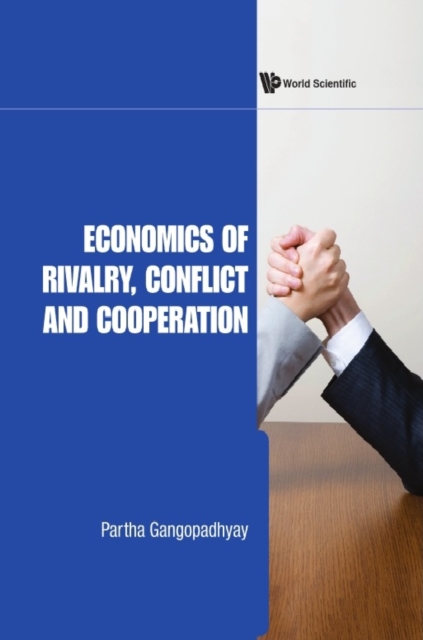
Economics of rivalry, conflict and cooperation
This book offers an extensive and original study of the dynamics of rivalry, evolution of costly and violent conflicts, and potential cooperation among powerful players. It unravels the special features of the global socio-economic system that can make it extremely fragile and vulnerable. It serves as a good reference source for anyone interested in some of the pressing and emerging problems of the global system, such as intra-national and interethnic conflicts, climate change challenges, poverty and terrorism, and provides useful and rigorous insights into the collective bid to resolve some of these problems. Written in a simple and accessible manner, this book will help researchers and policy makers in understanding and abetting costly conflicts.
eBook
Alternative systems of business organization of workers' remuneration
Examining the relationship between employment and rates of pay, this book discusses how the choice between different forms of business organization may affect this relationship. For the purposes of the discussion a simple model of an imperfectly competitive economy is constructed and then examined in operation with different organizational forms for the competing firms. Chapters cover the following: The Captialist Wage Economy; The Non-Discriminating Labour Co-operative; The Capitalist Sharing Economy; Discriminating Labour-Capital Partnerships.
Book
Market Structure and Competition Policy
This 2000 text applies modern advances in game theory to the analysis of competition policy and develops some of the theoretical and policy concerns associated with the pioneering work of Louis Phlips. Containing contributions by leading scholars from Europe and North America, this book observes a common theme in the relationship between the regulatory regime and market structure. Since the inception of the new industrial organization, economists have developed a better understanding of how real-world markets operate. These results have particular relevance to the design and application of anti-trust policy. Analyses indicate that picking the most competitive framework in the short run may be detrimental to competition and welfare in the long run, concentrating the attention of policy makers on the impact on the long-run market structure. This book provides essential reading for graduate students of industrial and managerial economics as well as researchers and policy makers.
eBook
Alternative Systems of Business Organization and of Workers' Renumeration
Examining the relationship between employment and rates of pay, this book discusses how the choice between different forms of business organization may affect this relationship. For the purposes of the discussion a simple model of an imperfectly competitive economy is constructed and then examined in operation with different organizational forms for the competing firms. Chapters cover the following: The Captialist Wage Economy; The Non-Discriminating Labour Co-operative; The Capitalist Sharing Economy; Discriminating Labour-Capital Partnerships.
eBook

On Myopic Equilibria in Dynamic Games with Endogenous Discounting
This paper derives an equilibrium for a competitive multi-stage game in which an agents' current action influences his probability of survival into the next round of play. This is directly relevant in banking, where a banks' current lending and pricing decisions determines its future probability of default. In technical terms, our innovation is to consider a multi-stage game with endogenous discounting. An equilibrium for such a multi-stage game with endogenous discounting has not been derived before in the literature.
eBook