
Catalogue Search | MBRL


Are you sure you want to remove the book from the shelf?

{{itemTitle}}
7
result(s) for
"Comprehensive high schools -- United States -- History"
Sort by:
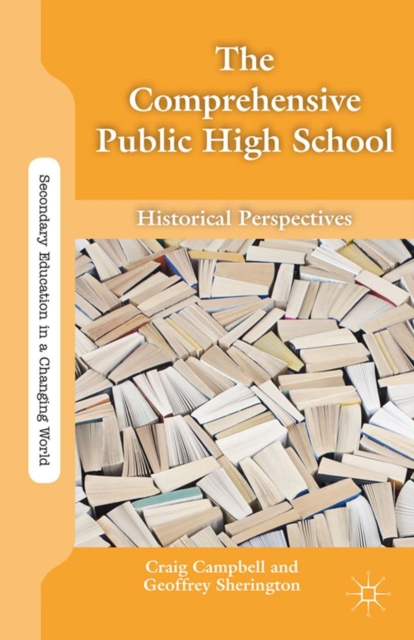
The comprehensive public high school : historical perspectives
This book traces the decline of the public comprehensive high school. New educational markets emphasized school diversity and parental choice rather than social equity through common schooling, and they were criticized for declining standards. The book also considers government education policies and their regional manifestations.
eBook

The Comprehensive Public High School
This book traces the decline of the public comprehensive high school. New educational markets emphasized school diversity and parental choice rather than social equity through common schooling, and they were criticized for declining standards. The book also considers government education policies and their regional manifestations.
eBook

Democracy's high school?
In this article the author discusses James Conant´s ideas about the democratic role of the comprehensive high school and addresses just how those ideas have been treated by history. He considers the historical context of the post-World-War II United States, focusing on several issues: (a) race and the growth of school segregation (b) the rise of a youth culture and the movement for students´ rights, and (c) the changing national economy, especially with respect to rising educational expectations. Drawing on the work of Amy Gutman and other treatments of democratic education he assesses how these factors changed the prospects for democracy in American high schools and also examines major policy statements and commission reports concerning secondary education from the 1970s and 1980s. Altogether, it appears that these major historical events converged in the postwar period to make Conant´s vision of the democratic high school problematic, at least in the nation´s large metropolitan areas. Thus the future of democratic education is an open question for the great variety of US youth to be educated in the coming century. ( DIPF/orig.)
Journal Article

The Traditional High School: Historical Debates over Its Nature and Function
For more than a century, American educators and education policymakers have chosen sides in a great debate about the nature and function of American high schools. The origins of this long-running argument can be traced to 1893, when the influential Committee of Ten, a bluechip panel of educators, issued a report proposing that all public high-school students receive a strong, liberal-arts education. Ever since then, fighting about whether high schools should be college prep for the masses or, as another blue-ribbon panel would put it 90 years later, a \"cafeteria-style curriculum in which the appetizers and desserts can easily be mistaken for the main course.\" There have been, of course, winners and losers on both sides throughout this long discussion, as high schools have grown into multibillion-dollar institutions serving, or ill serving, hundreds of millions of American adolescents. Yet the question of winners and losers in this debate about secondary schools is, to borrow a phrase, academic. The reality is that, quite some time ago, high schools were set on a course of diversification. The questions today are whether and how much this \"comprehensive high school\" has contributed to the declining quality of secondary education in this country. On this issue, one can learn much from history. (Contains 1 figure.)
Journal Article
