
Catalogue Search | MBRL


Are you sure you want to remove the book from the shelf?

{{itemTitle}}
891
result(s) for
"Compulsive gambling"
Sort by:

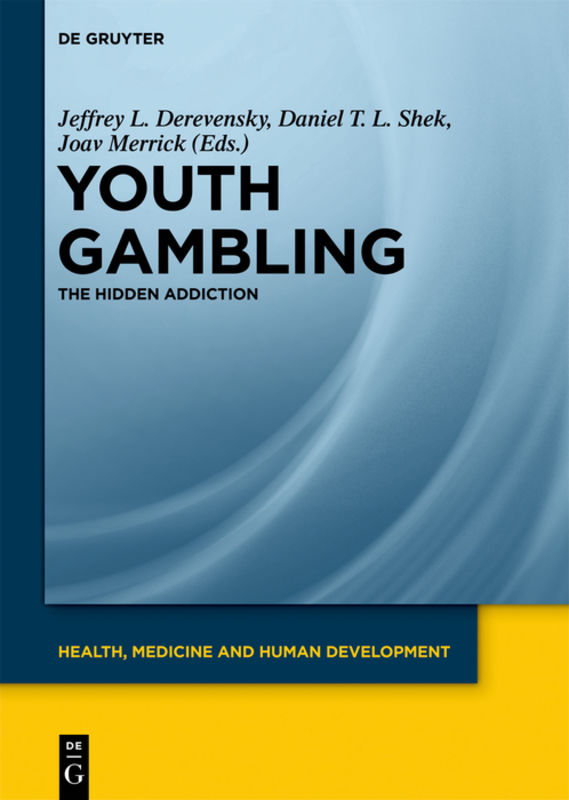
Youth Gambling
Youth gambling represents a potentially serious public policy and health issue. Nevertheless, the rise in youth gambling issues and problems in the global context is not matched with a parallel increase in research on adolescent gambling. As such, there is an urgent need to conduct more studies on adolescent gambling behaviour. Recently significant advances in the knowledge of the risk factors associated with adolescent problems has emerged. This book addresses issues related to prevalence, assessment, prevention and treatment of youth gambling problems as well as concerns related to technological changes associated with youth problem gambling.
eBook


Titans
Seventeen-year-old Astrid Sullivan belongs to a family of compulsive gamblers, and now that her father has been laid off from his job in Detroit and lost all their money betting on the Titans, which are half-horse, half car, and race around impossible tracks, her family is falling apart--but when Astrid's new friends give her the chance to participate in this year's Titan races, she thinks she sees a way to win some money and keep her family together.
Book

Similarities and differences between pathological gambling and substance use disorders: a focus on impulsivity and compulsivity
Rationale
Pathological gambling (PG) has recently been considered as a “behavioral” or nonsubstance addiction. A comparison of the characteristics of PG and substance use disorders (SUDs) has clinical ramifications and could help advance future research on these conditions. Specific relationships with impulsivity and compulsivity may be central to understanding PG and SUDs.
Objectives
This review was conducted to compare and contrast research findings in PG and SUDs pertaining to neurocognitive tasks, brain function, and neurochemistry, with a focus on impulsivity and compulsivity.
Results
Multiple similarities were found between PG and SUDs, including poor performance on neurocognitive tasks, specifically with respect to impulsive choice and response tendencies and compulsive features (e.g., response perseveration and action with diminished relationship to goals or reward). Findings suggest dysfunction involving similar brain regions, including the ventromedial prefrontal cortex and striatum and similar neurotransmitter systems, including dopaminergic and serotonergic. Unique features exist which may in part reflect influences of acute or chronic exposures to specific substances.
Conclusions
Both similarities and differences exist between PG and SUDs. Understanding these similarities more precisely may facilitate treatment development across addictions, whereas understanding differences may provide insight into treatment development for specific disorders. Individual differences in features of impulsivity and compulsivity may represent important endophenotypic targets for prevention and treatment strategies.
Journal Article

On thin ice
The way twelve-year-old Ked Eakins of Norton, Maine, sees it, his life has been stolen from him, piece by piece--first by kyphosis, a spinal abnormality which has made him a social outcast at school and a target for the school bully; by his friends who have recently abandoned him; by his mother, who left for the West Coast taking the insurance which might have saved him with her; and by his father, who's a gambling addict who has lost the rent money. But Ked is a builder, and using the school's Maker Space he intends to build his life back, and maybe make a few real friends, and save his father while he's at it.
Book

The relationship between problem gambling, excessive gaming, psychological distress and spending on loot boxes in Aotearoa New Zealand, Australia, and the United States—A cross-national survey
Notes that loot boxes are digital containers of randomised rewards available in many video games, and that due to similarities between some loot boxes and traditional forms of gambling, concerns regarding the relationship between spending on loot boxes in video games and symptoms of problematic gambling have been expressed by policy makers and the general public. Presents the first investigation of these concerns in large cross-sectional cross-national samples from three countries (Aotearoa New Zealand, Australia, and the United States). Determines the relationship between problem gambling symptoms and loot box spending, as well as the consistency of this relationship across these three countries. Source: National Library of New Zealand Te Puna Matauranga o Aotearoa, licensed by the Department of Internal Affairs for re-use under the Creative Commons Attribution 3.0 New Zealand Licence.
Journal Article