
Catalogue Search | MBRL


Are you sure you want to remove the book from the shelf?

{{itemTitle}}
180
result(s) for
"Computer art Criticism and interpretation."
Sort by:

Critical distance in documentary media
This collection of essays presents new formulations of ideas and practices within documentary media that respond critically to the multifaceted challenges of our age. As social media, augmented reality, and interactive technologies play an increasing role in the documentary landscape, new theorizations are needed to account for how such media both represents recent political, socio-historical, environmental, and representational shifts, and challenges the predominant approaches by promoting new critical sensibilities. The contributions to this volume approach the idea of \"critical distance\" in a documentary context and in subjects as diverse as documentary exhibitions, night photography, drone imagery, installation art, mobile media, nonhuman creative practices, sound art and interactive technologies. It is essential reading for scholars, practitioners and students working in fields such as documentary studies, film studies, cultural studies, contemporary art history and digital media studies.
Book

The Disney Animation Renaissance
Walt Disney Feature Animation Florida opened in Orlando at the dawn
of the Disney Renaissance. As a member of the crew, Mary E. Lescher
witnessed the small studio's rise and fall during a transformative
era in company and movie history. Her in-depth interviews with
fellow artists, administrators, and support personnel reveal the
human dimension of a technological revolution: the dramatic shift
from hand-drawn cel animation to the digital format that eclipsed
it in less than a decade. She also traces the Florida Studio's
parallel existence as a part of The Magic of Disney Animation, a
living theme park attraction where Lescher and her colleagues
worked in full view of Walt Disney World guests eager to experience
the magic of the company's legendary animation process.
A ground-level look at the entertainment giant, The Disney
Animation Renaissance profiles the people and purpose behind a
little-known studio during a historic era.
eBook

Ghostly Landscapes
In Ghostly Landscapes , Patricia M Keller analyses the aesthetics of haunting and the relationship between ideology and image production by revisiting twentieth-century Spanish history through the camera’s lens. Through its vision she demonstrates how the traumatic losses of the Spanish Civil War and their systematic denial and burial during the fascist dictatorship have constituted fertile territory for the expressions of loss, uncanny return, and untimeliness that characterize the aesthetic presence of the ghost.
Examining fascist documentary newsreels, countercultural art films from the Spanish New Wave, and conceptual landscape photographs created since the transition to democracy, Keller reveals how haunting serves to mourn loss, redefine space and history, and confirm the significance of lives and stories previously hidden or erased. Her richly illustrated book constitutes a significant reevaluation of fascist and post-fascist Spanish visual culture and a unique theorization of haunting as an aesthetic register inextricably connected to the visual and the landscape.
eBook
Figuring the past
This innovative analysis of period film presents a new way to examine the ways in which contemporary cinema recreates the historical past. Exploring the relationship between visual motifs and cultural representation, Figuring the Past is a selection of detailed case studies that explore three key figures—the house, the tableau, and the letter. Belen Vidal proposes a new aesthetic framework for the study of period film, looking at a number of important auteurs in the genre, including James Ivory, Martin Scorsese, and Jane Campion. This handsomely illustrated book seeks to position this popular but often understudied genre in its proper place within the academic discipline of cinema studies.
eBook

Killer tapes and shattered screens
Since the mid-1980s, US audiences have watched the majority of movies they see on a video platform, be it VHS, DVD, Blu-ray, Video On Demand, or streaming media. Annual video revenues have exceeded box office returns for over twenty-five years. In short, video has become the structuring discourse of US movie culture. Killer Tapes and Shattered Screens examines how prerecorded video reframes the premises and promises of motion picture spectatorship. But instead of offering a history of video technology or reception, Caetlin Benson-Allott analyzes how the movies themselves understand and represent the symbiosis of platform and spectator. Through case studies and close readings that blend industry history with apparatus theory, psychoanalysis with platform studies, and production history with postmodern philosophy, Killer Tapes and Shattered Screens unearths a genealogy of post-cinematic spectatorship in horror movies, thrillers, and other exploitation genres. From Night of the Living Dead (1968) through Paranormal Activity (2009), these movies pursue their spectator from one platform to another, adapting to suit new exhibition norms and cultural concerns in the evolution of the video subject.
eBook

Lee Friedlander : The little screens
An illustrated examination of an early photo-essay by Lee Friedlander that shows television screens broadcasting eerily glowing images into unoccupied rooms.Lee Friedlander's The Little Screens first appeared as a 1963 photo-essay in Harper's Bazaar , with commentary by Walker Evans.
eBook
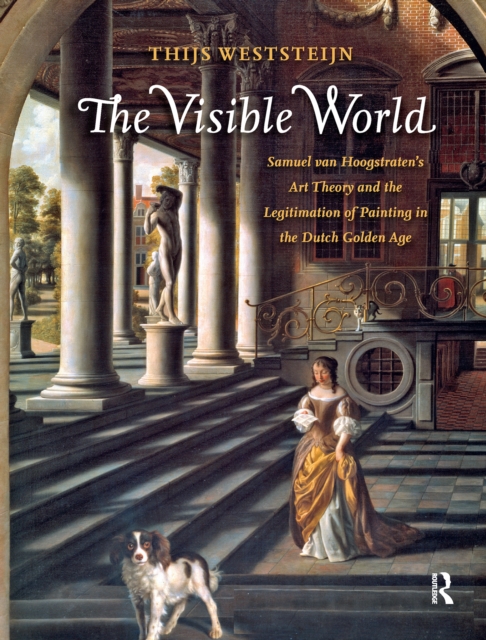
The Visible World
How did painters and their public speak about art in Rembrandt’s age? This book about the writings of the painter-poet Samuel van Hoogstraten, one of Rembrandt’s pupils, examines a wide variety of themes from painting practice and theory from the Dutch Golden Age. It addresses the contested issue of ‘Dutch realism’ and its hidden symbolism, as well as Rembrandt’s concern with representing emotions in order to involve the spectator. Diverse aspects of imitation and illusion come to the fore, such as the theory behind sketchy or ‘rough’ brushwork and the active role played by the viewer’s imagination. Taking as its starting point discussions in Rembrandt’s studio, this unique study provides an ambitious overview of Dutch artists’ ideas on painting.
eBook

Living Electronic Music
‘Simon Emmerson’s book provides an important new perspective on key aspects of the electroacoustic medium which hitherto have not received the attention they deserve. The product of meticulous and probing research, this critical account is both insightful and thought-provoking, not least in terms of the deeply informed discussion of key works within this rich and ever-growing legacy and the often overlooked issues of performance practice associated with their dissemination. It fills an important gap in the literature, successfully communicating both to the more specialist reader and also those new to this distinctive and significant medium of creativity’
– Professor Peter Manning, Head of Department and Director of CETL, Department of Music, Durham University
‘Simon Emmerson’s new book is a superb exploration of how we perceive and understand today’s technology-based music. He draws a historical line pointing out that music has evolved from the obvious efforts of people playing mechanical instruments to music that seems to happen without human effort. He then explores the ways in which we understand this new musical universe, populated by sounds that are produced by technology and seem to simply happen with no apparent cause. He discusses the relationships of these sounds to the real world, our perception of the new musical space in which these sounds exist; and our understandings of this new music through real-life ‘models’. Illuminating and insightful, this book is clearly the result of years of creativity and reflection and it will lead a reader to new depths of understanding of the musical revolution that is happening around us.’
– Joel Chadabe, President, Electronic Music Foundation and Professor Emeritus, State University of New York at Albany
Drawing on recent ideas that explore new environments and the changing situations of composition and performance, Simon Emmerson provides a significant contribution to the study of contemporary music, bridging history, aesthetics and the ideas behind evolving performance practices. Whether created in a studio or performed on stage, how does electronic music reflect what is live and living?
What is it to perform ‘live’ in the age of the laptop? Many performer-composers draw upon a library’ of materials, some created beforehand in a studio, some coded ‘on the fly’, others ‘plundered’ from the widest possible range of sources. But others refuse to abandon traditionally ‘created and structured’ electroacoustic work. Lying behind this maelstrom of activity is the perennial relationship to ‘theory’, that is, ideas, principles and practices that somehow lie behind composers’ and performers’ actions. Some composers claim they just ‘respond’ to sound and compose ‘with their ears’, while others use models and analogies of previously ‘non-musical’ processes.
It is evident that in such new musical practices the human body has a new relationship to the sound. There is a historical dimension to this, for since the earliest electroacoustic experiments in 1948 the body has been celebrated or sublimated in a strange ‘dance’ of forces in which it has never quite gone away but rarely been overtly present. The relationship of the body performing to the spaces around has also undergone a revolution as the source of sound production has shifted to the loudspeaker. Emmerson considers these issues in the framework of our increasingly ‘acousmatic’ world in which we cannot see the source of the sounds we hear.
eBook

The Computer and Music
The first of its kind, this is book consists of twenty-one essays describing the many different uses of the digital computer in the field of music.
eBook

From Disciplinary Societies to Algorithmic Control: Rethinking Foucault’s Human Subject in the Digital Age
In the digital age, the mechanisms of power and control have evolved beyond Foucault’s disciplinary societies, giving rise to a new paradigm of algorithmic governance. This study critically reinterprets Foucault’s concept of the human subject in light of contemporary digital surveillance, big data analytics, and algorithmic decision-making. The paper looks at how technology, biopolitics, and subject formation interact. It says that algorithmic control changes people’s choices in ways that have never been seen before through predictive modeling and real-time behavioral modulation. The study starts with a comparison of early Foucauldian frameworks and more recent theories of digital governance. It uses a method that combines philosophy, media studies, and political theory. The results show that while disciplinary societies relied on institutionalized norms and body regulation, algorithmic control works through data-driven anticipatory mechanisms, which make subjectivity less clear and more broken up. This shift raises ethical and ontological questions about autonomy, resistance, and the very notion of the self in a hyper-connected society. The study concludes that rethinking Foucault’s insights in the digital era is essential for understanding and contesting the pervasive influence of algorithmic power on human subjectivity.
Journal Article