
Catalogue Search | MBRL


Are you sure you want to remove the book from the shelf?

{{itemTitle}}
104
result(s) for
"Computer engineering Canada History."
Sort by:

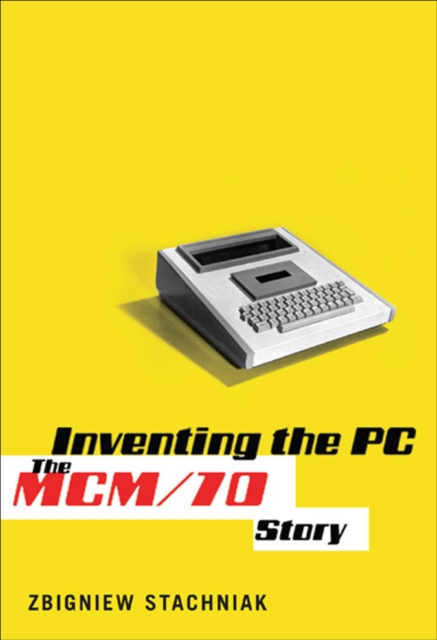
Inventing the PC
Inventing the PC details the invention and design of the MCM/70 computer and the prolonged struggle to bring it to market. Zbigniew Stachniak offers an insider's view of events on the front lines of pioneering work on personal computers. He shows what information and options PC pioneers had, how well they understood what they were doing, and how that understanding - or lack thereof - shaped both their engineering ingenuity and the indecisiveness and over-reaching ambition that would ultimately turn a very promising venture into a missed opportunity. Providing comprehensive historical background and rich photographic documentation, Inventing the PC tells the story of a Canadian company on the cutting-edge of the information age.
eBook

The Official Picture
Mandated to foster a sense of national cohesion The National Film Board of Canada's Still Photography Division was the country's official photographer during the mid-twentieth century. Like the Farm Security Administration and other agencies in the US, the NFB used photographs to serve the nation. Division photographers shot everything from official state functions to images of the routine events of daily life, producing some of the most dynamic photographs of the time, seen by millions of Canadians - and international audiences - in newspapers, magazines, exhibitions, and filmstrips. In The Official Picture, Carol Payne argues that the Still Photography Division played a significant role in Canadian nation-building during WWII and the two decades that followed. Payne examines key images, themes, and periods in the Division's history - including the depiction of women munitions workers, landscape photography in the 1950s and 60s, and portraits of Canadians during the Centennial in 1967 - to demonstrate how abstract concepts of nationhood and citizenship, as well as attitudes toward gender, class, linguistic identity, and conceptions of race were reproduced in photographs. The Official Picture looks closely at the work of many Division photographers from staff members Chris Lund and Gar Lunney during the 1940s and 1950s to the expressive documentary photography of Michel Lambeth, Michael Semak, and Pierre Gaudard, in the 1960s and after. The Division also produced a substantial body of Northern imagery documenting Inuit and Native peoples. Payne details how Inuit groups have turned to the archive in recent years in an effort to reaffirm their own cultural identity. For decades, the Still Photography Division served as the country's image bank, producing a government-endorsed \"official picture\" of Canada. A rich archival study, The Official Picture brings the hisotry of the Division, long overshadowed by the Board's cinematic divisions, to light.
eBook

Coupling Traditional Monitoring and Citizen Science to Disentangle the Invasion of Halyomorpha halys
The brown marmorated stink bug, Halyomorpha halys Stål (Hemiptera: Pentatomidae), is an invasive pest that has expanded its range outside of its original confinements in Eastern Asia, spreading through the United States, Canada and most of the European and Eurasian countries. The invasiveness of this agricultural and public nuisance pest is facilitated by the availability of an array of suitable hosts, an r-selected life history and the release from natural enemies in the invaded zones. Traditional monitoring methods are usually impeded by the lack of time and resources to sufficiently cover large geographical ranges. Therefore, the citizen science initiative “BugMap” was conceived to complement and assist researchers in breaking down the behavior of this invasive pest via a user-friendly, freely available mobile application. The collected data were employed to forecast its predicted distribution and to identify the areas at risk in Trentino, Northern Italy. Moreover, they permitted the uncovering of the seasonal invasion dynamics of this insect, besides providing insight into its phenological patterns, life cycle and potential management methods. Hence, the outcomes of this work emphasize the need to further integrate citizens in scientific endeavors to resolve ecological complications and reduce the gap between the public and science.
Journal Article
Telecom Nation
Laurence Mussio examines how federal and provincial public policy tried to keep pace with the diffusion of telecommunications, consumer demand, and a rising tide of technological innovation. Telecommunications regulation struggled to maintain a balance between producer and consumer in an increasingly complex field and policy makers were compelled to defend the national interest in international telecommunications arrangements or by making far-reaching decisions about transcontinental microwave systems and satellites. By the late 1960s national policy makers had embraced the arrival of the computer - especially once it began to be wired into Canada's communications infrastructure. Telecom Nation explores the impact of the computer on government policy and the first attempts to build a \"national computer utility\" - the beginnings of the Internet - twenty-five years before it became a reality.
eBook

Competing Research Traditions in American Industry: Uncertain Alliances between Engineering and Science at Westinghouse Electric, 1886–1935
Westinghouse Electric opened a new research laboratory near the company’s main factory in East Pittsburgh, Pennsylvania, in 1916. Located in the suburban borough of Forest Hills, the laboratory was set up to provide scientific knowledge for the older materials testing and product development laboratories at the factory. Unlike its industrial counterparts, however, the Forest Hills laboratory was dominated by a strong engineering research tradition that disrupted efforts undertaken in the 1920s and again in the 1930s to build and sustain a diversified fundamental research program. Whereas Eastman Kodak, DuPont, AT&T, and General Electric had successfully integrated fundamental research into their corporate laboratories, the Forest Hills laboratory remained the site of recurring tensions between two cultures of innovation—one based on fundamental science, the other on engineering research. Although such tensions often resulted in competing research strategies, managerial conflicts, and mismatched corporate priorities, the long-standing culture of engineering research contributed far more to Westinghouse’s strategic growth than even the most advanced fundamental research. More generally, the interactions between the cultures of engineering and science that characterize the early history of industrial research at Westinghouse highlight the evolving and sometimes conflicting patterns of technological innovation and organizational change in American industry before World War II.
Journal Article

Crossover Inventions and Knowledge Diffusion of General Purpose Technologies: Evidence from the Electrical Technology
Scholars have long noted the significant impact of general purpose technologies (GPTs) on the economy. However, limited attention has been paid to exploring how they are employed to generate inventions in downstream sectors (crossover inventions), and what factors may facilitate such diffusion. In a study of the introduction of electrical technology in the late-nineteenth-century United States, we find that knowledge spillovers between industries had little influence on the geography of crossover inventions as well as the speed and productivity of crossover inventors. Instead, human capital and an environment promoting inventions in general were more important.
Journal Article

An analysis of the universality, flexibility, and agility of total innovation management: a case study of Hewlett–Packard
Total Innovation Management (TIM) can be considered simply the mutually reinforcing innovation in all elements of an organization's business system, by everyone, everywhere, all the time. We analyze HP's innovation history and find that HP embodies all of the basic principles of TIM. This provides preliminary evidence for the universality of TIM. A longitudinal analysis indicates that HP also embodies the flexibility of TIM. [PUBLICATION ABSTRACT]
Journal Article

Corporate Learning and Quality Control at the Bell System, 1877–1929
From 1877 to 1929 the Bell System extended its qualityassurance capabilities, a step that was critical to the company's ability to certify the reliability of its equipment and apparatus and to provide economical service. Learning in this context involved the gradual development of an organizational structure for coordinating and controlling quality-assurance activities at both the staff and line levels and between the corporate elements of the Bell System. Over the course of the initiative, innovative methods of analysis emerged that provided useful new insights into the manufacturing process. The company's adaptation of probability theory, for example, enabled it to launch a comprehensive inspection regime, which became known as “statistical quality control” (SQC). Based on this new approach, Bell succeeded in broadening its manufacturing knowledge, quantifying definitions of quality, reducing costs and risk, thus assuming the more reliable operation of its vast telephone network. Eventually this upgrading of learning led to the formation of a new profession of quality engineering, which found adherents across many industries in the United States and abroad.
Journal Article
Selling Silicon Valley: Frederick Terman's Model for Regional Advantage
This paper explores the origins of the Silicon Valley model for regional economic development, and attempts to deploy this model elsewhere in the United States and abroad. Frederick Terman, Stanford's provost, first envisioned its unique partnership of academia and industry, and trained the first generation of students who effected it. He patiently cultivated an aggressively entrepreneurial culture in what he called “the newly emerging community of technical scholars.” Beginning in the 1960s, business groups elsewhere set out to build their own versions of Silicon Valley, some enlisting the assistance of Terman and his proteges. After discussing the emergence of the Stanford-Silicon Valley effort, the paper examines in detail the New Jersey Institute of Science and Technology, an effort led by Bell Laboratories; the Graduate Research Center of the Southwest and the SMU Foundaton for Science and Engineering in Dallas, Texas; and the Korea Advanced Insitute of Science and Technology, Terman's last and arguably most successful attempt. The paper discusses the reasons for the difficulties in creating new versions, and suggests explanations for the apparent success of the Korean experiment.
Journal Article