
Catalogue Search | MBRL


Are you sure you want to remove the book from the shelf?

{{itemTitle}}
1,367
result(s) for
"Computer firmware"
Sort by:
Quick boot: a guide for embedded firmware developers
Quick Boot is designed to give developers a background in the basic architecture and details of a typical boot sequence. More specifically, this book describes the basic initialization sequence that allows developers the freedom to boot an OS without a fully featured system BIOS. Various specifications provide the basics of both the code bases and the standards. This book also provides insights into optimization techniques for more advanced developers. With proper background information, the required specifications on hand, and diligence, many developers can create quality boot solutions using this text. Pete Dice is Engineering Director of Verifone, where he manages OS Engineering teams in Dublin, Ireland and Riga Latvia. Dice successfully launched Intel® QuarkT, Intel's first generation SoC as well as invented the Intel® GalileoT development board and developed a freemium SW strategy to scale Intel IoT gateway features across product lines. He is also credited with architecting the \"Moon Island\" software stack and business model.
eBook
Harnessing the UEFI shell: moving the platform beyond DOS
Focusing on the use of the UEFI Shell and its recently released formal specification, this book unlocks a wide range of usage models which can help people best utilize the shell solutions. This text also expands on the obvious intended utilization of the shell and explains how it can be used in various areas such as security, networking, configuration, and other anticipated uses such as manufacturing, diagnostics, etc. Among other topics, Harnessing the UEFI Shell demonstrates how to write Shell scripts, how to write a Shell application, how to use provisioning options and more. Since the Shell is also a UEFI component, the book will make clear how the two things interoperate and how both Shell developers as well as UEFI developers can dip into the other's field to further expand the power of their solutions. Harnessing the UEFI Shell is authored by the three chairs of the UEFI working sub-teams, Michael Rothman (Intel, chair of the UEFI Configuration and UEFI Shell sub-teams), Vincent Zimmer (Intel, chair of the UEFI networking sub-team and security sub-team), and Tim Lewis (Insyde Software, chair of the UEFI security sub-team). This book is perfect for any OEMs that ship UEFI-based solutions (which is all of the MNCs such as IBM, Dell, HP, Apple, etc.), software developers who are focused on delivering solutions targeted to manufacturing, diagnostics, hobbyists, or stand-alone kiosk environments.
eBook
Beyond BIOS: developing with the Unified Extensible Firmware Interface
This book provides an overview of modern boot firmware, including the Unified Extensible Firmware Interface (UEFI) and its associated EFI Developer Kit II (EDKII) firmware. The authors have each made significant contributions to developments in these areas. The reader will learn to use the latest developments in UEFI on modern hardware, including open source firmware and open hardware designs. The book begins with an exploration of interfaces exposed to higher-level software and operating systems, and commences to the left of the boot timeline, describing the flow of typical systems, beginning with the machine restart event. Software engineers working with UEFI will benefit greatly from this book, while specific sections of the book address topics relevant for a general audience: system architects, pre-operating-system application developers, operating system vendors (loader, kernel), independent hardware vendors (such as for plug-in adapters), and developers of end-user applications. As a secondary audience, project technical leaders or managers may be interested in this book to get a feel for what their engineers are doing. The reader will find: An overview of UEFI and underlying Platform Initialization (PI) specifications How to create UEFI applications and drivers Workflow to design the firmware solution for a modern platform Advanced usages of UEFI firmware for security and manageability
eBook
Embedded multitasking
In an embedded system, firmware is the software that directly interfaces with the microcontroller, controlling the system’s function. The major forces driving the embedded firmware development process today are reduced development times, increased complexity, and the need to handle multiple tasks simultaneously. These forces translate into strenuous design requirements for embedded engineers and programmers. Many low-level embedded microcontroller designs have insufficient memory and/or architectural limitations that make the use of a real-time operating system impractical. The techniques presented in this book allow the design of robust multitasking firmware through the use of interleaved state machines. This book presents a complete overview of multitasking terminology and basic concepts. Practical criteria for task selection and state machine design are also discussed.Designing multitasking firmware is arduous, complex and fraught with potential for errors, and there is no one, “standard way to do it. This book will present a complete and well-organized design approach with examples and sample source code that designers can follow. Covers every aspect of design from the system level to the component level, including system timing, communicating with the hardware, integration and testing.
eBook

Harnessing the UEFI Shell
Focusing on the use of the UEFI Shell and its recently released formal specification, this book unlocks a wide range of usage models which can help people best utilize the shell solutions. This text also expands on the obvious intended utilization of the shell and explains how it can be used in various areas such as security, networking, configuration, and other anticipated uses such as manufacturing, diagnostics, etc. Among other topics, Harnessing the UEFI Shell demonstrates how to write Shell scripts, how to write a Shell application, how to use provisioning options and more. Since the Shell is also a UEFI component, the book will make clear how the two things interoperate and how both Shell developers as well as UEFI developers can dip into the other's field to further expand the power of their solutions. Harnessing the UEFI Shell is authored by the three chairs of the UEFI working sub-teams, Michael Rothman (Intel, chair of the UEFI Configuration and UEFI Shell sub-teams), Vincent Zimmer (Intel, chair of the UEFI networking sub-team and security sub-team), and Tim Lewis (Insyde Software, chair of the UEFI security sub-team). This book is perfect for any OEMs that ship UEFI-based solutions (which is all of the MNCs such as IBM, Dell, HP, Apple, etc.), software developers who are focused on delivering solutions targeted to manufacturing, diagnostics, hobbyists, or stand-alone kiosk environments.
eBook

Software Update as a Mechanism for Resilience and Security
Software update is an important mechanism by which security changes and improvements are made in software, and this seemingly simple concept encompasses a wide variety of practices, mechanisms, policies, and technologies. To explore the landscape further, the Forum on Cyber Resilience hosted a workshop featuring invited speakers from government, the private sector, and academia. This publication summarizes the presentations and discussions from the workshop.
eBook


Quick Boot
Quick Boot is designed to give developers a background in the basic architecture and details of a typical boot sequence. More specifically, this book describes the basic initialization sequence that allows developers the freedom to boot an OS without a fully featured system BIOS. Various specifications provide the basics of both the code bases and the standards. This book also provides insights into optimization techniques for more advanced developers. With proper background information, the required specifications on hand, and diligence, many developers can create quality boot solutions using this text. Pete Dice is Engineering Director of Verifone, where he manages OS Engineering teams in Dublin, Ireland and Riga Latvia. Dice successfully launched Intel® Quark™, Intel's first generation SoC as well as invented the Intel® Galileo™ development board and developed a freemium SW strategy to scale Intel IoT gateway features across product lines. He is also credited with architecting the \"Moon Island\" software stack and business model.
eBook
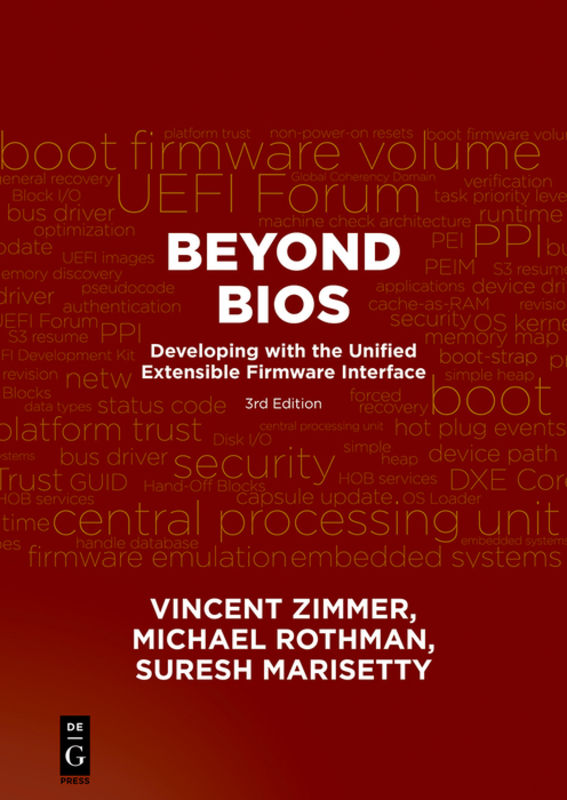
Beyond BIOS
This book provides an overview of modern boot firmware, including the Unified Extensible Firmware Interface (UEFI) and its associated EFI Developer Kit II (EDKII) firmware. The authors have each made significant contributions to developments in these areas. The reader will learn to use the latest developments in UEFI on modern hardware, including open source firmware and open hardware designs. The book begins with an exploration of interfaces exposed to higher-level software and operating systems, and commences to the left of the boot timeline, describing the flow of typical systems, beginning with the machine restart event. Software engineers working with UEFI will benefit greatly from this book, while specific sections of the book address topics relevant for a general audience: system architects, pre-operating-system application developers, operating system vendors (loader, kernel), independent hardware vendors (such as for plug-in adapters), and developers of end-user applications. As a secondary audience, project technical leaders or managers may be interested in this book to get a feel for what their engineers are doing. The reader will find: * An overview of UEFI and underlying Platform Initialization (PI) specifications * How to create UEFI applications and drivers * Workflow to design the firmware solution for a modern platform * Advanced usages of UEFI firmware for security and manageability
eBook
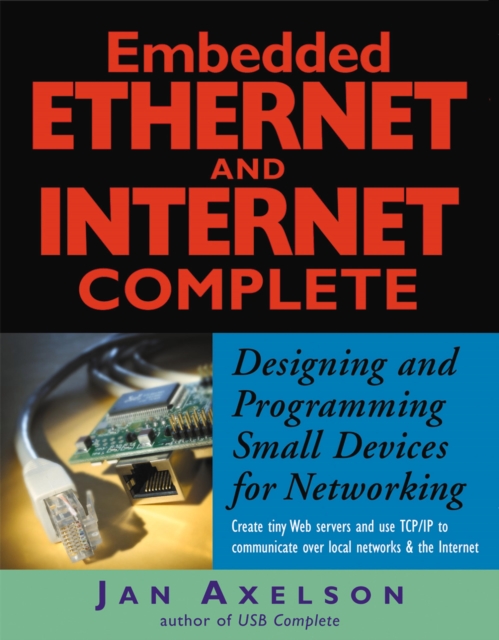
Embedded Ethernet and Internet Complete
Bringing together two areas of computer technology--networking and embedded systems--this developer's guide offers guidance and examples for each of these, with a focus on the special requirements and limits of embedded systems. Because developing an embedded system for networking requires knowledge from many areas, including circuit design, programming, network architecture, and Ethernet and Internet protocols, developers are given valuable technical information on each that can be put to use right away. Covered are the advantages and limits of using Ethernet to connect embedded systems in a local network, hardware and program code needed to connect an embedded system to an Ethernet network and the Internet, and how to build a network. Also discussed are how embedded systems can use TCP/IP and related protocols and how personal-computer applications can use the protocols to communicate with embedded systems. Developers will learn how their Web server's pages can include dynamic, real-time content and respond to user input.
eBook