
Catalogue Search | MBRL


Are you sure you want to remove the book from the shelf?

{{itemTitle}}
652
result(s) for
"Computer games--Design"
Sort by:


Making Virtual Worlds
The past decade has seen phenomenal growth in the development and use of virtual worlds. In one of the most notable, Second Life, millions of people have created online avatars in order to play games, take classes, socialize, and conduct business transactions. Second Life offers a gathering point and the tools for people to create a new world online.
Too often neglected in popular and scholarly accounts of such groundbreaking new environments is the simple truth that, of necessity, such virtual worlds emerge from physical workplaces marked by negotiation, creation, and constant change. Thomas Malaby spent a year at Linden Lab, the real-world home of Second Life, observing those who develop and profit from the sprawling, self-generating system they have created.
Some of the challenges created by Second Life for its developers were of a very traditional nature, such as how to cope with a business that is growing more quickly than existing staff can handle. Others are seemingly new: How, for instance, does one regulate something that is supposed to run on its own? Is it possible simply to create a space for people to use and then not govern its use? Can one apply these same free-range/free-market principles to the office environment in which the game is produced? \"Lindens\"-as the Linden Lab employees call themselves-found that their efforts to prompt user behavior of one sort or another were fraught with complexities, as a number of ongoing processes collided with their own interventions.
InMaking Virtual Worlds, Malaby thoughtfully describes the world of Linden Lab and the challenges faced while he was conducting his in-depth ethnographic research there. He shows how the workers of a very young but quickly growing company were themselves caught up in ideas about technology, games, and organizations, and struggled to manage not only their virtual world but also themselves in a nonhierarchical fashion. In exploring the practices the Lindens employed, he questions what was at stake in their virtual world, what a game really is (and how people participate), and the role of the unexpected in a product like Second Life and an organization like Linden Lab.
eBook


Level Up! The Guide to Great Video Game Design
Want to design your own video games? Let expert Scott Rogers show you how!
If you want to design and build cutting-edge video games but aren't sure where to start, then the SECOND EDITION of the acclaimed Level Up! is for you! Written by leading video game expert Scott Rogers, who has designed the hits Pac Man World, Maximo and SpongeBob Squarepants, this updated edition provides clear and well-thought out examples that forgo theoretical gobbledygook with charmingly illustrated concepts and solutions based on years of professional experience.
Level Up! 2nd Edition has been NEWLY EXPANDED to teach you how to develop marketable ideas, learn what perils and pitfalls await during a game's pre-production, production and post-production stages, and provide even more creative ideas to serve as fuel for your own projects including:
* Developing your game design from the spark of inspiration all the way to production
* Learning how to design the most exciting levels, the most precise controls, and the fiercest foes that will keep your players challenged
* Creating games for mobile and console systems – including detailed rules for touch and motion controls
* Monetizing your game from the design up
* Writing effective and professional design documents with the help of brand new examples
Level Up! 2nd Edition is includes all-new content, an introduction by David \"God of War\" Jaffe and even a brand-new chili recipe –making it an even more indispensable guide for video game designers both \"in the field\" and the classroom.
Grab your copy of Level Up! 2nd Edition and let's make a game!
eBook

Practical Gamemaker : Studio : language projects
\"Gain the skills required to create fun and compelling games using GameMaker: Studio, and its GML programming language. In this full-color book you'll learn 24 practical programming elements that are important when creating any game. Each section includes an introduction to a new programming element, some examples, a worksheet, and mini projects to allow you to test your new knowledge. After completing all elements, you will put into action what you have learned in a classic arcade style game. In Practical GameMaker: Studio, you will create a fully featured game, with guidance and in color. After each section you'll see how you'll apply what you've learned to the final game, and discover additional projects to try. These mini projects include a separate scoring guide, and a working example for each, which is useful if you're using this book in an educational environment. Similarly, the book also contains a number of assignments, which you may include as part of any associated coursework in your classes.\"-- Page [4] of cover.
Book
Practical Game Design
Immerse yourself in the fundamentals of game design. Are you are looking to take the creative lead and make better game designs faster? Then you have come to the right place. The book builds up the basics of game design one simple piece at a time. Written by two highly experienced industry professionals, this book will give real insights and.
eBook

Developing creative content for games
\"This book provides readers with a solid understanding of game development, design, narrative, charaterization, plot, back story and world creation elements that are crucial for game writers and designers as they create a detailed world setting, adventure, characters, narrative and plot suitable for possible publication. Game design and development issues such as writing for games, emergent complexity, risk reward systems, competitive and cooperative game play will be investigated, analyzed and critiqued. Examples will be used to highlight and explain the various concepts involved and how the game development process works\"-- Provided by publisher.
Book

Players unleashed!
It has been ten years since video game giant Electronic Arts first releasedThe Sims, the best-selling game that allows its players to create a household and then manage every aspect of daily life within it. And since its debut, gamers young and old have found ways to \"mod\"The Sims, a practice in which gamers manipulate the computer code of a game, and thereby alter it to add new content and scenarios.
InPlayers Unleashed!-the first study of its kind-Tanja Sihvonen provides a fascinating examination of modding, tracing its evolution and detailing its impact onThe Simsand the game industry as a whole. Along the way, Sihvonen shares insights into specific modifications and the cultural contexts from which they emerge.
eBook

Beginning RPG maker MV
Create your very own role playing game using the RPG Maker MV game development engine. You'll go through tutorials and exercises that will take you from installing the software to putting the final touches upon your first project. Beginning RPG Maker MV has been designed with the complete beginner in mind who has little to no experience with the engine. It includes full JavaScript code, replacing the old Ruby commands. Game design can be quite a daunting challenge, as it generally involves a large amount of programming know-how on top of having to plan everything out that makes a good game what it is. RPG Maker MV is an intuitive system that allows you to make your own game with a fraction of the effort otherwise required.
Book
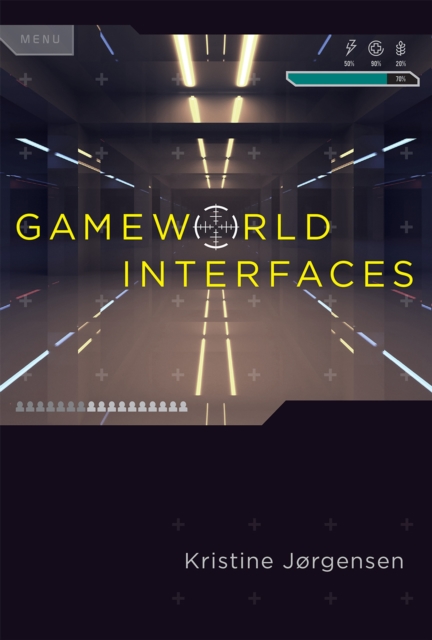
Gameworld Interfaces
Computer games usually take one of two approaches to presenting game information to players. A game might offer information naturalistically, as part of the game's imaginary universe; or it might augment the world of the game with overlays, symbols, and menus. In this book, Kristine Jørgensen investigates both kinds of gameworld interfaces. She shows that although the naturalistic approach may appear more integral to the imaginary world of the game, both the invisible and visible interfaces effectively present information that players need in order to interact with the game and its rules. The symbolic, less naturalistic approach would seem to conflict with the idea of a coherent, autonomous fictional universe; but, Jørgensen argues, gameworlds are not governed by the pursuit of fictional coherence but by the logics of game mechanics. This is characteristic of gameworlds and distinguishes them from other traditional fictional worlds. Jørgensen investigates gameworld interfaces from the perspectives of both game designers and players. She draws on interviews with the design teams of Harmonix Music (producer ofRock Bandand other music games) and Turbine Inc. (producer of such massively multiplayer online games asLord of the Rings Online), many hours of gameplay, and extensive interviews and observations of players. The player studies focus on four games representing different genres:Crysis,Command & Conquer 3: Tiberian Wars,The Sims 2, andDiablo 2. Finally, she presents a theory of game user interfaces and considers the implications of this theory for game design.
eBook