
Catalogue Search | MBRL


Are you sure you want to remove the book from the shelf?

{{itemTitle}}
1,304
result(s) for
"Computer industry India."
Sort by:


Embedded Autonomy
In recent years, debate on the state's economic role has too often devolved into diatribes against intervention. Peter Evans questions such simplistic views, offering a new vision of why state involvement works in some cases and produces disasters in others. To illustrate, he looks at how state agencies, local entrepreneurs, and transnational corporations shaped the emergence of computer industries in Brazil, India, and Korea during the seventies and eighties. Evans starts with the idea that states vary in the way they are organized and tied to society. In some nations, like Zaire, the state is predatory, ruthlessly extracting and providing nothing of value in return. In others, like Korea, it is developmental, promoting industrial transformation. In still others, like Brazil and India, it is in between, sometimes helping, sometimes hindering. Evans's years of comparative research on the successes and failures of state involvement in the process of industrialization have here been crafted into a persuasive and entertaining work, which demonstrates that successful state action requires an understanding of its own limits, a realistic relationship to the global economy, and the combination of coherent internal organization and close links to society that Evans called \"embedded autonomy.\"
eBook


The Outsourcer
The rise of the Indian information technology industry is a remarkable economic success story. Software and services exports from India amounted to less than $100 million in 1990, and today come close to $100 billion . But, as Dinesh Sharma explains in The Outsourcer , Indian IT's success has a long prehistory; it did not begin with software support, or with American firms' eager recruitment of cheap and plentiful programming labor, or with India's economic liberalization of the 1990s. The foundations of India's IT revolution were laid long ago, even before the country's independence from British rule in 1947, as leading Indian scientists established research institutes that became centers for the development of computer science and technology. The \"miracle\" of Indian IT is actually a story about the long work of converting skills and knowledge into capital and wealth. With The Outsourcer , Sharma offers the first comprehensive history of the forces that drove India's IT success. Sharma describes India's early development of computer technology, part of the country's efforts to achieve national self-sufficiency, and shows that excessive state control stifled IT industry growth before economic policy changed in 1991. He traces the rise and fall (and return) of IBM in India and the emergence of pioneering indigenous hardware and software firms. He describes the satellite communication links and state-sponsored, tax-free technology parks that made software-related outsourcing by foreign firms viable, and the tsunami of outsourcing operations at the beginning of the new millennium. It is the convergence of many factors, from the tradition of technical education to the rise of entrepreneurship to advances in communication technology, that have made the spectacular growth of India's IT industry possible.
eBook


New industries from new places : the emergence of the software and hardware industries in China and India
Software comes from India, hardware comes from China. Why is that? Why did China and India take such different paths to global dominance in new high-tech industries? Will their paths continue to diverge or converge? How can other countries learn from their successes – and failures – in reaching global scale in new industries? To answer these questions, this book presents the first rigorous comparison of the growth of the IT industries in China and India, based on interviews with over 300 companies. It explains the different growth paths of the software and hardware sectors in each country, providing insights into the factors behind the emergence of China and India as global economic powers. It provides a compelling case study of how differences in economic policies and the investment climate affect industrial growth. This book sheds new light on common debates on 'China versus India', on why India is the software capital of the world while China is a manufacturing powerhouse. It refutes common myths about the growth of these industries – for example, the role of Non-Resident Indians or the Y2K problem in the growth of the Indian software industry, the role of government intervention in industrial growth, and the relative size of China and India's software industries.
eBook

New Industries from New Places
Software comes from India, hardware comes from China. Why is that? Why did China and India take such different paths to global dominance in new high-tech industries? Will their paths continue to diverge or converge? How can other countries learn from their successes and failures in reaching global scale in new industries? To answer these questions, this book presents the first rigorous comparison of the growth of the IT industries in China and India, based on interviews with over 300 companies. It explains the different growth paths of the software and hardware sectors in each country, providing insights into the factors behind the emergence of China and India as global economic powers. It provides a compelling case study of how differences in economic policies and the investment climate affect industrial growth. This book sheds new light on common debates on \"China versus India\", on why India is the software capital of the world while China is a manufacturing powerhouse. It refutes common myths about the growth of these industries for example, the role of Non-Resident Indians or the Y2K problem in the growth of the Indian software industry, the role of government intervention in industrial growth, and the relative size of China and India's software industries.
eBook

In an Outpost of the Global Economy
While much has been written on the growth of information technology (IT) and IT-enabled services in India, little is known about the people who work in these industries, about the nature of the work itself, and about its wider social and cultural ramifications. The papers in this collection combine empirical research with theoretical insight to fill this gap and explore questions about the trajectory of globalization in India. The themes covered include: (a) sourcing and social structuring of the new global workforce; (b) the work process, work culture, regimes of control and resistance in IT-enabled industries; (c) work, culture and identity; (d) nations, borders and cross-border flows.
eBook
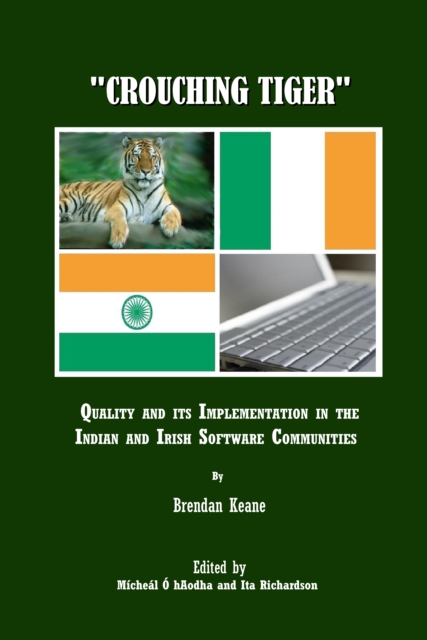
\Crouching Tiger\
There are few people who have not heard of the Irish software success story. Once a country whose primary industries were agriculture and manufacturing, Ireland has become a focal point for many multinational corporations setting up major offshore software bases. There has also been strong growth in the indigenous software sector. However, the Irish software industry is facing some new challenges. Low-cost countries are investing in the growth of their software industry. And, with this i.
eBook

Embedded autonomy : states and industrial transformation
Frontmatter -- Contents -- List of Tables -- Acknowledgments -- List of Abbreviations and Acronyms -- 1. States and Industrial Transformation -- 2. A Comparative Institutional Approach -- 3. States -- 4. Roles and Sectors -- 5. Promotion and Policing -- 6. State Firms and High-Tech Husbandry -- 7. The Rise of Local Firms -- 8. The New Internationalization -- 9. Lessons from Informatics -- 10. Rethinking Embedded Autonomy -- Notes -- References -- Index
Book