
Catalogue Search | MBRL


Are you sure you want to remove the book from the shelf?

{{itemTitle}}
127,746
result(s) for
"Computer interfaces."
Sort by:


Designing with the mind in mind : simple guide to understanding user interface design guidelines
In this completely updated and revised edition of Designing with the Mind in Mind, Jeff Johnson provides you with just enough background in perceptual and cognitive psychology that user interface (UI) design guidelines make intuitive sense rather than being just a list or rules to follow.Early UI practitioners were trained in cognitive psychology.
eBook

Four ethical priorities for neurotechnologies and AI
Current BCI technology is mainly focused on therapeutic outcomes, such as helping people with spinal-cord injuries. It might take years or even decades until BCI and other neurotechnologies are part of our daily lives. Such advances could revolutionize the treatment of many conditions, from brain injury and paralysis to epilepsy and schizophrenia, and transform human experience for the better. But the technology could also exacerbate social inequalities and offer corporations, hackers, governments or anyone else new ways to exploit and manipulate people.
Journal Article


Exploring spatial-frequency-sequential relationships for motor imagery classification with recurrent neural network
Background
Conventional methods of motor imagery brain computer interfaces (MI-BCIs) suffer from the limited number of samples and simplified features, so as to produce poor performances with spatial-frequency features and shallow classifiers.
Methods
Alternatively, this paper applies a deep recurrent neural network (RNN) with a sliding window cropping strategy (SWCS) to signal classification of MI-BCIs. The spatial-frequency features are first extracted by the filter bank common spatial pattern (FB-CSP) algorithm, and such features are cropped by the SWCS into time slices. By extracting spatial-frequency-sequential relationships, the cropped time slices are then fed into RNN for classification. In order to overcome the memory distractions, the commonly used gated recurrent unit (GRU) and long-short term memory (LSTM) unit are applied to the RNN architecture, and experimental results are used to determine which unit is more suitable for processing EEG signals.
Results
Experimental results on common BCI benchmark datasets show that the spatial-frequency-sequential relationships outperform all other competing spatial-frequency methods. In particular, the proposed GRU-RNN architecture achieves the lowest misclassification rates on all BCI benchmark datasets.
Conclusion
By introducing spatial-frequency-sequential relationships with cropping time slice samples, the proposed method gives a novel way to construct and model high accuracy and robustness MI-BCIs based on limited trials of EEG signals.
Journal Article
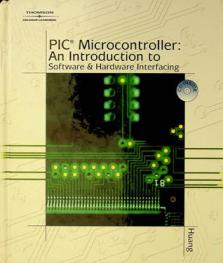
PIC microcontroller : an introduction to software and hardware interfacing
\"This book presents a thorough introduction to the Microchip PIC® microcontroller family, including all of the PIC programming and interfacing for all the peripheral functions.\"--Back cover.
Book

Critiquing the Concept of BCI Illiteracy
Brain–computer interfaces (BCIs) are a form of technology that read a user’s neural signals to perform a task, often with the aim of inferring user intention. They demonstrate potential in a wide range of clinical, commercial, and personal applications. But BCIs are not always simple to operate, and even with training some BCI users do not operate their systems as intended. Many researchers have described this phenomenon as “BCI illiteracy,” and a body of research has emerged aiming to characterize, predict, and solve this perceived problem. However, BCI illiteracy is an inadequate concept for explaining difficulty that users face in operating BCI systems. BCI illiteracy is a methodologically weak concept; furthermore, it relies on the flawed assumption that BCI users possess physiological or functional traits that prevent proficient performance during BCI use. Alternative concepts to BCI illiteracy may offer better outcomes for prospective users and may avoid the conceptual pitfalls that BCI illiteracy brings to the BCI research process.
Journal Article


Brain-Computer Interface: Advancement and Challenges
Brain-Computer Interface (BCI) is an advanced and multidisciplinary active research domain based on neuroscience, signal processing, biomedical sensors, hardware, etc. Since the last decades, several groundbreaking research has been conducted in this domain. Still, no comprehensive review that covers the BCI domain completely has been conducted yet. Hence, a comprehensive overview of the BCI domain is presented in this study. This study covers several applications of BCI and upholds the significance of this domain. Then, each element of BCI systems, including techniques, datasets, feature extraction methods, evaluation measurement matrices, existing BCI algorithms, and classifiers, are explained concisely. In addition, a brief overview of the technologies or hardware, mostly sensors used in BCI, is appended. Finally, the paper investigates several unsolved challenges of the BCI and explains them with possible solutions.
Journal Article